
So they were more successful than the 2019 team. But I think more people would say the 2018 team was better. That team was cruelly dispatched in a game 163/one game Wild Card playoff. (Their offense also died those days.) The 2017 team made it to the NLCS, though they performed poorly. The 2016 team won the World Series. The 2015 team made it to the NLCS. It has been an incredible 5-year-run for the team, by any measure.
And that they could make it as far as they did with a team wide .220 batting average is even more remarkable. Remarkably sad, that is. This team was terrible, just terrible offensively.
In spite of that, I am willing to forgive them, because this is such an unusual season, and because I do not think they should be judged as harshly, and because I do not want them to break up the core. They should tip their cap to the Marlins, who overcame incredible adversity (and horrible teams for years) to land where they did. And now, the Marlins have to get added to the list of greatest rivals (with the Mets, Cardinals, Brewers, Dodgers, White Sox, and perhaps the Reds). The season should be taken with a grain of salt and an *. It was an experimental season for the MLB. The universal DH will go into effect, the playoffs will be permanently expanded (but I really do not like opening with a 3 game series for a divsion winner--shouldn't they get a bye week?). The Cubs need to keep Lester, they don't need to offer Kris Bryant a long term deal but this is a good time to get him cheap, as with Javier Baez. Both of them had terrible seasons. They both had limiting circumstances. Javy did not have the crowd chanting behind him. He is a performative player, the fans energize him and add a second level to his game. His defense was excellent as ever, but his hitting was atrocious, though probably not much better than in 2014 or 2015 or the beginning of 2016, and yes, I cannot believe Javy Baez had his 6 year anniversary as a player this season. He is 27 and should be entering his prime, he should get better, his best days should not be behind him, but this season's performance gives one pause. As with Kris Bryant. So with both of them, it is a hard decision to lock them up, trade them, or let them play out another year. 2020 is such a lost year for so many people, it's a shame that we couldn't just start 2021 with the same contract terms that were in place in 2020, even though everyone is a year older, and some of them, like Justin Verlander, got injured. But no--we need to judge on the basis of the season, and as such the players (and manager) should be examined individually.
THE MANAGER
David Ross: A-

David Ross did a great job as a manager. I only disagreed with three things he did all year. One of them was putting in Josh Phegley to pinch hit for Jason Kipnis in a 9th inning situation against Josh Hader, ostensibly to play the splits (or to play Josh-on-Josh juju). Phegley was hitting .000 (he ended the season at .063; only Jose Martinez was worse at .000 in 22 at bats). He struck out. The Cubs lost. Alec Mills had started that game. He started off the season hot, he was a solid #4 behind Lester, Darvish and Hendricks. Then he sort of got beat by Christian Yelich. Not a great game, but later he threw a no-hitter. Not a great move by Manager David in this game against the Brewers though. And then there were two things in the playoffs. In Game 1, he took Hendricks out after he surrendered a home run, and then he brought in Jeremy Jeffress, pitching without the lead. Jeffress was perfect this season, basically, but not when behind, and he gave up another run and that made the game seem even more out of reach. And then, in Game 2, he intentionally walked a guy to get to another batter, which moved another runner up, and then the next guy got a hit, and that also made the game more out of reach. Not great individual choices but others will disagree and defend him. And I do give him an A-. He was the perfect manager for this team. It's wonderful that he's managing so many of his 2016 teammates. He just needs to get them to hit! They could have gone deeper into the postseason and he could have gotten NL Manager of the Year if they did.
THE PITCHERS
Yu Darvish: A+

Yu Darvish will probably not win the Cy Young, nor get a significant number of votes, but he was one of the best pitchers in all of baseball (a lot of starting pitchers had really good years). The Cubs gave him a 6 year, $120 million contract. He earned every penny of his pro-rated $20 million this year. And he did last year as well. The year before that, not so much. If he pitches two or three more years at this level, and the Cubs somehow win another World Series, he may bypass Jon Lester as the greatest free agent signing in Cubs history.
Jon Lester: B

Jon Lester did not open up the 2020 season as the Ace of this staff for the first time as a Cub. Kyle Hendricks made sense as the Ace, and Yu Darvish made sense as the #2 (in 2021, they may flip-flop those positions; and yes in 2018 and 2019, Hendricks was the de facto Ace, just not the opening day starter). Jon Lester made sense as the #3. Alec Mills and Tyler Chatwood filled out the rotation as Jose Quintana recovered from his dishwashing injury. And in the first 2-3 weeks of the season, they had an All-Star rotation (though there were no All-Stars this year). Shorty thereafter, Lester came back to earth as the 36-year-old he is, and ended the season as one of his worst statistically in many years (yet if only 2 bad starts against the White Sox had not happened, it would have been a very good year for him--and that is the 2020 problem). The word for Lester was "inconsistent." I don't doubt that, in a 162-game season, Lester would have "evened out" and had a better year overall. As such, there were extreme highs and lows. He has 193 wins in his career. He has suggested that he would like to be back in 2021, that he would like to earn his 200th victory as a Cub, preferably in front of the crowd at Wrigley Field. And the front office has indicated that they would like to make that happen. Lester is the greatest free agent signing in Cubs history, and a likely future Hall of Famer, and he deserves a proper sendoff to end a storied career. Lester has a $25 million option for 2021, and the rumor is that the Cubs will buy him out of that contract for $10 million, and then offer a smaller one-year contract for 2021. I'm not sure how much you pay him but I can't see going that much lower than $10 million. But what do I know.
Kyle Hendricks: A

My favorite Cubs players have changed each year.
2015: Jake Arrieta
2016: Kyle Hendricks
2017: Kris Bryant/Anthony Rizzo
2018: Javier Baez
2019: Nicholas Castellanos
2020: Jeremy Jeffress
Up to now, I have only had an Arrieta jersey. After wearing it for this many years, while Jake has not been on the team since 2017, I have realized it is no longer good luck and I am retiring it. I wanted to get a Hendricks jersey, and then a Baez one, and then a Castellanos one. Hendricks would have been the best bet. He has been the most consistent player on the Cubs roster over the past five seasons. His numbers did not look quite as good in 2018 and 2019 (he missed a few games in 2017) but that was due to lack of offensive support from the team (in the 21st century, wins for starting pitchers has become a less reliable metric than quality starts). This happened again in 2020. What is truly shocking is that he has not once been named to the All-Star team. Hendricks has been a rock and borderline superstar for the Cubs. He probably will not be a Hall of Famer, though he may have another 10 years in the tank. Comparisons to Greg Maddux are not inapposite. The difference is that he will not jump ship on the team as Maddux did to have a better chance to win with the Braves. If he leaves, it will be as part of a fire-sale, or as a free agent approaching his mid-30's. Regardless of his win-loss record on paper, teams no longer underestimate Hendricks (as they might have in say, 2016). They see him as an All-Star, and everyone knows it, and while it's only a token accolade, I would bet on him making that team in 2021. It's just ridiculous he hasn't. That said he gave up a lot of home runs this year, for him.
Alec Mills: A-

Earlier I mentioned that Alec Mills got beat in Milwaukee by the Brewers in that game with a managerial miscue. But he came back to Milwaukee later in the season to throw a no-hitter against them. If you throw a no-hitter, you automatically go into Cubs lore, with Milt Pappas, Carlos Zambrano (who also memorably threw a no-hitter in Milwaukee, in a game against Houston where the Cubs were the home team), and Jake Arrieta (when you throw your 2nd, you are legendary). Many people have thrown no-hitters and gone on to have middling or mediocre careers, and the no-hitter will always be the pinnacle for the pitcher. At least Mills will have that. Mills was far from perfect in his other performances, though he started off the first two weeks as admirably as anyone. The only person that throws slower than Kyle Hendricks is Alec Mills. Alec Mills is basically Kyle Hendricks, Jr. Though he is only two years younger. He had been more good than bad in his Cubs career, and despite giving up 13 home runs and walking 19 batters in 11 starts, 2020 is his breakout year. He's basically a lock for the 2021 rotation and should cement himself as the third starter (4th if the Cubs surprise everyone and bring in a bigger name in 2021). At the very least, he has proven himself to be one of the greatest values on the team, eclipsing Jose Quintana and Tyler Chatwood despite far lower pay. He probably deserves a B or B+ for his performance but throwing a no-hitter boosts your grade and enhances expectations and potential.
Tyler Chatwood: C+

We all know Tyler Chatwood was a train-wreck in 2018, and that he bounced back to good form in 2019 as a relief pitcher and spot-starter. To start 2020, he was back in the rotation due to Quintana's IL stint, and he performed as admirably as the other starters. Each of the five starters began the season with all-star performances. However, Chatwood lost consistency and fell back into some of his old routines, and finished the 2020 campaign with only five starts, due to a season-ending injury. Walks were again problematic, though he continued to show that his control has slightly improved. His contract is up and I have no idea what will happen to him. People will still say that Chatwood has nasty stuff, as he showed arguably more flashes of it in this season than any other with the Cubs (see 12.1 K/9). For that reason, they may consider bringing him back on a short-term deal. I do not think he will be paid $13 million per year again, by the Cubs or any other team. At least he has gotten paid; one could not call him an unsuccessful major league pitcher. It would be magnanimous and not inappropriate if the Cubs give him one more chance, because 2020 wasn't fair to the majority of players on this team, including him.
Jose Quintana: ???

Jose Quintana's 2020 season will mostly be remembered for how how it started on the IL due to cutting his thumb in a dishwashing accident. It is unfortunate that he only pitched in four games this season. He started 1 game, he pitched 10 innings total, and he struck out 12, with a 4.50 era. The sample size is too small to fairly evaluate him with a letter grade. Quintana was often criticized by David Kaplan as a "Buick" and while I always thought that was unfair, as he was one of the most reliable starters on this team since coming over in 2017, I do not see how he will come back next year, as his contract is up. Perhaps there could be a short term deal, but the sad thing for Quintana is, Cubs fans will not look back on him as fondly as Sox fans. He did not live up to his potential on this team. At certain times, briefly, he was the best pitcher on the team (see early 2019), and it looked as though he might live up to it. Because I am crazy and hate losing players with pseudo-dramatic careers, and hate betting against "underperformers," I hope they give him a short-term chance like Tyler Chatwood, perhaps as two long-relievers/spot-starters/5th starters. But the Cubs may move in a different direction due to emergence of a younger, flashier pitcher...
Adbert Alzolay: B+

Alzolay came flying out of the gates in 2019, working very quickly between pitches and dazzling everyone with this stuff, for two games. Then hitters figured him out, or he had control issues, and at the end of the season he seemed like afterthought, not a viable member of the 2020 rotation. He ends 2020 as a viable (and likely) member of the 2021 rotation. His stuff looked even better (though it seemed like he didn't work as quickly), and he struck out a ton of guys, though he also walked his fair share and could work on his control. He only gave up one home run. I could potentially give him an A-, but again the sample size is small (as with Chatwood)
Jeremy Jeffress: A+

Okay maybe Jeffress only deserves an A, but I'm going to go out on a limb and defend every mistake he made on the grounds that they were due to being misused. That is, Jeffress was perfect, flawless for so long, and only appeared to falter when he was brought into situations that did not call for his services. Sometimes this was due to the ongoing drama of Craig Kimbrel and the role of the closer on the team. Jeffress finished 2020 with 8 saves and effectively took over for Kimbrel, who had 2. Other times, it was a befuddling decision by manager David (which is partially why his playoff performance appears atrocious). And he was brought into all those situations because he was the best. Nobody is perfect but Jeffress was close. The Cubs got him for $850,000, pro-rated. That is why he gets an A+ because he earned more than every penny. They must re-sign him. Jesse Chavez made $4 million this season (so did Josh Hader, fyi). The Cubs gave $3 million to Andrew Chafin. The Cubs gave $16 million to Craig Kimbrel. I would offer Jeffress at least $3 million, maybe 4, the caveat being my experience lately that relievers are the least consistent players on a season-by-season basis (exceptions being Mariano Rivera). But I believe in Jeffress, as much or more, than any other relief pitcher I have seen on the Cubs in a long time, the role Pedro Strop played on this team for so many years (and it was a shame that Strop did not appear in a game after he was re-signed to a minor league contract, but perhaps it was for the best). I would make a multi-year offer to Jeffress. I don't believe he should be the full time closer, but he should continue to be the closer we need when the closer we thought we deserved fails to inspire confidence...
Craig Kimbrel: C+

To be fair, Kimbrel did have a sick K/9 ratio (16.4), and though I tend to scoff when people refer to him as future Hall of Famer, I see how sick his ERA has been in the past and, that it is still, after everything with the Cubs (6.53 and 5.28), at a 2.19 for his career. And the Cubs will have one more year of Kimbrel and it does not appear they can unload him for anything useful (though stranger things have happened) so they have to make the best of paying him his inflated (though previously justifiable) salary. There will be a place for him on the 2020 team, they will find a way to use him in a beneficial way. He seemed like he might even be a good setup man for Jeffress, and his specialty appeared to become the Hold this year. You brought in Kimbrel when you didn't have the lead. You would bring in Jeffress when you had the lead. Eventually, Kimbrel could be trusted, sort of. It's hard to say whether the closer role is his in 2021 but I would expect it to be anyways.
Rowan Wick/Ryan Tepera/Dan Winkler/Kyle Ryan/Duane Underwood Jr./Jason Adam/Colin Rea/Casey Sadler/Andrew Chafin (low-profile bullpen): B+


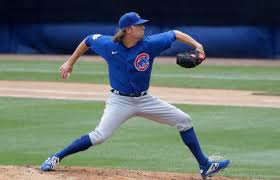


THE HITTERS (Highest to Lowest Batting Average)
Jason Heyward (.265): A-
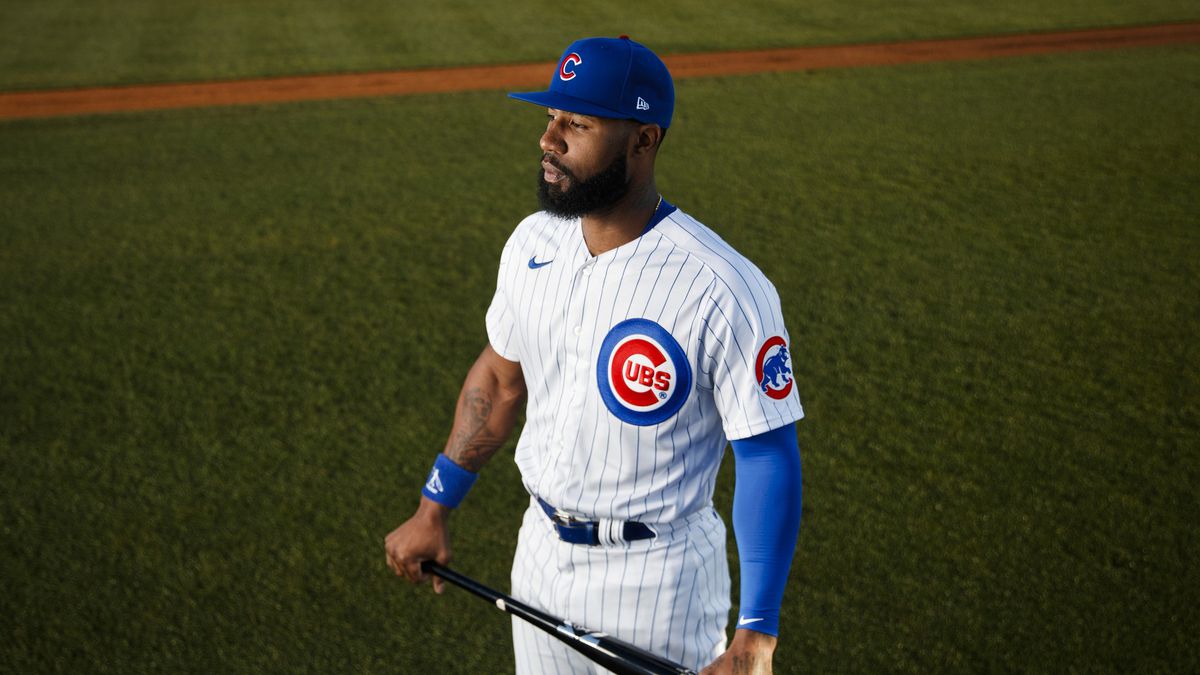
Heyward continued on his path of redeeming himself in the eyes of Cubs fans for his marginal offensive production and arguably gave an All-Star performance. On a team where so many of the offensive threats wilted and faltered, Heyward kept steady and was the team's most consistent hitter. His excellent defense continued and he should earn a Gold Glove (if they are giving them out). Everybody knows that Jason Heyward looked like a very bad deal (World Series-winning inspirational speech aside) for most of 2016 and 2017. In 2018, he showed flashes of the player they paid $184 million to. In 2019, he showed more power, and in 2020, he was absolutely worth whatever chunk of his salary was allocated for it. He was good for second highest OPS on the team, only behind the breakout star of the team this year, someone who certainly would have made the All-Star team.
Ian Happ (.258): A

While a .258 average is hardly impressive, Ian Happ faded a bit down the stretch and fell out of the MVP conversation. He led the team in home runs (12, one more than Rizzo and Schwarber) and established himself as the de facto lead-off hitter. While experiments with Kris Bryant and Anthony Rizzo were amusing, Happ quickly became the obvious choice. For a minute there, before the reality would sink in that they were all having terrible years, the 1-6 lineup of Happ-Bryant-Rizzo-Baez-Schwarber-Contreras looked like the most devastating in the MLB. He was 2nd on the team in RBI, with 29. We should extend that over a 162 game season for context. There are 162 games in a season, and there were 60 games this season, so statistics should be multiplied by 2,7. That is 32 home runs and 76 RBI, and is pretty good for a lead-off hitter. Simply put, Happ met and exceeded all expectations in 2020 and should start 2021 leading off.
Wilson Contreras (,243): B

Wilson Contreras epitomized the 2020 season at the end of Game 2, when he was hit by a pitch, then called for leaning into it. The at-bat continued to his chagrin, and he chirped at the Marlins pitcher, and he chirped back. After a couple of pitches, he was hit again, without leaning into it. He didn't score, we didn't come back, and the season ended. But the emotion remains. Now, catchers do not need to be offensive weapons. It is merely a plus factor. So when we say that Wilson Contreras had a bad season, we say that with heightened expectations. He did in fact make the All-Star team the last two years and while it was a down season, people say he improved his pitch framing, and again 2020 is such a weird season, and everyone else around him played so poorly, I'm tempted to give him a B+. I do not think the Cubs have a problem at catcher. Because they have an all-star catcher, a good backup catcher, and another one coming up in the minor leagues. Contreras led the league in HBP, which Rizzo usually does. Like having the two slowest pitchers in baseball, having the top two players in this category is what makes this team so great.
Victor Caratini (.241): B

Caratini is still a good backup catcher at .241. I believe he caught the no-hitter by Alec Mills so he gets a boost for that. He did not look as good as he did in 2019. Again, like Contreras above him, you can chalk it up to 2020 weirdness. And also, with the added DH role, Caratini and Contreras would flip on these two positions. Sometimes other players would get slotted in for a 1/2 day off. But basically Caratini got significant playing time in 2020, and while it wasn't that great, he was okay, and it is no small feat to catch a no-hitter either. He does what a catcher is supposed to do and he does it very well. Some people hate on him, because yes, generally, he does not inspire great confidence at the plate, but that is all past perception, he was solid in 2019. He also catches for Yu Darvish. I think you need to keep Victor Caratini for that reason alone.
Jason Kipnis (.237): B-

The Northbrook native and former World Series foe came back to his hometown to make good and it turned out well enough. Will he be back next season? Frankly I would hope so. In terms of the terrible offense on this team, Kipnis was one of the few players who looked more consistent at times when the rest of the team was dumbstruck by every pitcher, not unlike Contreras. For a while, Kipnis was my second favorite player on the team behind Jeffress. I think he started off the season very hot, and by its end, he was an equivalent player to last season. Really any conversation about Jason Kipnis implicates Nico Hoerner. Hoerner did not show that he should be the everyday starting 2nd baseman. And Kipnis did not get his true career sendoff. He returned to Progressive Field and he hit a home run there and the people in Cleveland cared, but they couldn't come to the game, nor could they at home. There is no indication that Jason Kipnis, like Javy Baez, feeds off the energy of the crowd, but it is certainly the cruel joke of 2020 that players such as him will be denied the send-off they deserve. He'll be 34 at the start of the 2021 season. He is too young to retire and he may be a better option that Daniel Descalso, if Descalso is to return.
Anthony Rizzo (.222): C-

It is always easy to find good pics of Rizzo, but it is hard to pick the best. Here, he is pictured giving hand sanitizer to noted Cubs-killer Orlando Arcia. Rizzo had his worst year since 2013, his first full season as a Cub. If you multiple his home run total by 2.7, it's 29.7, which is just as it should be, as Rizzo averages about 30 home runs per season. So his power was not severely compromised. 24 RBI, however, 65 RBI projected, is his worst by a long-shot (even in 2013 he had 80). His on base percentage was basically a career-worst as well. I would always feel confident with Rizzo at the plate and 2 strikes on him, because he chokes up and just aims to make contact at that point, and usually with surprisingly good results. I did not feel that way this year. I still felt reasonably confident with him at the plate, but less so (still more so than Kris Bryant). I listened to a podcast that discussed whether Rizzo should have a "C" on his uniform, and one on the panel said he doesn't deserve that at all, and it seemed like they were just saying that to be controversial. Rizzo is the captain of this team, and for all intents and purposes, he is the closest thing the team has had to Ernie Banks (one could argue that Sammy Sosa is, in fact, the better comp, but we also must look at their relationship to the organization). I have always said, do not trade Kris Bryant, do not break up Bryzzo, and felt most people agreed with me. After 2020, I am not sure that will still be the case. But you know, chalk it up to 2020 weirdness, because Rizzo has been more consistent than any other player on the team this decade, and can be expected to bounce back in 2021.
Nico Hoerner: (.222): C+

Again, we will say that Nico Hoerner had an unfair rookie season. You can't call this a full rookie season. He would not be in the conversation for Rookie of the Year with this performance. Generally, Jason Kipnis inspired greater confidence than Hoerner. They were platooned (Hoerner against lefties, Kipnis against righties) and I was going to guess the Cubs did much better against lefties than righties, but that's not true, (.196 against righties, .229 against lefties). Hoerner looked much better in 2019 than 2020, and he is still a very young player, so I expect him to make some adjustments and would not downgrade his 2021 outlook.
Kris Bryant (.206): D

Javier Baez (.203): D+

Like Anthony Rizzo, Javier Baez returned to his rookie form. At moments, it seemed as if Javy might break out of his slump, stringing together a couple home runs, having a multi-hit game, only to slip back into another slump shortly thereafter. This was a trend across the team. He gets boosted towards a D+ (maybe even deserves a C-) because the rest of his game did not suffer. He continued to run aggressively on the basepaths with generally favorable results, and his defense remained stellar. But something happened to Javy this year, and I think many correctly noted that, he plays to the crowd. When the crowd chants his name, he tends to come up big. Without the crowd, he rarely came up big. Like Wilson Contreras, he was coming off back-to-back all-star seasons. This was a step back for Javy. In the early years of his career, he had a serious problem with striking out. He kept swinging at tons of pitches as he came into his own as a superstar, but he put the ball in play more often than not, and he was one of the most dangerous 2-strike hitters in the game. In 2020, he stopped making contact, and he swung at things way out of the strike zone. So maybe he will need to adjust his approach at the plate during this off-season. But his previous success was not a fluke, and this is also a 2020 thing.
David Bote (.200): C+

Your 2020 Cubs RBI leader is David Bote, who only appeared in 45 games. He had one more than Ian Happ, who played in 57 games at an all-star level. Bote did this while batting .200. The simple explanation is that David Bote is clutch. He is the greatest clutch hitter on the team. He is the guy you should always be bringing in as a pinch hitter. He's a valuable utility player on a team-friendly contract. I am having a hard time acknowledging that any of the players are a problem on this team. I do not know how he led this team in this category. It's very 2020. Still admirable.
Kyle Schwarber (.188): D+

I was going to give Schwarber a D, but he did make some decent plays in left field (he made a a couple bad plays too, but the good outweighed the bad) and he tied Anthony Rizzo with 2nd most home runs, and tied Rizzo and Baez with 3rd most RBI. So he produced and proved himself in the field. Unfortunately I would have to guess that Schwarber's future is more uncertain than the majority of "core" guys on this roster. And that shouldn't be the case, given all he has done for the franchise (undoubtedly brought enormous energy to the 2016 World Series) and the power potential he brings to the plate. He hit 38 home runs last year. Projected out, his 2020 season looks a lot like his 2017 season. And though he wasn't much better in 2018, he did bounce back, and like everyone else in this write-up, I expect him to be better next year.
OVERALL OUTLOOK FOR 2021
I could write about Albert Almora or Steven Souza Jr. or Cameron Maybin but this post is now nearly unreadable due to its length. I will only add that people see Billy Hamilton as a one-off rental, and I wish they didn't. I wish they kept Billy Hamilton on this team. They need someone like him.
The Cubs, Cardinals, Reds and Brewers all made the playoffs this year, and each was dispatched in the cruel first round. This is the Cubs biggest problem. There are too many good teams around them that they need to play more than any other teams. But the Cardinals, Reds and Brewers have that same problem. None of these teams are going away. Even when the Brewers looked like a total failure of a team, a 2020 casualty due to the Covid-related departure of Lorenzo Cain and the collapse of Christian Yelich, they somehow made it. The Cardinals missed an absurd number of games due to Covid-postponements, and still they came back to bedevil the Cubs. None of these teams are going anywhere (though the Brewers appear weakest going forward).
Many people will speak about 2021 as a sort of "last dance" for this team, but that is not accurate. There is no Jordan on this team that is on the verge of retirement at the top of his game. Jon Lester is not Michael Jordan, but he will be remembered, along with Kris Bryant and Anthony Rizzo and Javier Baez and Wilson Contreras and Kyle Schwarber and and Kyle Hendricks, for accomplishing the impossible with this franchise. This is a team built on a now-outmoded school of baseball thought that will soon evolve, yet can still be retained for an authentic full season (assuming some fans will be allowed into stadiums). This team won the NL Central Division. If they can fix their offensive issues, there is no reason they cannot compete with the best teams in baseball. We should forgive them for 2020, celebrate Manager David's success, and remember that, in more than a few moments this year, they looked a lot like the 2016 team.


