Tuesday, October 20, 2020

Chicago Cubs 2020 Post-Mortem


Friday, October 2, marked the end of the Chicago Cubs 2020 campaign, They were eliminated from the playoffs by the Florida Marlins, swept in two games. Many now believe there is a Bartman Curse associated with the Marlins in the postseason. And while I was reminded of that, I was more reminded of their terrible playoff performances in 2007 and 2008, when they were swept in the first round of both playoffs. But really, they had some offense in those games (I remember Mark Derosa did not hit the only home run in the 2008 playoffs, as Ian Happ did this year). There was basically zero offense in these games. The pitchers did the best they could, and they did pretty well. It was an unfair ending to the season, which they started by going 13-3, tying a franchise best. Nobody can call this a normal season, but they consistently (if precariously) held onto first place the whole way and won the division. 

So they were more successful than the 2019 team. But I think more people would say the 2018 team was better. That team was cruelly dispatched in a game 163/one game Wild Card playoff. (Their offense also died those days.) The 2017 team made it to the NLCS, though they performed poorly. The 2016 team won the World Series. The 2015 team made it to the NLCS. It has been an incredible 5-year-run for the team, by any measure. And that they could make it as far as they did with a team wide .220 batting average is even more remarkable. Remarkably sad, that is. This team was terrible, just terrible offensively. 

In spite of that, I am willing to forgive them, because this is such an unusual season, and because I do not think they should be judged as harshly, and because I do not want them to break up the core. They should tip their cap to the Marlins, who overcame incredible adversity (and horrible teams for years) to land where they did. And now, the Marlins have to get added to the list of greatest rivals (with the Mets, Cardinals, Brewers, Dodgers, White Sox, and perhaps the Reds). The season should be taken with a grain of salt and an *. It was an experimental season for the MLB. The universal DH will go into effect, the playoffs will be permanently expanded (but I really do not like opening with a 3 game series for a divsion winner--shouldn't they get a bye week?). The Cubs need to keep Lester, they don't need to offer Kris Bryant a long term deal but this is a good time to get him cheap, as with Javier Baez. Both of them had terrible seasons. They both had limiting circumstances. Javy did not have the crowd chanting behind him. He is a performative player, the fans energize him and add a second level to his game. His defense was excellent as ever, but his hitting was atrocious, though probably not much better than in 2014 or 2015 or the beginning of 2016, and yes, I cannot believe Javy Baez had his 6 year anniversary as a player this season. He is 27 and should be entering his prime, he should get better, his best days should not be behind him, but this season's performance gives one pause. As with Kris Bryant. So with both of them, it is a hard decision to lock them up, trade them, or let them play out another year. 2020 is such a lost year for so many people, it's a shame that we couldn't just start 2021 with the same contract terms that were in place in 2020, even though everyone is a year older, and some of them, like Justin Verlander, got injured. But no--we need to judge on the basis of the season, and as such the players (and manager) should be examined individually. 

THE MANAGER
David Ross: A- 

David Ross did a great job as a manager. I only disagreed with three things he did all year. One of them was putting in Josh Phegley to pinch hit for Jason Kipnis in a 9th inning situation against Josh Hader, ostensibly to play the splits (or to play Josh-on-Josh juju). Phegley was hitting .000 (he ended the season at .063; only Jose Martinez was worse at .000 in 22 at bats). He struck out. The Cubs lost. Alec Mills had started that game. He started off the season hot, he was a solid #4 behind Lester, Darvish and Hendricks. Then he sort of got beat by Christian Yelich. Not a great game, but later he threw a no-hitter. Not a great move by Manager David in this game against the Brewers though. And then there were two things in the playoffs. In Game 1, he took Hendricks out after he surrendered a home run, and then he brought in Jeremy Jeffress, pitching without the lead. Jeffress was perfect this season, basically, but not when behind, and he gave up another run and that made the game seem even more out of reach. And then, in Game 2, he intentionally walked a guy to get to another batter, which moved another runner up, and then the next guy got a hit, and that also made the game more out of reach. Not great individual choices but others will disagree and defend him. And I do give him an A-. He was the perfect manager for this team. It's wonderful that he's managing so many of his 2016 teammates. He just needs to get them to hit! They could have gone deeper into the postseason and he could have gotten NL Manager of the Year if they did. 

THE PITCHERS
Yu Darvish: A+ 

Yu Darvish will probably not win the Cy Young, nor get a significant number of votes, but he was one of the best pitchers in all of baseball (a lot of starting pitchers had really good years). The Cubs gave him a 6 year, $120 million contract. He earned every penny of his pro-rated $20 million this year. And he did last year as well. The year before that, not so much. If he pitches two or three more years at this level, and the Cubs somehow win another World Series, he may bypass Jon Lester as the greatest free agent signing in Cubs history. 

 Jon Lester: B

Jon Lester did not open up the 2020 season as the Ace of this staff for the first time as a Cub. Kyle Hendricks made sense as the Ace, and Yu Darvish made sense as the #2 (in 2021, they may flip-flop those positions; and yes in 2018 and 2019, Hendricks was the de facto Ace, just not the opening day starter). Jon Lester made sense as the #3. Alec Mills and Tyler Chatwood filled out the rotation as Jose Quintana recovered from his dishwashing injury. And in the first 2-3 weeks of the season, they had an All-Star rotation (though there were no All-Stars this year). Shorty thereafter, Lester came back to earth as the 36-year-old he is, and ended the season as one of his worst statistically in many years (yet if only 2 bad starts against the White Sox had not happened, it would have been a very good year for him--and that is the 2020 problem). The word for Lester was "inconsistent." I don't doubt that, in a 162-game season, Lester would have "evened out" and had a better year overall. As such, there were extreme highs and lows. He has 193 wins in his career. He has suggested that he would like to be back in 2021, that he would like to earn his 200th victory as a Cub, preferably in front of the crowd at Wrigley Field. And the front office has indicated that they would like to make that happen. Lester is the greatest free agent signing in Cubs history, and a likely future Hall of Famer, and he deserves a proper sendoff to end a storied career. Lester has a $25 million option for 2021, and the rumor is that the Cubs will buy him out of that contract for $10 million, and then offer a smaller one-year contract for 2021. I'm not sure how much you pay him but I can't see going that much lower than $10 million. But what do I know. 

Kyle Hendricks: A

My favorite Cubs players have changed each year.
2015: Jake Arrieta
2016: Kyle Hendricks
2017: Kris Bryant/Anthony Rizzo
2018: Javier Baez
2019: Nicholas Castellanos
2020: Jeremy Jeffress

Up to now, I have only had an Arrieta jersey. After wearing it for this many years, while Jake has not been on the team since 2017, I have realized it is no longer good luck and I am retiring it. I wanted to get a Hendricks jersey, and then a Baez one, and then a Castellanos one. Hendricks would have been the best bet. He has been the most consistent player on the Cubs roster over the past five seasons. His numbers did not look quite as good in 2018 and 2019 (he missed a few games in 2017) but that was due to lack of offensive support from the team (in the 21st century, wins for starting pitchers has become a less reliable metric than quality starts). This happened again in 2020. What is truly shocking is that he has not once been named to the All-Star team. Hendricks has been a rock and borderline superstar for the Cubs. He probably will not be a Hall of Famer, though he may have another 10 years in the tank. Comparisons to Greg Maddux are not inapposite. The difference is that he will not jump ship on the team as Maddux did to have a better chance to win with the Braves. If he leaves, it will be as part of a fire-sale, or as a free agent approaching his mid-30's. Regardless of his win-loss record on paper, teams no longer underestimate Hendricks (as they might have in say, 2016). They see him as an All-Star, and everyone knows it, and while it's only a token accolade, I would bet on him making that team in 2021. It's just ridiculous he hasn't. That said he gave up a lot of home runs this year, for him.

Alec Mills: A- 

Earlier I mentioned that Alec Mills got beat in Milwaukee by the Brewers in that game with a managerial miscue. But he came back to Milwaukee later in the season to throw a no-hitter against them. If you throw a no-hitter, you automatically go into Cubs lore, with Milt Pappas, Carlos Zambrano (who also memorably threw a no-hitter in Milwaukee, in a game against Houston where the Cubs were the home team), and Jake Arrieta (when you throw your 2nd, you are legendary). Many people have thrown no-hitters and gone on to have middling or mediocre careers, and the no-hitter will always be the pinnacle for the pitcher. At least Mills will have that. Mills was far from perfect in his other performances, though he started off the first two weeks as admirably as anyone. The only person that throws slower than Kyle Hendricks is Alec Mills. Alec Mills is basically Kyle Hendricks, Jr. Though he is only two years younger. He had been more good than bad in his Cubs career, and despite giving up 13 home runs and walking 19 batters in 11 starts, 2020 is his breakout year. He's basically a lock for the 2021 rotation and should cement himself as the third starter (4th if the Cubs surprise everyone and bring in a bigger name in 2021). At the very least, he has proven himself to be one of the greatest values on the team, eclipsing Jose Quintana and Tyler Chatwood despite far lower pay. He probably deserves a B or B+ for his performance but throwing a no-hitter boosts your grade and enhances expectations and potential.

Tyler Chatwood: C+

We all know Tyler Chatwood was a train-wreck in 2018, and that he bounced back to good form in 2019 as a relief pitcher and spot-starter. To start 2020, he was back in the rotation due to Quintana's IL stint, and he performed as admirably as the other starters. Each of the five starters began the season with all-star performances. However, Chatwood lost consistency and fell back into some of his old routines, and finished the 2020 campaign with only five starts, due to a season-ending injury. Walks were again problematic, though he continued to show that his control has slightly improved. His contract is up and I have no idea what will happen to him. People will still say that Chatwood has nasty stuff, as he showed arguably more flashes of it in this season than any other with the Cubs (see 12.1 K/9). For that reason, they may consider bringing him back on a short-term deal. I do not think he will be paid $13 million per year again, by the Cubs or any other team. At least he has gotten paid; one could not call him an unsuccessful major league pitcher. It would be magnanimous and not inappropriate if the Cubs give him one more chance, because 2020 wasn't fair to the majority of players on this team, including him. 

Jose Quintana: ???


Jose Quintana's 2020 season will mostly be remembered for how how it started on the IL due to cutting his thumb in a dishwashing accident. It is unfortunate that he only pitched in four games this season. He started 1 game, he pitched 10 innings total, and he struck out 12, with a 4.50 era. The sample size is too small to fairly evaluate him with a letter grade. Quintana was often criticized by David Kaplan as a "Buick" and while I always thought that was unfair, as he was one of the most reliable starters on this team since coming over in 2017, I do not see how he will come back next year, as his contract is up. Perhaps there could be a short term deal, but the sad thing for Quintana is, Cubs fans will not look back on him as fondly as Sox fans. He did not live up to his potential on this team. At certain times, briefly, he was the best pitcher on the team (see early 2019), and it looked as though he might live up to it. Because I am crazy and hate losing players with pseudo-dramatic careers, and hate betting against "underperformers," I hope they give him a short-term chance like Tyler Chatwood, perhaps as two long-relievers/spot-starters/5th starters. But the Cubs may move in a different direction due to emergence of a younger, flashier pitcher...

Adbert Alzolay: B+

Alzolay came flying out of the gates in 2019, working very quickly between pitches and dazzling everyone with this stuff, for two games. Then hitters figured him out, or he had control issues, and at the end of the season he seemed like afterthought, not a viable member of the 2020 rotation. He ends 2020 as a viable (and likely) member of the 2021 rotation. His stuff looked even better (though it seemed like he didn't work as quickly), and he struck out a ton of guys, though he also walked his fair share and could work on his control. He only gave up one home run. I could potentially give him an A-, but again the sample size is small (as with Chatwood)  

Jeremy Jeffress: A+

Okay maybe Jeffress only deserves an A, but I'm going to go out on a limb and defend every mistake he made on the grounds that they were due to being misused. That is, Jeffress was perfect, flawless for so long, and only appeared to falter when he was brought into situations that did not call for his services. Sometimes this was due to the ongoing drama of Craig Kimbrel and the role of the closer on the team. Jeffress finished 2020 with 8 saves and effectively took over for Kimbrel, who had 2.  Other times, it was a befuddling decision by manager David (which is partially why his playoff performance appears atrocious). And he was brought into all those situations because he was the best. Nobody is perfect but Jeffress was close. The Cubs got him for $850,000, pro-rated. That is why he gets an A+ because he earned more than every penny. They must re-sign him. Jesse Chavez made $4 million this season (so did Josh Hader, fyi). The Cubs gave $3 million to Andrew Chafin. The Cubs gave $16 million to Craig Kimbrel. I would offer Jeffress at least $3 million, maybe 4, the caveat being my experience lately that relievers are the least consistent players on a season-by-season basis (exceptions being Mariano Rivera). But I believe in Jeffress, as much or more, than any other relief pitcher I have seen on the Cubs in a long time, the role Pedro Strop played on this team for so many years (and it was a shame that Strop did not appear in a game after he was re-signed to a minor league contract, but perhaps it was for the best). I would make a multi-year offer to Jeffress. I don't believe he should be the full time closer, but he should continue to be the closer we need when the closer we thought we deserved fails to inspire confidence...

Craig Kimbrel: C+


To be fair, Kimbrel did have a sick K/9 ratio (16.4), and though I tend to scoff when people refer to him as future Hall of Famer, I see how sick his ERA has been in the past and, that it is still, after everything with the Cubs (6.53 and 5.28), at a 2.19 for his career. And the Cubs will have one more year of Kimbrel and it does not appear they can unload him for anything useful (though stranger things have happened) so they have to make the best of paying him his inflated (though previously justifiable) salary. There will be a place for him on the 2020 team, they will find a way to use him in a beneficial way. He seemed like he might even be a good setup man for Jeffress, and his specialty appeared to become the Hold this year. You brought in Kimbrel when you didn't have the lead. You would bring in Jeffress when you had the lead. Eventually, Kimbrel could be trusted, sort of. It's hard to say whether the closer role is his in 2021 but I would expect it to be anyways.

Rowan Wick/Ryan Tepera/Dan Winkler/Kyle Ryan/Duane Underwood Jr./Jason Adam/Colin Rea/Casey Sadler/Andrew Chafin (low-profile bullpen): B+


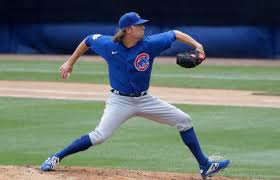


As a whole, the Cubs bullpen began the year on the skids. The team started off 13-3 in spite of them. For the better part of the season, starting pitching carried this team, and the path to victory often included one (Wick) or two (Tepera) of these guys and Jeffress, occasionally Kimbrel. Wick was one of the best relievers last year and he was one of the best relievers this year (though marginally worse, I believe). He had twice as many saves as Craig Kimbrel. He is in line to lead the bullpen again in 2021. (I was concerned that Brad Wieck was no longer on the team, and discovered no, he was merely injured and sat out the season, except for one unfortunate inning--hopefully he will come back strong and boost the bullpen.) Tepera was one of the new pitchers and honestly I can't remember much about him or Dan Winkler or Jason Adam or Colin Rea or the other guys. Andrew Chafin was of course notable for his mustache. Basically, the bullpen was very bad to start the season, and then as the season wore on and [most of] the rotation came back to planet earth, something clicked in the bullpen and they ended the season on a stretch that put them statistically among the best in the MLB. They redeemed themselves. They weren't always great, but they were more good (Wick, Tepera, Winkler, Adam) than average (Ryan, Underwood Jr., Rea, Sadler). Kyle Ryan is a good example of the above-referenced volatility of relief pitchers. It appeared that this season was a step back for him. I would not bet against a resurgence next year.   

THE HITTERS (Highest to Lowest Batting Average)

Jason Heyward (.265): A-
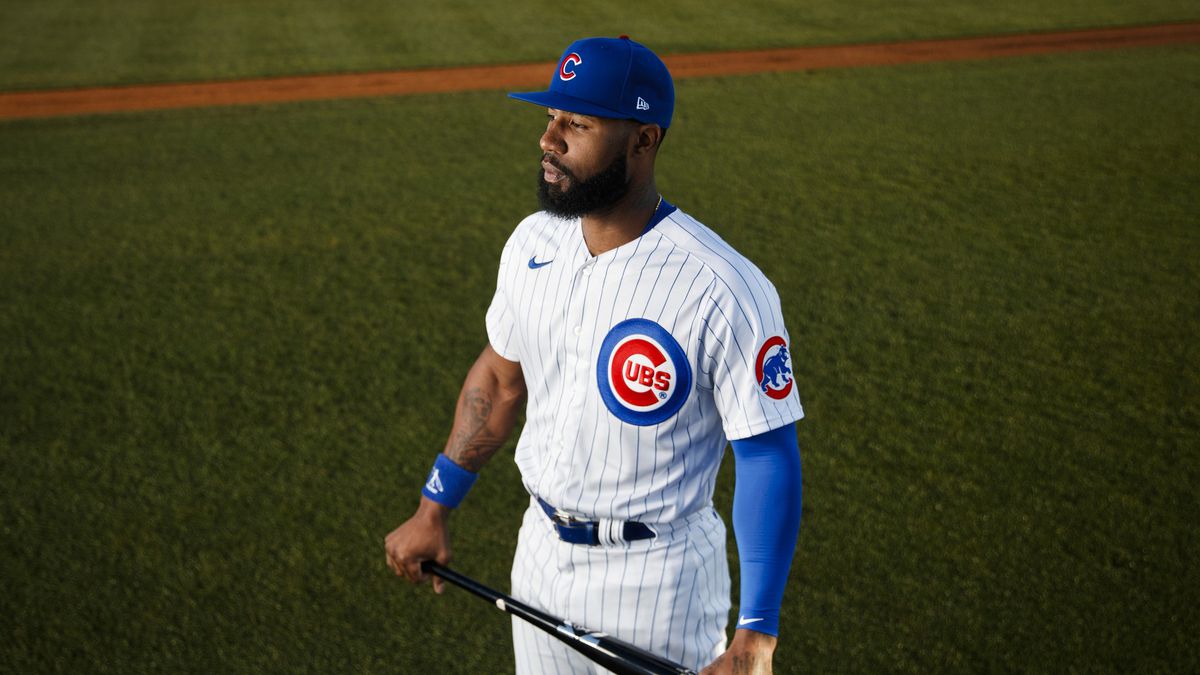
Heyward continued on his path of redeeming himself in the eyes of Cubs fans for his marginal offensive production and arguably gave an All-Star performance. On a team where so many of the offensive threats wilted and faltered, Heyward kept steady and was the team's most consistent hitter. His excellent defense continued and he should earn a Gold Glove (if they are giving them out). Everybody knows that Jason Heyward looked like a very bad deal (World Series-winning inspirational speech aside) for most of 2016 and 2017. In 2018, he showed flashes of the player they paid $184 million to. In 2019, he showed more power, and in 2020, he was absolutely worth whatever chunk of his salary was allocated for it. He was good for second highest OPS on the team, only behind the breakout star of the team this year, someone who certainly would have made the All-Star team. 

Ian Happ (.258): A

While a .258 average is hardly impressive, Ian Happ faded a bit down the stretch and fell out of the MVP conversation. He led the team in home runs (12, one more than Rizzo and Schwarber) and established himself as the de facto lead-off hitter. While experiments with Kris Bryant and Anthony Rizzo were amusing, Happ quickly became the obvious choice. For a minute there, before the reality would sink in that they were all having terrible years, the 1-6 lineup of Happ-Bryant-Rizzo-Baez-Schwarber-Contreras looked like the most devastating in the MLB. He was 2nd on the team in RBI, with 29. We should extend that over a 162 game season for context. There are 162 games in a season, and there were 60 games this season, so statistics should be multiplied by 2,7. That is 32 home runs and 76 RBI, and is pretty good for a lead-off hitter. Simply put, Happ met and exceeded all expectations in 2020 and should start 2021 leading off. 

Wilson Contreras (,243): B

Wilson Contreras epitomized the 2020 season at the end of Game 2, when he was hit by a pitch, then called for leaning into it. The at-bat continued to his chagrin, and he chirped at the Marlins pitcher, and he chirped back. After a couple of pitches, he was hit again, without leaning into it. He didn't score, we didn't come back, and the season ended. But the emotion remains. Now, catchers do not need to be offensive weapons. It is merely a plus factor. So when we say that Wilson Contreras had a bad season, we say that with heightened expectations. He did in fact make the All-Star team the last two years and while it was a down season, people say he improved his pitch framing, and again 2020 is such a weird season, and everyone else around him played so poorly, I'm tempted to give him a B+. I do not think the Cubs have a problem at catcher. Because they have an all-star catcher, a good backup catcher, and another one coming up in the minor leagues. Contreras led the league in HBP, which Rizzo usually does. Like having the two slowest pitchers in baseball, having the top two players in this category is what makes this team so great.

Victor Caratini (.241): B

Caratini is still a good backup catcher at .241. I believe he caught the no-hitter by Alec Mills so he gets a boost for that. He did not look as good as he did in 2019. Again, like Contreras above him, you can chalk it up to 2020 weirdness. And also, with the added DH role, Caratini and Contreras would flip on these two positions. Sometimes other players would get slotted in for a 1/2 day off. But basically Caratini got significant playing time in 2020, and while it wasn't that great, he was okay, and it is no small feat to catch a no-hitter either. He does what a catcher is supposed to do and he does it very well. Some people hate on him, because yes, generally, he does not inspire great confidence at the plate, but that is all past perception, he was solid in 2019. He also catches for Yu Darvish. I think you need to keep Victor Caratini for that reason alone.  

Jason Kipnis (.237): B-

The Northbrook native and former World Series foe came back to his hometown to make good and it turned out well enough. Will he be back next season? Frankly I would hope so. In terms of the terrible offense on this team, Kipnis was one of the few players who looked more consistent at times when the rest of the team was dumbstruck by every pitcher, not unlike Contreras. For a while, Kipnis was my second favorite player on the team behind Jeffress. I think he started off the season very hot, and by its end, he was an equivalent player to last season. Really any conversation about Jason Kipnis implicates Nico Hoerner. Hoerner did not show that he should be the everyday starting 2nd baseman. And Kipnis did not get his true career sendoff. He returned to Progressive Field and he hit a home run there and the people in Cleveland cared, but they couldn't come to the game, nor could they at home. There is no indication that Jason Kipnis, like Javy Baez, feeds off the energy of the crowd, but it is certainly the cruel joke of 2020 that players such as him will be denied the send-off they deserve. He'll be 34 at the start of the 2021 season. He is too young to retire and he may be a better option that Daniel Descalso, if Descalso is to return.

Anthony Rizzo (.222): C-

It is always easy to find good pics of Rizzo, but it is hard to pick the best. Here, he is pictured giving hand sanitizer to noted Cubs-killer Orlando Arcia. Rizzo had his worst year since 2013, his first full season as a Cub. If you multiple his home run total by 2.7, it's 29.7, which is just as it should be, as Rizzo averages about 30 home runs per season. So his power was not severely compromised. 24 RBI, however, 65 RBI projected, is his worst by a long-shot (even in 2013 he had 80). His on base percentage was basically a career-worst as well. I would always feel confident with Rizzo at the plate and 2 strikes on him, because he chokes up and just aims to make contact at that point, and usually with surprisingly good results. I did not feel that way this year. I still felt reasonably confident with him at the plate, but less so (still more so than Kris Bryant). I listened to a podcast that discussed whether Rizzo should have a "C" on his uniform, and one on the panel said he doesn't deserve that at all, and it seemed like they were just saying that to be controversial. Rizzo is the captain of this team, and for all intents and purposes, he is the closest thing the team has had to Ernie Banks (one could argue that Sammy Sosa is, in fact, the better comp, but we also must look at their relationship to the organization). I have always said, do not trade Kris Bryant, do not break up Bryzzo, and felt most people agreed with me. After 2020, I am not sure that will still be the case. But you know, chalk it up to 2020 weirdness, because Rizzo has been more consistent than any other player on the team this decade, and can be expected to bounce back in 2021.

Nico Hoerner: (.222): C+

Again, we will say that Nico Hoerner had an unfair rookie season. You can't call this a full rookie season. He would not be in the conversation for Rookie of the Year with this performance. Generally, Jason Kipnis inspired greater confidence than Hoerner. They were platooned (Hoerner against lefties, Kipnis against righties) and I was going to guess the Cubs did much better against lefties than righties, but that's not true, (.196 against righties, .229 against lefties). Hoerner looked much better in 2019 than 2020, and he is still a very young player, so I expect him to make some adjustments and would not downgrade his 2021 outlook.

Kris Bryant (.206): D

During spring training, Kris Bryant said the team was ready to "strap it on" in 2020. People were still concerned that he was going to be traded during Spring Training. He recently became a father. He didn't have a great season. At the end, when they clinched the playoffs, and was asked about his critics, who pointed out that he was having a terrible season (which he acknowledged), he responded, "I, don't, give, a, shit." That felt very empowering at the time but people may now use that against him, and claim that he lacks passion or doesn't really care about making the Hall of Fame. There were rumors that he rejected Cubs offers in the $200 MM range for a long term contract extension (which does not surprise me given his agent). Fans are very polarized about Kris Bryant, torn between loving him and dismissing him as overrated, and those in the latter camp must be increasing, as this off-season will not likely be much different, there will be trade rumors again. We don't need to recite his stats. They were anemic. He played 34 games out of 60 and was compromised by injuries (the haters will point out that he is always compromised by injuries). But we should not forget that Kris Bryant had an all-star 2019 season. There will be controversy, and again, I will scoff at overtures to trade him. But I would not rule out a trade deadline deal, depending on his individual performance, and that of the team, at the next all-star break. Regardless, this is not the same team without Bryzzo.

Javier Baez (.203): D+

Like Anthony Rizzo, Javier Baez returned to his rookie form. At moments, it seemed as if Javy might break out of his slump, stringing together a couple home runs, having a multi-hit game, only to slip back into another slump shortly thereafter. This was a trend across the team. He gets boosted towards a D+ (maybe even deserves a C-) because the rest of his game did not suffer. He continued to run aggressively on the basepaths with generally favorable results, and his defense remained stellar. But something happened to Javy this year, and I think many correctly noted that, he plays to the crowd. When the crowd chants his name, he tends to come up big. Without the crowd, he rarely came up big. Like Wilson Contreras, he was coming off back-to-back all-star seasons. This was a step back for Javy. In the early years of his career, he had a serious problem with striking out. He kept swinging at tons of pitches as he came into his own as a superstar, but he put the ball in play more often than not, and he was one of the most dangerous 2-strike hitters in the game. In 2020, he stopped making contact, and he swung at things way out of the strike zone. So maybe he will need to adjust his approach at the plate during this off-season. But his previous success was not a fluke, and this is also a 2020 thing.

David Bote (.200): C+

Your 2020 Cubs RBI leader is David Bote, who only appeared in 45 games. He had one more than Ian Happ, who played in 57 games at an all-star level. Bote did this while batting .200. The simple explanation is that David Bote is clutch. He is the greatest clutch hitter on the team. He is the guy you should always be bringing in as a pinch hitter. He's a valuable utility player on a team-friendly contract. I am having a hard time acknowledging that any of the players are a problem on this team. I do not know how he led this team in this category. It's very 2020. Still admirable.

Kyle Schwarber (.188): D+

I was going to give Schwarber a D, but he did make some decent plays in left field (he made a a couple bad plays too, but the good outweighed the bad) and he tied Anthony Rizzo with 2nd most home runs, and tied Rizzo and Baez with 3rd most RBI. So he produced and proved himself in the field. Unfortunately I would have to guess that Schwarber's future is more uncertain than the majority of "core" guys on this roster. And that shouldn't be the case, given all he has done for the franchise (undoubtedly brought enormous energy to the 2016 World Series) and the power potential he brings to the plate. He hit 38 home runs last year. Projected out, his 2020 season looks a lot like his 2017 season. And though he wasn't much better in 2018, he did bounce back, and like everyone else in this write-up, I expect him to be better next year. 

OVERALL OUTLOOK FOR 2021

I could write about Albert Almora or Steven Souza Jr. or Cameron Maybin but this post is now nearly unreadable due to its length. I will only add that people see Billy Hamilton as a one-off rental, and I wish they didn't. I wish they kept Billy Hamilton on this team. They need someone like him.  

The Cubs, Cardinals, Reds and Brewers all made the playoffs this year, and each was dispatched in the cruel first round. This is the Cubs biggest problem. There are too many good teams around them that they need to play more than any other teams. But the Cardinals, Reds and Brewers have that same problem. None of these teams are going away. Even when the Brewers looked like a total failure of a team, a 2020 casualty due to the Covid-related departure of Lorenzo Cain and the collapse of Christian Yelich, they somehow made it. The Cardinals missed an absurd number of games due to Covid-postponements, and still they came back to bedevil the Cubs. None of these teams are going anywhere (though the Brewers appear weakest going forward).

Many people will speak about 2021 as a sort of "last dance" for this team, but that is not accurate. There is no Jordan on this team that is on the verge of retirement at the top of his game. Jon Lester is not Michael Jordan, but he will be remembered, along with Kris Bryant and Anthony Rizzo and Javier Baez and Wilson Contreras and Kyle Schwarber and and Kyle Hendricks, for accomplishing the impossible with this franchise. This is a team built on a now-outmoded school of baseball thought that will soon evolve, yet can still be retained for an authentic full season (assuming some fans will be allowed into stadiums). This team won the NL Central Division. If they can fix their offensive issues, there is no reason they cannot compete with the best teams in baseball. We should forgive them for 2020, celebrate Manager David's success, and remember that, in more than a few moments this year, they looked a lot like the 2016 team.


Wednesday, October 7, 2020

Cleanness - Garth Greenwell (2020)

I had no knowledge of Garth Greenwell until I heard about this book on the NY Times Book Review podcast. From the way they discussed Cleanness, he struck me as a next-generation version of Dennis Cooper, and after reading this, I would say that is roughly 66% accurate. The writing style is quite different, and though the subject matter is relatively similar, it is more high-brow than low-brow, almost The Unbearable Lightness of Being, the gay version. I read that book many years ago and perhaps it is too charitable a comparison, yet that is what comes to mind.

There are no names. The narrator has no name and all other characters are only identified by a letter, or their occupation. The setting is Sofia, Bulgaria. If anything, this novel is a love letter to Bulgaria, certainly a country that many people often forget, or don't even know exists. Perhaps that regional element is what brings Kundera to mind, though Czechoslovakia is far from adjacent. Certainly the chapter "Decent People" brings to mind the political unrest that undergirds Kundera's work, a 2013 version of 1968 (so far as I can determine--I have almost no knowledge of such matters personally). So yes, a crass distillation, or equation, would be: Dennis Cooper + Milan Kundera = Garth Greenwell. At least for this volume. 

Each chapter stands on its own as a short story. Individually, they range from very good to great. Collectively, while they certainly complement one another, they do not cohere as in a more traditional novel. The only throughlines are the narrator, the setting of Sofia, and R. And while the narrator's relationship with R. is the emotional center of the novel, roughly half of the novel does not concern R., except as a memory and symbol of heartbreak, the most perfect sort of love the narrator has experienced, and the longing for something as powerful that may never come to pass.

The plot is basic: the narrator is an American writing instructor teaching in Bulgaria, for seven years, perhaps. There are three graphic sex scenes, pornographic with an intellectual undercurrent, and there is the melancholy love affair with R. There are also several scenes with current and former students which are basically innocuous, to varying degrees. The ultimate strength of this book is its honesty. The reader never gets the sense that the narrator is sanitizing his desire. There are romantic elements, certainly, but there is nothing in it that feels false, or phony. The tension between outward respectability and inward depravity is carefully and thoughtfully detailed. There are many praiseworthy elements of the novel; my only critique is that the ending feels anticlimactic, and unsettled--though the final image on the last page is quite moving. 

It is perhaps worth noting how different the first chapter, "Mentor," feels from the rest of the novel. It may turn some readers off, and it almost feels a little unfair that Greenwell is able to get away with breaking so many rules of dialogue:

"There were more people in the restaurant now, and G. lowered his voice as the booths around us filled and the air grew thick with smoke. I was leaning forward to hear him, and it occurred to me that he had brought me here for the added privacy of it, the privacy of the booth and his lowered voice but also the privacy of the language; at any of the brighter cafes on the boulevards we would have heard English but here no one else was speaking it, and we were alone in that way too. I didn't think of B. as special then, not really, he said, speaking of the boy who was also in my class, whom I thought of as G.'s particular friend; we were all equally friends, the four of us, but B. and I had always been in the same classes, in eighth and ninth grade, and then the next year they put us in different sections. It shouldn't have mattered, he said, we were good students, we didn't talk in class or fool around, and we still had our time together as a group. But it did matter, he said, I couldn't stand it. I made them switch me, I said that I hated the other students, I said they were cruel to me. It wasn't true but I made my mother believe it, I made her come to the school to complain, and after a few days they put me where I wanted to be. Everything should have been fine then but it wasn't fine, I knew that it shouldn't have made me so upset, I couldn't understand why it had. But that's not true, he said, shaking his head just slightly, I did understand, at least a little, I knew I felt something I shouldn't feel." (13)

Now that passage isn't that confusing, but later on when G. tells the story of how B. and their other two friends (one of them a girl) rent a cabin for a senior summer trip, and how he and B. were sleeping next to one another, and how when he woke up alone, the other friend told him that B. and the girl had hooked up the night before, and the feelings that brought out, it's tedious at the very least. Grammatically, it does hold together, but it is yet another contemporary novel that finds quotation marks to be a limiting concept and a nuisance. It's not like this is Ulysses; also Kurt Vonnegut would not approve of the heavy semicolon use.

If readers can get past "Mentor," they next need to contend with "Gospodar," which is perhaps the most "hardcore" scene in the novel. After these two, the reader will know how "challenging" the work is, while it smooths down the rougher edges and mostly lightens up the rest of the way. Do you really want an excerpt from "Gospodar?" Do I really want to try to set a new bar for obscenity on Flying Houses? Okay...

"He returned his hand to my head and gripped me firmly again, still not moving, having grown very still; even his cock had softened just slightly, it was large but more giving in my mouth. And then he repeated the word I didn't know but that I thought meant steady and suddenly my mouth was filled with warmth, bright and bitter, his urine, which I took as I had taken everything else, it was a kind of pride in me to take it. Kuchko, he said as I drank, speaking softly and soothingly, addressing me again, mnogo si dobra, you're doing very good, and he said this a second time and a third before he was done." (35-36) 

And that is just from the consensual part of the encounter.

"Decent People" is the protest chapter, and it certainly felt relevant to me in the political moment we are having in this country, and yet I could not fully understand the nature of it. Perhaps this is another failing of the book: it asks too much of the reader. Not all of us are fluent in foreign affairs or post-U.S.S.R. societal restructuring. The emphasis is on the love and unity that flows through the crowd, and the danger that others fear it will foment. While there are a few nice moments, it is mainly about the narrator meeting up with some other academic friends and students, and the whirlwind of the scene around them. Frankly it is more boring than the first two, and yet leaves me wanting more exposition to provide a deeper understanding.

After these, the novel shifts to Part II, Loving R., which is 64 pages long and the highlight of the novel (like the first part of Asymmetry, if less substantial). These three chapters represent the most conventional elements of the novel and are more emotionally affecting than anything else in it. It made me feel lonely and sad, thinking of travels I wanted to take with a friend, as they mostly concern a trip to Bologna and Venice. These chapters exude sweet melancholy, and the twin burdens of loss and past happiness remembered:

"And he did find it [San Marco], finally, by luck mostly, I think, suddenly we turned and it opened out before us, after the cramped alleys the expanse of the square, beyond it the horizon of water. R. turned to me, smiling, and surely it wasn't at that moment that the bells began to ring, it's a trick of memory to stage it that way, but it is how I remember it, the birds flying up, everyone turning to the Campanile, as we did, its top still bright as it caught the last of the sun. Merchants were walking through the crowds, hawking toys for children, spinning tops that burst into LED color as they helicoptered up. All that was new there was evanescent, the toys, the tourists, R. and I; all that was lasting was old, worn dull with looking though I still wondered to look at it, the centuries-old basilica, the bells, the gold lion on its pedestal, the seat that would swallow it; and everywhere else the books I had read, so that look, there, I could almost convince myself of it, Aschenbach stepping from uncertain water to stone." (123-124)

While the final chapter, "An Evening Out," nearly approaches the level of Part II, it is passages like this that elevate the novel into the territory of high-art. Greenwell tempers the discordant and repelling themes of the narrative with the sort of depth of feeling and humanity that prove revelatory to the reader. And yet while this novel has many virtues, it is uneven, it is quite imperfect. And perhaps that is partly intentional, for on the whole I enjoyed the novel very much. But because I write for other readers (though in practice mostly for myself), effusive praise felt untrue, and so I recommend the book with this caveat, knowing that many readers will simply never experience it for discomfort with its subject matter.

Grade: B

Friday, September 11, 2020

Indelicacy - Amina Cain (2020)

On the heels of Dept. of Speculation, here we now have Indelicacy. I predicted, after the fact, that a whole slew of Offill imitators would flood the marketplace, around 2016. At first blush, over the first few pages, I thought this was part of that imagined slew, but it is not. 

There is a big reveal in the acknowledgments of this book that I feel is not inappropriate to mention:

"Short passages from Jean Rhys's Wide Sargasso Sea, Jean Genet's The Maids, and Octavia Butler's Kindred appear here, and I've named my characters after characters in those works, as well as Clarice Lispector's The Apple in the Dark. A passage also appears from Goya: The Witches and the Old Women Album." (159)

Elena Ferrante is not acknowledged perhaps because Cain has not directly lifted from her work in the same manner, but Indelicacy owes a greater debt to Ferrante than Offill. One might make this mistake because it is "minimalist," but it does not go as far as Offill. We do not learn the main character's name until almost the last chapter. But there are other proper names (rather than a letter like G. or B., or their occupation). It is not framed as a series of non-sequiturs, though there are a number of them. The story takes place in some sort of alternate world that is vague and shadowy, and the protagonist occasionally departs from the genteel tone of the novel by saying something (forgive me) indelicate. While attending a reading at a library by an author she likes, he disappoints her, as does another author interviewing him, by conducting an obsequious exchange, taking success for granted:

"When I walked out of the room, I said simply, 'You're both worms,' and they looked at me, not knowing how to respond to a statement like that. 'Of the worst kind. When you open your mouths, you are male worms eating from a toilet.'" (119-120)

Or another nonchalant aside:

"Before I had finished my soup, an older man came and sat near me. He wasn't eating; he appeared to be doing nothing at all. He looked at me, then looked again. Men looking at women like that are truly horrible. Especially when they are so much older, when they are nearly dead themselves." (28)

The plot is very simple and basic. A woman works as a cleaning lady at a museum. She makes friends with her co-worker, Antoinette, and they eventually become best friends. There is real love between them. The woman soon meets a man. Here is the story of how they met:

"It's strange my husband noticed me, but he came to the museum to see paintings of Caravaggio and then of Goya, and the third time I was mopping the floor of the coatroom when he came for his jacket and umbrella. We stood together near the coats for some time, talking, and then he walked me home.
'Aren't you embarrassed?' I asked, and he said he was never embarrassed by anything.
We were married at the start of the summer and hardly anyone attended--a few of his friends, a cousin from Brazil. No one I knew was there." (33)

The novel almost never identifies any specific people or places, except Brazil and Jamaica and the painters referenced here. 

After getting married, the woman is able to quit her job at the museum, and focus full-time on her writing. She wants to be a writer. There are many ruminations on writing here. She doesn't know what to write about, except descriptions of paintings she admires. She becomes estranged from Antoinette after marriage, as she quits her job at the museum, and laments the loss. She develops an appreciation for dance and becomes a near-constant concert-goer. She takes ballet lessons and she meets Dana, who replaces Antoinette as her closest, dearest friend. There are shades of homo-eroticism in these friendships, and it is more pronounced with Dana. She gets drunk for the first time with Dana, and tells her husband about it, and he asks if she wants to get high with him for the first time, and so they smoke hashish. While there's nothing particularly anachronistic about this, it feels that way, perhaps to comment on the shifting tones of a patriarchal society. The woman is financially dependent on her husband. He is marrying "beneath him." It is almost old-fashioned with a modern sheen.

Eventually, Antoinette and the woman are reunited and resume their friendship. Antoinette has married, and loves her husband Frederick, though they are poor. She gets pregnant shortly after marriage. The woman has been married to her husband for three years. She does not love him, but she does love the life their marriage has made possible. She has never particularly wanted children, and she has never gotten pregnant, despite having sex without contraceptives. The woman and her husband also have a housekeeper, Solange, who becomes the other major figure in the novel. 

While this book did not knock me out quite like Dept. of Speculation, and while I often picked it up with some measure of indifference, the more I think about it, the better it seems. Because it is the fantasy all would-be writers have: to marry someone rich so we don't have to work and can instead devote the rest of our lives to the pursuit of artistic beauty. It is the idea of heaven, to some. And though like heaven, it is a fantasy, unlike heaven it is in fact a reality for some, and there is certainly a dark side to absolute freedom, when it has been bestowed by another. And yet the husband is not a villain, even when he devolves into a rant that is one of the outstanding moments of novel:

"'Women, I know they're attuned to something, they're always tuned in, I guess. I've often felt that women were tuned in to things they have no business being tuned in to. But you can't stop it, can you? Not you. You encourage it, in fact! Don't do that!......I don't even like sex! But I do like comfort. Men told me. Why didn't I listen? And just who are you, anyway? Just what are you attuned to? I've only wanted to live a normal life, and with you that's impossible. Do you know what people say about you? Do you have any idea? They feel sorry for me! And now I know why...You're like an old piece of pie I can't throw away, a very good pie. But I rescued you. You know that! And yet, I'd never seen anyone so alluring. You're always turning away. Turn toward me. Haven't you ever felt yourself carried away? Toward a woman?...Look at me, you are my wife, first and foremost, and I will be loyal to you. Let's go away, I'll take you to Brazil after all. We'll walk up and down the avenues. I'll protect you and keep you close. I gave very dear things to you, many, many jewels. Everything you're wearing right now. You are a proper woman. No, you are not. Clothes can't make a woman proper. Do you know how hard I've tried?...I don't think you realize how hard I work--not once have you come to my office!'
That is where I stopped listening." (150-151)

This novel is a complicated, troubling examination of class and power in friendship and marriage. All of the characters are flawed (Antoinette and Dana, less so). At the same time, it is a deceptively simple story. It is inspirational in a similar way to Dept. of Speculation because it presents a different sort of way of writing a novel. You don't need to pepper your narrative with complex characters and an ingenious plot. You can keep it simple and speak your personal truth. You can simply ask yourself why you write, and you can follow that purpose to its logical end. 

Grade: A-

Tuesday, September 1, 2020

Catch and Kill - Ronan Farrow (2019)


Previously, we had occasion to review She Said in short-form. That is a terrible review, I'm sorry, not one I would put in my portfolio. But I did say I would expand on it, when I got around to Catch and Kill. And I may do this again with Apropos of Nothing, when my library account is no longer suspended. I gave She Said an A-. I thought I had given it a B+. I was going to put Catch and Kill just a notch above it, an A-. I cannot in good conscience give this an A, even though it is an acclaimed work by a Pulitzer Prize-winning journalist. Do not misunderstand--this is a very good book--I just wouldn't put it up there with Dept. of Speculation and The Night of the Gun. This is only because the story is unwieldy. I am sure that a lot of material was cut out, but there is still too much material. It really is an epic read at 414 pages. There is a great style to its structure: 59 one-word chapters. Each chapter settles on an image that tends to represent the entire scene. And looking at them now, I can instantly transport myself to them.

I see Chapter 32 is "Hurricane" and I remember the reference to Hurricane Harvey. 
I see Chapter 17 is "666" and I remember that is the safe deposit box number they almost take to hold the sensitive documents in the story, in case anything happens to Farrow.
I see Chapter 25 is "Pundit" and I remember that is his partner's dog, and how he warms up one of the victims and lightens the mood, and I remember how it was one of the best chapters in the book, even though the name of the dog annoyed me.
I see Chapter 50 is "Playmate" and I remember that is about the Playboy model that carried on a consensual relationship with Trump and the payouts she received. 

Somewhere along the line, it becomes clear that Catch and Kill is not only about Harvey Weinstein. It tends to chart a great deal of reporting Farrow did after his New Yorker story. At another point, he pursues a previously-buried story about an alleged love child of Trump (now in her early 30's and working at a genetics testing company), who had also been paid off in the late months of 2015. Farrow finds her father, who tells her she won't talk. Later on, he goes on Rachel Maddow's show and divulges how NBC tried to kill the story. This is largely about that. And Non-Disclosure Agreements. Sometimes, it almost reads like one, long NDA. They are an ever-present theme. It finally ends with Matt Lauer, who is also a looming character in this book.

And this is ultimately what puts it one "notch" above She Said: it is more of a personal statement. There are even certain moments that seem to break the fourth wall (see page 406; see also page 331, less directly). Perhaps, because there is only one protagonist and one author, there is greater unity and personal depth to the storytelling. 

For stretches, Catch and Kill is truly great. It tends to ride the wave of developments in the story, and some parts read more quickly than others. However, it began to vaguely disappoint me around page 300. I can't explain why. Maybe at that point I was thinking, "Alright, enough already, we get the point." Farrow finds a different way to tell multiple versions of a set fact pattern ending with a non-disclosure agreement. To his credit, he tends to keep it fresh, yet the reader may simply find some of the story about the story being killed at NBC less compelling or tedious. I think that really is the heart of my criticism. Some of the names do not register as characters, and it can be difficult to separate the characters and remember their role in the story.

Noah Oppenheim, for example, leads the "wrecking crew" against the story at NBC. The running gag of the book is that Oppenheim wrote the screenplay for Jackie, which many do not view as a good movie. Farrow's mother in particular, did not enjoy it. But in Catch and Kill, there are heroes, villains and bystanders, and few are exactly as they seem. Perhaps this element keeps it interesting. One is tempted to view every character that gets introduced as "good" or "bad" and it becomes very difficult to keep track of who-is-who on the NBC/Comcast corporate ladder. Farrow really should have included an organizational chart, a la One Hundred Years of Solitude. He does write an incredible coda for Oppenheim:

"'My boss! Okay? I have a boss. I don't run NBC News exclusively,' he said, then seemed to catch himself. 'You know, everyone was involved in this decision. You can speculate what Kim Harris's motives are, you can speculate what Andy's motives are, you can speculate what my motives are. All I can tell you is at the end of the day, they felt like, you know, there was a consensus about the organization's comfort level moving forward.'
He reminded me, twice, that he'd revived my career after my show was canceled. That we'd been friends. He hoped we could get a beer and laugh about it all in a few months. I struggled to understand what he was asking for. Gradually, he let it out. 'I'm just making a plea,' he said. 'If the opportunity ever does present itself to you to say that maybe I'm not the villain in all this, I would be grateful.'
And there it was, at the end of his arguments: an unwillingness not just to take responsibility but to admit that responsibility might, in some place, in someone's hands, exist. It was a consensus about the organization's comfort level moving forward that stopped the reporting. It was a consensus about the organization's comfort level moving forward that bowed to lawyers and threats; that hemmed and hawed and parsed and shrugged; that sat on multiple credible allegations of sexual misconduct and disregarded a recorded admission of guilt. That anodyne phrase, that language of indifference without ownership, upheld so much silence in so many places. It was a consensus about the organization's comfort level moving forward that protected Harvey Weinstein and men like him, that yawned and gaped and enveloped law firms and PR shops and executive suites and industries; that swallowed women whole.
Noah Oppenheim was not the villain." (404-405)

Certainly, a documentary about the subject matter of this book would be explosive, but it would more likely resurface as a feature, and in the movie, Oppenheim would be the bad guy, and Rich McHugh would be the good guy. I think. All of the women are good. Except for Lisa Bloom. Almost everyone at NBC is bad, but there are layers of moral culpability threading the organization, cutting between business interests and journalistic integrity. Perhaps Tom Brokaw, or Meredith Vieira, exemplify the ambiguity of the interests at play. Brokaw--a mentor to Farrow, a titan of the industry and the medium, a friend of Weinstein and still a champion of the story--also got #metoo'd, but that consisted of three complaints, many years ago, that were part of the "permissive atmosphere when it came to harassment by prominent men at the network." (393) Vieira looks the other way on Lauer, until she can't possibly do so any longer (Ann Curry did the same, to a lesser degree, earlier).

I see that a problem in reviewing this book is reciting its revelations without proper attention to detail. To be clear, the reporting is nuanced. The reference to the "recorded admission of guilt" in the above-excerpt, for example, is really just Weinstein saying, "I'm used to this," to Ambra Gutierrez, who was fending him off and wearing a wire. But there is always more to it than that, more context than one sentence can appropriately convey. As such I will not be fact-checking this review but I encourage all readers to flag any incorrect or misleading statements as they see fit, for I would not want to appear slanted on such sensitive issues. (Yet I did also read the NY Times review recently, and saw how deftly it was summarized, and wanted to do better. We did hit on a few of the same points, if that means anything.)

Along the way, the famous figures appear: Rose McGowan, Ashley Judd, Anabella Sciorra, Mira Sorvino, Rosanna Arquette, Asia Argento, Claire Forlani, Daryl Hannah Meryl Streep (who is unimpeachable...because she's Meryl Streep) and Susan Sarandon ("Oh, Ronan...you're gonna be in trouble.")

And then there are all of the non-famous people: Ambra Gutierrez, Zelda Perkins, Emily Nestor, Ally Canosa, Jennifer Laird, Sophie Dix, Abby Ex, Emma de Caunes, Lauren O'Connor, Lucia Evans, Karen McDougal ("Playmate"), Mimi Haleyi, Melissa Lonner, and Brooke Nevils. They didn't want their names to be known, for fear of reprisal (from Weinstein, from Trump, from Lauer/NBC), for they do not have the safety of their own independent brand to sustain them. They open themselves up to attack, and their courage in coming forward makes them the true, unsung heroes of the story. 

Gwyneth Paltrow does not appear. Neither does Christine Blasey-Ford. Certainly, they are two of the most compelling characters in She Said. Paltrow is irrelevant to the story (Donna Gigliotti, a producer on Shakespeare in Love, fulfills her function to a degree). Perhaps references to her ambivalent relationship with Weinstein--how she denounces him, while conceding that she owes her success to him--are unnecessary. And she played no role in his story, just as he played no role in Christine Blasey-Ford's story. Yet their presence in She Said lend gravitas to that narrative in the same way that Farrow's own history and personality elevate this one.

Black Cube, the shadowy private-intelligence firm hired by Weinstein to investigate Farrow's sources, and Farrow himself, is also dissected in an amusing subplot, with the two men, Ostrovskiy and Khaykin, assigned to his case. They serve as comic relief, while the question of their moral ambiguity hangs in the balance. They are sinister, and yet they are not. 

Despite the dangers he faces and the paranoia that takes a mental toll, Farrow lives a rather fabulous life, and one may become almost envious of the difficult situation in which he finds himself. For example, he is forced to stay with his friend Sophie, the daughter of a wealthy executive, in her "safe house": "a section of a building in Chelsea where Sophie's family owned several floors. It was a space to comfortably house everyone you've ever met. The rooms were proportioned like airplane hangars--imposing and beautiful and full of ornate couches you'd be afraid to sit on and objets d'art you'd be afraid to touch." (257-258) If only we could all have such a friend and place to stay in dangerous times, life might seem better. Farrow does receive vague death threats on Instagram, and though his life may actually be in danger, the situation does seem rather exciting and fun. Some might not want to trade places with him, yet he really seemed to be living out his own adventure-thriller movie plot, and one must admit it would be a good part to get to play. Farrow was brave, make no mistake, but he was also lucky to have the opportunity.

He has certainly lived a storied life, and while at various points others bring up his "conflict of interest," skeptical of the HW story due to his own personal history, his relationship with his sister Dylan is beautifully interwoven into the narrative. Their brief moments together, on the phone or in the past, veer from emotionally devastating to heartwarming:

"I looked at him like he was crazy for a moment and then asked, 'Noah, is this story dead or not?' He looked at the script again. Over his shoulder, I saw the deco architecture of historic Rockefeller Plaza. 
I thought of my sister. Five years earlier, she'd first told the family she wanted to revive her allegation of sexual assault against Woody Allen. We'd stood in the TV room at our home in Connecticut, with stacks of fading VHS tapes.
'I don't see why you can't just move on,' I told her.
'You had that choice!' she said. 'I didn't!'
'We have all spent decades trying to put this thing behind us. I'm just now trying to launch something serious where people focus on the work. And you want to--want to reset the clock completely.'
'This isn't about you,' she said. 'Don't you see that?'
'No, it's about you. You're smart. You're talented, you have so many other things you can do,' I said.
'But I can't. Because it's always there,' she said, and then she was crying.
'You do not need to do this. And you are ruining your life if you do.'
'Fuck you,' she said.
'I support you. But you just--you have to stop.'" (190)

His relationship with his father, Woody Allen, is heartbreaking in another way entirely. This is perhaps best left unexplored in this review, and saved for Apropos of Nothing. Farrow does not play into the rumor that Allen is not actually his biological father, yet they clearly have no relationship, and it does not appear that either wishes to have a relationship:

"Weinstein seemed to want a strategic playbook--for quashing sexual assault allegations, and for dealing with me. 'How did you deal with this?' Weinstein asked at one point.  He wanted to know if Allen would intercede on his behalf. Allen shut down the idea. But he did have knowledge that Weinstein would later put to use. That week, Weinstein's credit card receipts show his purchase of a book of interviews with Allen, written by a die-hard fan of his, documenting all of the arguments Allen and his army of private investigators and publicists had come up with to smear the credibility of my sister, the district attorney, and a judge who had suggested she was telling the truth.
'Jeez, I'm so sorry,' Allen told Weinstein on the call. 'Good luck.'" (255)

Regardless of your feelings on Farrow, if you are at all interested in journalism or the entertainment industry, this should be required reading. And if you do happen to have an odd feeling of underlying contempt for the work he has done, this will dispel any illusions as to his motives. He absolutely makes the best of his opportunity to be heard, if only one is willing to listen.

Grade: A-

Wednesday, August 19, 2020

Dept. of Speculation - Jenny Offill (2014)


In titling this post, I instinctively wrote "2018" as the year of publication. Once again, The New York Times Book Review podcast alerted me to this author, in a discussion of Weather, her newest volume. They had occasion to reference Dept. of Speculation, her previous book, and praised it effusively. I put a hold on it at the library. It took a while to get it, because of the waiting list, and then a 60+ day closure. Then it took me too long to read it (it could be read in a day, or two; it took me a week, or two, or three, or four). 

But this book came out six years ago, in the comparatively innocent days of 2014. And I slept way, way too long on Jenny Offill. Unquestionably, this goes on the Best Books list. The first thing I did after finishing Dept. of Speculation was to place a hold on Weather.

Offill, it must be well-known, writes in a very unique, totally original style. It is prose, but it reads like poetry, and sometimes comedy. Also tragedy. The paragraphs are short, sometimes just a sentence or two. The pages are small. There is a limited third-person narrator. 

The plot concerns a young couple--a wife in her mid-30's, a husband a few years older--that has just had a baby in Brooklyn. The novel covers roughly the first six years of the baby's life. It is hardly at all about the baby, later the little girl, except how she annoys them and how they love her:

"Is she a good baby? People would ask me.
Well, no, I'd say." (30)

Certain details emerge. The Husband plays the piano and writes musical scores for film and television. The Wife is a college professor, not writing a follow-up novel; instead she attempts to ghostwrite a memoir by a man who was almost an astronaut, who wants to tell the story of Voyager 2. At a certain point, their apartment is infested with bedbugs. And then the Husband has an affair. And the Wife goes mad, and struggles to find meaning in her life.

There are no easy, simple, neat answers in this book. Only questions. There is no sense that everything is going to be okay in the end. While there is great darkness and cynicism in this work, there are also moments of inspiration that border on the divine (generally, quotes without context from Rilke, or Kafka, and others):

"What Rilke said: I want to be with those who know secret things or else alone." (148)

"What Kafka said: I write to close my eyes." (156)

"Studies show that 110% of men who leave their wives for other women report that their wives are crazy.

Darwin theorized that there was something left over after sexual attractiveness had served its purpose and compelled us to mate. This he called 'beauty' and thought it might be what drives the human animal to make art." (103) 

There is hardly a wasted word in this book. There must already be many Jenny Offill imitators filling up the slush piles. Please read it if you haven't.

Grade: A

Saturday, August 8, 2020

Maybe You Should Talk to Someone - Lori Gottlieb (2019)


This morning (8/8/20, from approximately 10:30 AM to 11:45 AM) a truck was parked outside my living room window. The truck had been outfitted with an extremely sensitive alarm due to past break-ins. The driver told me as much when I confronted him. He was parked in a tow-zone. Every time a car rushed past closely enough to his, a little beep would ensue, followed by a succession of quick horn bursts. This aggravated me to no end, as I had a headache, and did not get quality sleep last night. The truck driver (owner of a plumbing company) explained he was not going to change his alarm. I asked him if he could move it, not very politely. I thought I heard him say no, and I cursed at him, not exactly under my breath.  Then I saw him pull away. I was just a jerk. I've been wracked with guilt for more than an hour after the incident.

For context, I was trying to read the last 10 pages of Maybe You Should Talk to Someone, the latest selection from the Voracious Violets book club (I have fallen off, badly. Maybe I will resume after Just Mercy, the current selection). To review, previous selections include Educated, A Gentleman in Moscow, and The Line Becomes a River.  Certainly, this is my least favorite thus far.  

I open up with this anecdote for two reasons: (1) my aggravation at the car alarm was certainly related to my aggravation at this book never ending; (2) this type of behavior is problematic and indicative of need for change. No one deserves to be talked at like that. And maybe because of this book, and my own disgust at myself for being "that guy," a person that the plumber will look back on with disdain, maybe I am going to try to be better, and more compassionate. 

This book is too long. That is my primary gripe. It's over 400 pages. It's a bit self-indulgent. There is great vulnerability in it, and while that is always beautiful to regard in actual life, in memoir it can feel cloying and overly precious. To be clear, this book has its moments. Several passages did, in fact, make me cry. I just think it could have been about one hundred pages shorter. At a certain point, the author describes how she gets contracts to write two different books--one about Parenting, and the other about Happiness. Apparently she was given huge advances for these. She writes neither. (Note: this review will have mild spoilers.) Instead she wrote this book about Therapy. And it really feels like that--a book she was commissioned to write, that has to hit a certain quota. 

I don't doubt many people love this book, but I did not have the patience for it. I struggled to read it for more than thirty minutes at a time. It is very hard for me to reject books outright. Previously I was forced to do so, since the Chicago Public Library had a three-week limit, and fines. Now there are no fines. I do not want to be a jerk and keep books unnecessarily long. I have three other books to read, all of which are overdue.  I digress. Must avoid self-indulgence in review.

PLOT: Lori is a therapist that suffers an upheaval in her life. Boyfriend leaves her. She is a single mother, and Boyfriend tells her that he can't live with a kid under his roof for 10 more years (he has a kid of his own that is going off to college, and he wants the freedom of an empty nest). He does this completely out of the blue and leaves shortly thereafter. She is completely devastated. She needs to start going to therapy, and she gets connected with Wendell. 

Now my first complaint with the book are the scenes with Wendell. They just bored me to tears. This would probably be a great book for therapists because there is so much inside baseball (and yes, speaking as a patient, some of it was illuminating, and helped me to better understand what my psychiatrist was trying to do with me). But let's be clear: Lori is a clinical psychologist, not a psychiatrist. Perhaps a psychiatrist would write an even more boring book, discussing drug interactions. There is bravery and courage in this book. Gottlieb (not Robert's daughter) certainly opens up some veins and bleeds. Yet she writes so much about appreciating life and enjoying every minute and being thankful for all of its gifts that I can't help but be annoyed, because everything seems easier for her, somehow.

This is decidedly not the case in the chapter "The Whole Package," where she details her desire to be a mother, while not yet having found the right partner, as she hovers around age 36 and 37. As a single, childless 37-year-old, this book made me even more depressed than I already am, at times. She does opt for artificial insemination, and the discussions of the guys whose sperm she wants made me want to puke because they reminded me of how recessive I am. Must not be self-indulgent. There is one clever aside, that perhaps explains why I feel about this book the way I do:

"Other donors seemed to have good health, intelligence, and similar physical features, but something else would raise a red flag, like the donor who wrote that his favorite color was black, his favorite book Lolita, and his favorite movie A Clockwork Orange. I tried to imagine my child reading this profile one day and looking at me like, 'And you chose this one?' I had the same reaction if the donor couldn't spell or use punctuation correctly." (101)

Now I can certainly get behind the last sentence. But dissing fans of Kubrick and Nabokov, two of their mediums' indisputable masters? That is not going to sit well on Flying Houses. Were I that child, were I so lucky to have a mother so open-minded as to embrace transgressive genius, I would love her all the more. Who is to say that child will grow up to be a difficult freak, an enfant terrible? Such blanket characterizations are ultimately harmful to art and humanity. Perhaps this is just a small joke that I am taking far too seriously. But yes, she is enamored to get the sperm of "young George Clooney" (as is everyone else in that clinic).

Clooney, however, does have a memorable cameo in this book:

"Late that fall, I was out to dinner with a group of people after my baby shower when my mother noticed the real George Clooney sitting at a table nearby. Everyone at our table knew about Kathleen's 'young George Clooney' description, and one by one, my friends and family pointed at my enormous belly, then turned their heads toward the movie star. 
He looked much more grown up than he had as a young actor starring in ER. I, too, felt much more grown up than I'd been as a young executive working at NBC. So much had happened in both of our lives. He was about to win an Oscar. I was about to have my son." (107-108)

Yes though, perhaps I am jealous of her trajectory: working at NBC on ER in Los Angeles, deciding she wants to go to med school, then deciding she would rather get a PhD in clinical psychology. She made tons of mistakes and backtracks, and her story feels empowering and reassuring. Yet it still seems too easy for those less accomplished readers among us.

FURTHER PLOT: the narrative technique employed in the novel is to focus on several of her patients: John (a successful TV-show producer and writer); Julie (terminally-ill 35-year-old, recently married, on the verge of starting a family); Rita (a depressed 69-year-old planning to kill herself on her 70th birthday), and Charlotte (a mid-20's low-grade alcoholic in search of a meaningful relationship). Several other ancillary characters appear as supporting players in these patients' lives: Margo, Gabe, Gracie, Ruby, Rosie (John's family); Myron (Rita's romantic interest); Dude (Charlotte's romantic interest that she meets in the waiting room, a patient of her colleague's, a f***boy). 

Some of these narratives are insufferable, some of them have revelatory moments. One of the biggest questions I have about this book: what show was John working on? It seems like a big hit, yet I have zero idea what it could be--it's definitely not Friends, but it seems adjacent to that.

Ultimately, Rita's story is powerful and beautiful, a true highlight of the book. I can recall exactly the passage that struck a chord:

"Here's what Myron realized: He missed Rita. Deeply. He wanted to tell her things--all the time, every day--the way he had wanted to tell his wife Myrna things throughout their marriage. Rita made him laugh and think, and when photos of his grandchildren popped up on his phone, he wanted to show them to Rita. He didn't want to do any of this with Randie in the same way. He loved Rita's sharp intellect and sharper wit, her creativity, her kindness. How she picked up his favorite cheese if she was at the grocery store. 
He liked Rita's worldliness and wry observations and wise counsel whenever he asked her advice. He adored her throaty laugh and her eyes that were green in the sunlight and brown indoors and her bright red hair and her values. He loved that if they started a conversation on one topic, it would segue into two or three others before it would loop back around or that sometimes they'd get so immersed in their tangents that they'd forget what they were talking about in the first place. Her paintings and sculptures made his heart thrill. He was curious about her, wanted to know more about her kids, her family, her life, her. He wanted her to feel comfortable telling him and wondered why she had been like a cipher, revealing so little of her past. 
Oh, and he thought she was beautiful. Absolutely stunning. But would she please stop wearing T-shirts that looked like rags?" (229-230)

Julie's story is also quite moving, and John's story is shattering, and there is certainly much I can relate to in Charlotte's (except it also annoys me because she's 10+ years younger and lamenting, "I just don't want to wake up five years from now and never have had any kind of relationship...five years from now, a lot of people my age won't be single anymore, and I'll be the girl who hooks up with a guy in the waiting room or her neighbor and then tells the story at a party like it's just another adventure.  Like I don't even care." (333-334)). But Rita's story for me is the true heart and soul of this book. 

So this is a complicated book to process, and I think my feelings of annoyance or aggravation largely stemmed from impatience, the pandemic (how can it not color everything we digest, seeing the world we lived in before?), and the unresolved issues I continue to have after six years of therapy. I cannot wholeheartedly recommend it, but I certainly recommend it for anyone that is struggling with grief or trauma, particularly as it relates to parenting or the looming spectre of death. As long as it took me, I got through it faster than A Gentleman in Moscow (which to be fair is very long). There is so much in it that I can't properly address in this review. Actually I wrote this review in less than two hours. So I'm sorry if it's not my finest work. It's a messy review for a messy book. There is great humanity in the work, and many wonderful "academic" portions. I learned something about myself in the process of reading it, and certainly in finishing it this morning and writing this review. I do believe that it will help many people to have a better understanding of therapy and the changes it can inspire in the way we process the world. Patience and compassion are virtues, too. 

Grade: B