Showing posts with label Ursula Andress. Show all posts

Monday, February 11, 2013

The Bond Project: The End? (Part Two)

I know, I know.  It seems as if we cannot stop the Bond Mania.  I believe this will be the 30th post on Flying Houses dedicated to James Bond.  I am sure there are other sites on the internet that have more Bond memorabilia, but this will be the last one (seriously--The Bond Project is officially over as of this post unless I decide to watch Bonds 1-20 + Never Say Never Again and replicate what my colleague Mr. Maronde has endeavored to provide--and I do not think I have the patience for that).  Also, this is the last day I can publish this post in good faith because Skyfall will be released on DVD and Blu-ray tomorrow.  Happy Valentine's Day.  


A Bond Project Wrap Up: Part Deux
by Jay Maronde

This is it. My last Bond article for a minute (Until Bond #24--JK). It’s probably best this way. Most women don’t want to hear too much about James Bond while at the bar, and thinking about James Bond all day leaves one quite prone to telling women at the bar all about Bond.  But after ranking all the films, it seemed to me that there were still some things left unsaid—ratings to be made, pithy comments I never got to commentate—so here dear readers is a long list of Bond Bests including the best cars, Bond girls, henchmen, and villains.
Let’s start with the cars because some of the choices are a little bit obvious.

TOP 5 Bond Movie Cars

1.       The Silver Birch 1963 Aston Martin DB5
No vehicle has ever been more iconic or more fully aligned in the world’s understanding of a character. The car has been in numerous films and plays a huge role in Skyfall.
2.       The Aston Martin “Vanish”
 
Die Another Day wasn’t that great of a film, and everyone hated this car but I think it’s super awesome for Bond to be driving an invisible car. Aston Actually designed and produced this car strictly for the film and while in real life you cannot purchase an invisible car, you can however purchase a V12 Vanquish and get your 007 dreams on.

3.       The Lotus Espirit S1
 
From The Spy Who Loved Me. I’m not necessarily a large fan of the film or of seeing James Bond outside of an Aston, but a car that turns into a submarine is clearly so James Bond that it hurts.

4.      The BMW 750iL
       
From Tomorrow Never Dies. James Bond has a smart phone that not only starts his luxury car but can also completely control the machine.  Oh and by the way, Bond has this smart phone over a decade before the release of the iPhone.

5.       M’s Jaguar XJ Ultimate Long Wheel Base

“Just get out of the way! Don’t you know the car!?!” M’s car is a standout. A real touring saloon that Bond steals with M inside.  Just imagine being able to power around London in one of Britain’s finest luxury cars with police lights to avoid all the traffic troubles!

Honorable Mention: The BMW R1200 Motorcycle

From Tomorrow Never Dies. As an avid motorcyclist I would like to consider myself somewhat knowledgeable of the various types of motorbikes, and the BMW R1200 had long been a favorite even before Bond put one through all of its courses while handcuffed to Wai-Lin. The R1200-C model inspired by the film was even better.

TOP 5 Bond Henchmen
1.)    Jaws

Always Jaws. He’s the only henchmen to reprise his role. He’s so famous it hurts and Richard Kiel still does appearances for the James Bond franchise.
2.)    Dario

From Licence to Kill and played magically by Oscar winner Benicio Del Toro. I would suggest watching this whole movie just to catch the glimpses of early genius at being so creepy. Truly, if Jaws wasn’t Jaws, Dario would easily be #1.
3.)    Oddjob

 The classic hat throwing monster mute dude might even be more famous than the villain for which his featured film is named (Goldfinger). The actor Harold Sakata paid a high physical toll to film his death scene as he was really electrocuted.
4.)    Nick Nack

Herve Villechaize is remarkable, fun sized, and hilarious. He is the only redeeming factor in what could be one of the worst Bond Films: The Man with the Golden Gun.
5.)    Xenia Onatopp
The only lady to make this list will actually appear in this article twice as what’s really better than a lady henchman who kills via fornication?

Honorable Mention:   The two weirdos from Diamonds are Forever.

Credited as Mr. Wint and Mr. Kidd and played by Bruce Glover and Putter Smith, these two hand-holding murderers are funny as all get out and eliminated in a lovely manner by Bond, but not before the very end of the film.

TOP 5 Bond Villains

#1: Silva


Skyfall’s epic villain is played masterfully by the remarkable Javier Bardem. To be honest, Silva is without a doubt the surprise of Skyfall. A real twisted warped evil villain, so weird and evil on so many levels that he easily tops our #2 on this list.

 #2: Max Zorin

The genetically engineered villain from A View to a Kill, played as only could be done by Academy Award winner Christopher Walken. It’s really hard to top Walken when it comes to the “creepy factor,” and had Bardem been anything less than stupendous, Walken would easily be #1

#3: Auric Goldfinger

“Ha ha ha, no Mr. Bond, I expect you to die.” One of the earliest villains in the canon could easily be the best. Mega rich and super weird, Goldfinger not only operates on numerous continents, but also has a plan to rob Fort Knox.

#4 Telly Savalas

Savalas is easily the best Blofeld amongst the several actors to play the part—creepy, scheming, and definitely trying to ruin the entire world. While Blofeld appears numerous times throughout the James Bond canon, Savalas easily does the best job.

#5: Hugo Drax

Evil, Hitler-esque, and eugenically-minded, this super villain from Moonraker not only intends to destroy the whole world, but plans on repopulating it with his sort of people. Oh yeah, and he steals the space shuttle and builds an international space station several decades before the real ISS.

Honorable Mention: Gustav Graves and Colonel Moon
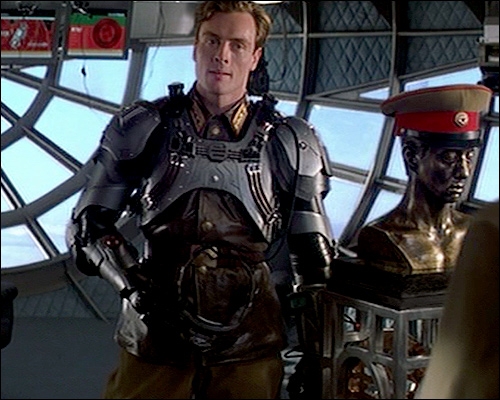

Two villains in one from Die Another Day. Granted, both of these actors are supposed to be playing the same deranged North Korean bent on world domination, but without both of their wonderful performances this already rough movie completely falls on its face.

TOP 10 Bond Girls
        Well, now that we’ve come to the very end and to the part that everyone has been waiting for, I must be honest and admit that ranking these 10 women might have been even harder than ranking the films themselves, as there are soooo many beautiful women in the world of Bond. I’m sure I will upset a lot of people with this list, but IDGAF, this is my article and my opinion.

#1: Agent Caruso

The busty Italian agent that Bond has hidden in his closet at the opening of Live and Let Die. Played magically by the horror film classic Madeline Smith, and reportedly working through being massively anxious due to Roger Moore’s insanely jealous real life wife being on set during filming, Miss Smith is amazing. Her busty physique has provided her with mountains of work throughout the years, but her doe eyes, plush pouty lips, come hither attitude, and bad Italian accent are absolutely perfect to compliment the debonair Moore. Further, Bond should totally be involved with a real life sex symbol, not just a very pretty actress.

#2: Honey Ryder

The original Bond girl herself, played by the super famous Ursula Andress comes in a very close second—such a close second that if I preferred blondes she could easily be first. 

#3: Vesper Lynd

Played by the radiant Eva Greene, Vesper Lynd is the only woman who Bond ever loved. Casino Royale’s main female lead is gorgeous, and I know more than a few women who dream of being her.

#4: The Countessa Tracy  Di Vincenzo 

Played  by one of the biggest stars of the day Dame Diana Rigg, the only woman who Bond ever marries is gorgeous, and while her performance against George Lazenby leaves just a little to be desired, this co-star of On Her Majesty’s Secret Service certainly gets the job done.

#5: Xenia Onatopp

The villainess who literally screws people to death is the only person to appear on multiple lists in this article. This remarkable lady henchman from Goldeneye was a little known actress but major model and sex symbol before this film, and Famke Jannsen has since gone on to remarkable silver screen greatness as the X-(wo)Man Jean Grey and numerous other roles.

#6: Dr. Christmas Jones

Denise Richards being a James Bond girl and then later marrying Charlie Sheen easily serves to prove how much that guy is “winning.” Her role in The World is Not Enough  was almost written for her Playmate of the month self and her name leads to one of the best puns in the canon when at the end of film Bond says: “I thought Christmas only comes once a year”

#7: NSA Agent Jinx

Played by the stunning Halle Berry, to not include Jinx (Bond’s American spy counterpart in Die Another Day) would be utterly remiss. I almost wish I could put her higher but Jinx trying to be the American Bond only serves to highlight how super awesome Bond really is.

#8: Domino

The kept woman from ThunderBall. Miss Claudine Auger was Miss France before attaining this role. Her beauty is still remarkable all these years later and her chemistry with Connery is beyond reproach.

#9: Maud Adams

BUT NOT FROM OCTOPUSSY. It sounds completely crazy but Adams can’t have the award for the movie named after her character. To be honest, she was too old in that film and she only made Roger Moore look older. However, a few years before that, she starred as Scaramonga’s girlfriend in The Man with the Golden Gun, and while I utterly loathe Moore’s treatment of her during the film, her beauty shines through so much that she easily makes this list.

#10: Strawberry Fields

We never learn the real first name of Gemma Arterton’s character in Quantum of Solace until the film’s final credits, but the actress is absolutely perfect as a foil towards Daniel Craig’s Bond. Her death scene is as fine of an homage to the James Bond Canon as has ever been dreamed.

Honorable Mention: Carey Lowell

As CIA pilot Pam Bouvier from Licence to Kill. I just love Carey Lowell. 

Thursday, November 8, 2012

Die Another Day - Dir. Lee Tamahori (The Bond Project #20)


Die Another Day (2002)
Dir: Lee Tamahori

Bond Turns 20
by
Jay Maronde

                For the 20th Eon Productions James Bond film, the producers wanted to go all out and make the Best Ever Bond for this grand anniversary. Die Another Day is a fantastic movie, filled with great action, an epic plot and superb casting, but it is so overfilled with James Bond illusions that it almost falls flat on its face. Let me be clear—I think this movie is great and could easily be the best of the Brosnan’s—but the viewer is constantly left with this impending sense of how great James Bond is supposed to seem that it detracts just slightly from what could have been a very awesome action movie. I could easily write all day about these allusions which in truth are quite fantastic, and the references to every single film in the Bond canon are very fun. However, it makes for an overly long slightly convoluted movie, and would make for a crazy long article here, so I will stick to the big highlights.
                First and foremost, to many this is known as the “Halle Barry” Bond movie. And yes Miss Barry, fresh off her Oscar win from Monster's Ball is definitely featured prominently in the film, and she is wonderful. So wonderful in fact that there was some talk of a Halle Berry Bond spin-off, with her reprising her role as NSA agent Jinx and Bond appearing only briefly for a cameo. Luckily for Bond viewers everywhere the producers thought better of that after the Catwoman debacle. No matter what you have to say about Berry, her role is well-written, and she turns in a superb performance. She’s a gorgeous Bond girl, she’s beautiful, and she’s a much better actress than most of the other Bond girls ever cast before her. Be sure not to miss her fantastic entrance in Cuba which features an epic allusion to Dr. No and Ursula Andress’ extremely memorable entrance.
Another fantastic Bond girl in this film is Madonna, who not only acts as Bond’s fencing coach, but also supplies the title song. First off, this title sequence is the first set of Bond titles in the franchise to actually feature into the movie, as during the titles Bond is being beaten and tortured as a result of his capture in North Korea during the pre-titles scene. Madonna’s song fits the movie perfectly and provides great background for a scene which the producers wanted to somehow play down (as who really wants to watch Bond tortured for 14 months). Also her acting in the movie makes her the first ever to do so. Many people did not like the song as they felt it was too modern, but I think it’s a wonderful piece of electronic dance music and was very popular in night clubs around the time of the film’s release.
                Another highlight of this movie, as it always is, is James Bond’s car, and Aston Martin is once again back with a James Bond car for the history books. The Aston Martin V12 Vanquish as the limited production model is known, was the first car ever made just for James Bond, like before the producers asked for a James Bond car, there was no such thing as the Vanquish. In the movie, Q (or R depending on how you feel about John Cleese) explains to Bond that “Aston Martin calls it the Vanquish, but we call it the Vanish” as he highlights the cars invisibility features. That’s right the car, besides all of its other cool James Bond stuff, is fucking invisible. Many people have complained that this was a completely ridiculous feature of the movie, and the haters can hate all they want, but it definitely makes for a fantastic James Bond car. The car features prominently in the scenes at the Ice Hotel, including a stupendous action sequence where Bond eliminates the diamond-faced henchman Zao (himself a throwback to GoldFinger’s OddJob, but played very well by the actor Rick Yune) after one of the best car chase scenes ever. A little known fact is that both the Aston and the Jaguar used in filming had been completely gutted and replaced underneath with the engines/suspensions/and four-wheel drive transmissions of Ford Expeditions to be able to perform well on the frozen lake.
                This movie features numerous really great action sequences including most at the end of the film, which is really just one crazy action sequence that has a fist fight, a sword fight, and a space laser that destroys a flying jumbo plane, all before James Bond escapes from the plane with no parachute.  All and all, Die Another Day is a great, very entertaining and fun entry into the Canon, but the movie makes the mistake of falling into the trap of the James Bond franchise being so in love with itself that it derails a little bit right as it rolls into the station. The constant allusions to the rest of the series bring back too many memories of silly Roger Moore Bond times, and while it’s a great movie to watch I’ve always felt like it ran long just to fit in all the allusions.


Friday, October 12, 2012

For Your Eyes Only - Dir. John Glen (The Bond Project #12)


For Your Eyes Only (1981)

Dir: John Glen

Atrocious Bond
by
 Jay Maronde
                This movie is atrocious. To be honest, it’s so fucking bad I had trouble viewing it and writing this review. In fact, I watched the next two movies just to psyche myself up for writing this, and I still almost submitted this review containing only the words, “if you don’t have anything nice to say, then don’t say anything at all.” Unlike The Man with The Golden Gun, this movie doesn’t just suffer from a bad plot, it suffers from bad vision—atrocious vision, in fact—and it doesn’t even have a midget to make things go down any easier.
                Let’s start at the very beginning, the very first scene. Bond is visiting his deceased wife at a cemetery. It’s sad, it’s stupid, and it’s only there because the writers/producers were unsure if Roger Moore could be enlisted to reprise his role as Bond and as such needed a scene to possibly introduce a new actor as Bond. Moore eventually capitulated, returning geriatric as ever—meaning that this scene has even less significance and seems even more tasteless. While Bond is at the cemetery, the office calls the priest and tells him to inform Bond that they are sending a chopper for him. Bond hops in the chopper, seemingly off to another highly important mission. Unfortunately, an unnamed, uncredited, bald wheelchair-bound cat-stroking villain shocks the pilot to death, and takes remote control of the helicopter with the intent of killing Bond. Clearly Bond isn’t going to die before the credits, so he pulls some pretty sweet maneuvers and eventually dispatches this villain. This “not-Blofeld” is here because the producers had just finished another extensive round of litigation with our old real life villain, Kevin McClory, and Albert R. Broccoli wanted to symbolize his success of finally being rid of both villains. Sadly this might be the most satisfying moment in the movie, as the rest just drags.
                The title credits feature a forgettable 1980’s anthem by Sheena Easton, which is only of note because Easton appears in the title sequence herself and is the first Bond songstress to do so. The song was actually quite successful and every Bond song since has had a tied in music video as a result of the song’s success. But not even a great song can justify the tripe that is the rest of the film.
                After the titles we are transported to an unknown locale in the Mediterranean where a covert British spy ship is quickly sunk by sea mine. The boat carries a transmitter to control the nuclear missiles on the British fleet of Polaris submarines. Clearly the MI6 needs this item back, so they contract fellow Britons the Havelocks to retrieve said item. The Havelocks are murdered on their research vessel right in front of their daughter Melina, played by the very passionate Carole Bouquet (who coincidentally is named Melina, the Greek word for Honey, in an Homage to Dr. No’s classic Bond Beauty Honey Ryder—another tragedy because Bouquet cannot compare to Ursula Andress). Bond is called in to find and interrogate the murder suspect, who is now relaxing at his villa, waiting to be paid by the villains who ordered the hit. Bond witnesses the payoff, and then is captured. Personally, I would have cut this whole divergence from the film as it really adds nothing but to introduce the silent henchman—then again I would have cut about ¾ of this film, or just made a completely different movie. Melina shoots the assassin with a crossbow, in a scene which I feel only adds to the anemic aged-ness of Roger Moore, as James Bond shouldn’t really need random revenge seeking women to help or save him. Bond and Melina escape, but Bond’s Lotus explodes after two low-level henchmen try to break into it (in a scene which was supposed to symbolize that this new Bond film would rely less heavily on gadgets, which was a huge error in the entire direction of the film because Bond’s super gadgets are a big part of the reason to view any Bond film). In truth the scene just makes Bond’s gear look craptacular, so Bond has to escape by driving the girl’s Citron, which again is shameful for the world’s best secret agent to be driving such a tin can.
                Next Bond travels to Italy, to a winter Olympic compound (added to the film to capitalize on the popularity of the recent winter Olympics in Lake Placid). Here in Italy, Bond again meets up with Melina and has a few assorted adventures dealing with henchmen of all sorts and eventually has a social meeting with the film’s real villain, who is at the time posing as an ally to Bond. The villain here is played actually quite wonderfully by the delightful Julian Glover. Glover’s performance is quality Bond Villain evil, but my major complaint is that he does a much better job playing a nefarious double agent villain almost a decade later in Indiana Jones and The Last Crusade (coincidentally one of his co-stars in that film is former Bond Sean Connery). The whole Italian part of this film also adds nothing to the plot, as even though Bond and MI6 know almost exactly where the nuke transmitter is located (off the coast of Greece) for some reason Bond needs to wander around this ski resort town and have silly-ass adventures. I will note that two of Bond’s escapades in this part of the film contain very commendable women. First off while visiting the ski resort town, Bond dispatches several henchmen, including one whom he throws through the window of a flower shop. While the henchmen and the fight scene aren’t very memorable or classic, the girl in the flower shop is very notable for how she got the role. Robbin Young was actually the winner of Playboy Magazine’s, “Be a Bond Girl Contest,” and besides being rather pretty, launched her modeling career and was featured in a Playboy spread. The other notable woman is The Countess Lisl von Schlaf, played prettily, but again not memorably by the beautiful actress Cassandra Harris. While Harris’ performance isn’t spectacularly wonderful, what she did while off camera is the notable part, as she introduced her current husband (some little known actor fellow, Pierce Brosnan) to Broccoli, and clearly this would have some very long lasting implications for the franchise.
                Eventually Bond decides that actually getting in a mini-sub and recovering the artifact that the whole film revolves around will be a good plan. He goes to Greece, recovers the device, gets roughed up by some henchmen in an underwater battle, loses the device, fights some more henchmen, and eventually recovers and destroys the device. Now this seems like a great end to a Bond film as Bond vanquishes all the villains and does save the day, but again this falls short, as this sequence occupies approximately thirty minutes of the two hour plus film. I’m sorry but had I been alive in 1981 and gone to see this film, where only the last half hour of the movie had anything to do with the plot, I probably would have smashed my face into the wall of the building upset about the other 90 minutes of my life I had sacrificed to this complete drivel.
                I really wanted to write some sort of redeeming conclusion here, but I’ve got nothing for you, dear reader. What I can say, is that if you have a choice of watching any of the Bond films, this one would easily be at the bottom of my list.


Tuesday, September 11, 2012

James Bond 007: Goldfinger - Dir. Guy Hamilton


James Bond 007: Goldfinger (1964)
Bond Goes Blockbuster
by Jay Maronde

The third cinema installment of the 007 franchise takes Bond to a fantastic new level, a level which manages to raise the bar for the films of the franchise in so many new ways that its initial release not only changed the world of Bond, but the whole world’s perception on not only the secret agent film genre but the entire concept of James Bond. That’s right, I said it, Goldfinger redefines not only the world of “Bond” but redefines and elucidates the essence of Bond to the world. Pray tell how one film could do so much?..... Well that’s what this article is about! 
First and Foremost let us start with the “firsts.” Goldfinger is the first film in which Commander Bond steps foot in America. It’s also the first film with a completely tangential opening scene, in which Bond uses a fantastic duck snorkel to perform some unplanned demolition of a drug lab.  Now, obviously after your favorite secret agent blows up a South American cartel headquarters, he’s going to need to get out of town, pretty quickly, and obviously he’ll need to go to Fontainebleau* in Miami Beach for some well-deserved R&R.  Before Bond gets to MIA however, the movies cuts away to its fantastic opening sequence complete with the first Shirley Bassey theme song of the series. Bassey would go on to record several more uber-classic theme songs for the franchise, but “Goldfinger” (the song) was the first, and I’ve had its classic hook stuck in my head for more than a few days now.  While the music plays, the title credits roll and scenes from the film are shown projected on gold painted body parts of a beautiful woman.
 This is where the story really begins after the opening credits: Here we find our AMERICAN friend Felix Leiter, tracking down Bond to give him a new assignment, and as Bond and Leiter meet for the first time, the fantastic misogyny begins to ooze, and the metamorphosis of  Bond’s pop cultural definition as the ultimate ladies’ man begins.  Don’t get me wrong, the first two movies contain numerous references to Bond’s proclivities as a lush, but here in this first Miami scene he quickly dispatches his (second (in the film)) lady friend with a smack on the ass and the comment that he and his friend need to have “man talk.” Now personally I love misogynistic Bond. He’s the man, and he’s acting like it in a way that would make a Barnard girl’s skin crawl.  This attitude/swagger/charisma/skew is what makes Bond EPIC, but it does come with its pitfalls: if Bond is more extreme in his character then certainly much more extreme things must happen. And they do. As such the now long-standing Bond tradition of “Sex for dinner, death for breakfast” begins in earnest. Bond’s first move in Miami Beach (after donning an enviable post swimming baby blue terry-cloth onesie) is to not only steal the main villain’s “girlfriend” but to cause Mr. Auric Goldfinger to lose a $15,000 game of cards. (That’s 1960’s money remember, gold is roughly $30/oz in the film, and current prices are well over $1500/oz, you can do the math if you are stickler type**.) Clearly the Villain is displeased, and Jill Masterson (who bears a striking resemblance to one of my favorite bartenders) has to die. Her death scene is not only one of the most referenced Bond lady deaths, but also has inspired its own “Mythbusters” episode, was highlighted with a huge spread in LIFE magazine, and was even referenced in JB007:#22 Quantum Of Solace by way of Strawberry Fields's death. Sadly for the fictional Masterson parents, Jill’s sister also dies in a 007 exploit later in the film.
Another area of "firsts" comes from Q branch. Having realized the popularity of the Quartermaster Corps and the average film-goers fascination with Bond’s gadgets, the producers chose to include a full scene where Bond travels to the Q-branch offices. Herein Bond gets his now standard tour of the new “tools” in development, and is assigned his new car: The Aston Martin DB5. Bond’s car might be the only thing more famous than himself (possibly because its non-fictional) and in an ironic footnote of history, the Aston Martin Company almost didn’t go for it. I’m certainly sure that now they are quite glad they did as Bond’s Classic DB5 is one of the most recognizable cars in global popular culture, and now as they are currently in production as of BOND23, Bond is once again driving an Aston. Further, the producers licensed an “official” JB:DB5 toy car, which later became the bestselling toy of 1964. All these "firsts" are dwarfed in comparison to the big first: THE MONEY.
The Guinness Book Of World Records lists Goldfinger as the fastest grossing movie EVER. In fact, Goldfinger was produced with a budget of the two other Bond films combined. That three milllion dollars of 1964 money (approx. $22M in 2012) yielded a movie that would become the first blockbuster in the franchise. Goldfinger’s producers’ recouped their money in roughly a week, the movie then went on  to gross over $124 million dollars (again, 1964 money, inflation calculators figure that amount would be roughly equal to $850 million in today dollars) in fact the movie was so popular that some cinemas were compelled to stay open 24 hours a day and continuously show Goldfinger just to keep up with popular demand.     
Shockingly, the box office figures only comprised a fraction of the film franchise's profits in other arenas. The producers also “struck Gold,” as it were, by licensing everything they could think of--from lunch boxes, to menswear, to albums. This remarkable amount of money directly correlates to how Goldfinger changed the game even for Bond. Director Guy Hamilton’s new "Uber-Bond" was such a smashing success that spy movies became so popular that in 1965 came the release of no less than 20 other Spy Genre films. The whole world had gone Bonkers for Bond.
The new James Bond of Goldfinger is amazing, in no small part due to the man playing him. This film was Sean Connery’s third appearance as Bond, and the actor seems to fill out the role like never before. Maybe it was just the standard cultural misogyny of the 1960’s or what have you, (I couldn’t tell you, I’m too young to remember) but Connery seems even more perfect as Bond as soon as the first well-gaffed ass smack comes during the scene in Miami. He then proceeds to evoke even more Bond perfection as the movie goes on. During the course of this film, James Bond not only talks his way out of a laser death machine (and by the way, lasers weren’t even invented yet, making that another Bond First), but winks his way out of jail cell, and literally saves the world with his “Mojo.” In all of these scenarios Sean Connery’s gratuitous personal swag comes across the silver screen as clear as an azure summer afternoon and completely “sells” each scene. Only an actor reprising a role which he has already worked extensively on could possibly exude such confidence of character***. Connery and Bond merge forever into the pop culture collective. Connery was great and he knew it; but this led to some very interesting complications, most of which had to do with money. 
As the movie was being filmed and the popularity was growing, Connery realized he should get more money. As such, and due to an injury he suffered during filming, Connery negotiated a 5% cut from the take of all the Bond Films he would star in. (Again, in case math isn’t your forte: 5% of $850 million, is $42.5 Million.) Connery had redefined Bond and movie stardom as a whole.               
All these fantastic gizmos, and lasers, and Gold would be for naught if Connery had been cast beside losers, or nobodies, or even just plain crap actors, so I personally feel that one of Director Guy Hamilton’s most outstanding contributions to whole world of Bond, was to be able to cast wonderful, memorable, important actors to the other roles. The real standout in history is the casting of Honor Blackman as “Pussy Galore,” Goldfinger’s personal pilot, and boss of her very own “Flying Circus.”  First off let us note that this is another Bond Film "first": the blatant hyper-sexualizing of a female name. This (one of my favorite) Bond traditions, has been “flirted” with many times throughout the course of the rest of the franchise, but I really don’t think anything can come close to “Pussy Galore.” Blackman was already famous from “The Avengers” and this played no small part in her being cast. In fact, part of the script was re-written to highlight her judo skills. Further, Pussy’s role as the leader of an all-female cadre of pilots has served to highlight the middle century views of women’s empowerment, and establish Pussy as a feminist foil to Bond’s rampant misogyny. Without the yin there can be no yang, so inasmuch as Bond needed a feminist to offset his sexism, Connery also needed exquisite actors to star as his villains, and here Hamilton shines again.
Many, Many actors were considered and auditioned for the role of Auric Goldfinger. It was the title character of the next film in an already incredibly successful cinematic franchise. Eventually, with Orson Welles demanding an outrageous amount of money, the producers chose the German actor Gert Fröbe. The title character is wonderful. He acts exactly like one would imagine a super villain would: he cheats at everything, pays beautiful women to stay in his company, and always seems to have yet another killing machine for disposing of his enemies. He even has a golden gun! The super-secret about Fröbe was that (much like Ursula Andress in Dr. No) his English was atrocious. Hamilton had him phonetically deliver all his lines (at double speed, so his face looks right in the film) and then dubbed him using the voice of American actor Michael Collins.  Fröbe does such a fantastic job with the acting, and Hamilton with the editing that I never even would have guessed, had I not read it in Wikipedia.
If you were the world’s biggest super villain, clearly you are much too cool and important and busy to do your own bidding, plus you obviously need security. In Auric Goldfinger’s case, you already have a small army of Asian goonies at your beck and call, so your number one assistant obviously should be a Korean Manservant. And here, for our viewing pleasure, we come upon one of most famous cinematic villains ever in Oddjob. Hamilton’s casting skills were beyond reproach again as he cast the Olympic silver medal winning weight lifter Harold Sakata. Previous to GoldFinger Mr. Sakata had been a television wrestler. Hamilton saw him and immediately knew he had his villain. The fact that Mr. Sakata could also barely speak English was also no problem as the role had no words, merely a few well-placed grunts. It’s a tribute to both Sakata and Hamilton that the character of Oddjob still shines throughout all this, and to this day is referenced in many different areas of popular culture.
When the viewer considers the multiplicity of Bond "firsts," it is apparent that Goldfinger, like Dr. No and From Russia, With Love before it, made great strides**** in honing the "Bond formula" that has allowed it to stand the test of time and remain a viable franchise for 50 years.  No other character can lay claim to such a feat.  

 *The Fontainebleau Hotel was embroiled in litigation before Goldfinger was made.  This case (decided in 1959) has not been referenced on Flying Houses before, but was one of the more memorable topics in Property.  The Fontainebleau's owner did not like the neighboring hotel's owner, so he decided to construct an addition which would block the sunlight from the other hotel's pool and tanning area.  The court referenced the "ancient lights" doctrine and noted that it had been universally repudiated in the United States, even though it had been recognized in England (perhaps the producers of Goldfinger were enraged by such a notion, and used the location as a political statement--but it is highly doubtful).  The court ruled that the addition could be constructed, even though it was quite clear that the idea arose out of a personal dispute.  I could not stop writing about this case on my Property exam because I felt it had been so badly decided.  Of course, the neighboring hotel will suffer economic loss because people are not going to Miami Beach to tan in the shade.  -JK

**By my math, Goldfinger would have lost $750,000 in 2012 dollars.-JK

***Which leads me to wonder what Batman Forever would have been like had Michael Keaton retained the role.-JK

****One hopes that the writer of these reviews will be able to deliver a ranking of all Bond films after Skyfall is released.  It is difficult to tell whether he prefers Goldfinger to From Russia, With Love, though it seems clear that while he has great admiration for Dr. No, he does not consider it as strong a film as its two immediate sequels.-JK

Thursday, August 30, 2012

James Bond 007: From Russia, With Love - Dir. Terence Young


The Best Bond?
by Jay Maronde

James Bond wasn’t born--he’s a fictional character.  In fact, as I’ve already discussed in previous articles, he didn’t even originally appear in films, he was a character of literature, and From Russia With Love wasn’t even his first appearance; but for many people, From Russia, With Love defines the epitome of Bond. FRWL is consistently rated by both professional and amateur interweb critics as the “Best Bond” or “Highest Rated Bond” or “The ‘classic’ Bond” for numerous reasons: not necessarily for the plot (convoluted), nor the actors (because one of the female leads was (hopefully) cast for her atrocious hideousness), but instead for its classic Bond conventions (which weren’t the classic Bond ‘things’ when the movie was released, merely new directions the burgeoning franchise had chosen to take).  However, the rosy goggled 20/20 vision of hindsight has since made those producers in 1963 seem like geniuses with some sort of super-secret Q branch future vision machine.
            Speaking of Q branch: let us start right there. From Russia With Love was the first movie to have real James Bond Gadgets, and the first appearance of one Desmond Llewelyn (who still holds the record for most appearances in Bond Films, appearing in every film until Bond19 (The World is Not Enough)).  Credited only as Boothroyd, (in later films referred to only as Q), Bond and "Q" meet early in the film for their equipment briefing, a scene which becomes standard in all Bond films up through Bond20 (Die Another Day) and Q presents Bond with a rather interesting piece of luggage. While the briefcase is certainly no x-ray specs or invisible Aston Martin it definitely is a very cool package that not only packs quite the wallop, but also foreshadows many of Bond’s exciting exploits ahead.  The movie also contains a scene with a helicopter; making this the first Bond Film to include a helicopter, even though every Bond movie since has included at least one scene with a helicopter, and I believe this particular scene inspired one Steven Spielberg in his filming of Sean Connery disabling the plane in Indiana Jones and The Last Crusade.
              Bond’s Quartermaster briefing isn’t the only convention defined and typified by this film--so much of “classic” Bond franchise originates with this film. First-off we notice that there is now a scene before the opening credits. This opening pre-credits scene at the time was a new concept, and while now we almost take this idea for granted, it was groundbreaking at the time. Further, From Russia With Love was the first Bond film to have a theme song made just for the film. Again it seems obvious to us now that a movie needs a theme song, but in 1963 these producers were breaking new ground. Also while this seems like a rather obvious idea now, FRWL was one of the first films ever to include a stylized opening credits sequence.
              Another huge Bond convention that started with From Russia With Love was Bond's proclivity to jet-set to numerous exotic locales during the course of his mission (or the course of the film).  Bond begins the movie in Britain, as almost always, but during the course of the film, jaunts first to Istanbul, where the Cold War isn’t so cold, and the work of a spy involves an amazing and gorgeous scene of canoeing through the underground reservoir of the Emperor Constantine, followed by peering into the Russian Consulate with a re-purposed Submarine Periscope. After a brief stay at a Gypsy camp, (with a tremendous girl fight/ belly dancing / gun battle scene that could easily be a defining moment in any movie) Bond really gets to business. He seduces / manipulates / cavorts with a Russian file clerk, and later escapes from Turkey with her, and a stolen Russian Lektor Decoding machine, via the Orient Express. Eluding the Russians to make it on to the train, and then cleverly dealing with a SPECTRE agent who poses as an ally but exposes his true criminal nature by “ordering red wine with Fish,” Bond escapes with the girl from the train, and then from the helicopter, and then from a regatta of enemy boats, all while making his way towards safe territory in Venice. After watching this film one definitely gets the feeling like they have gone on a mini European vacation, a sensation that audiences have always loved, and as such the producers have always kept Agent 007 moving through as many exotic locations in the films as possible.
                Perhaps the most compelling plot facet established by FRWL is the fictional James Bond’s place in the very non-fictional Cold War. It has become so ingrained in our collective unconscious that Bond has always been a crusader for “our side” that without serious thought the average viewer could easily assume that the “bad guys” are the Commies in almost any or all of the early Bond films. In reality, (or Bond’s reality anyways) the “bad guy” is almost always SPECTRE. However at the time when the film was made you have to look at history to grasp the full gravity of what the film meant to the free world. The year was 1963, Dr. No had been a smashing success, and the producers had been green-lighted to begin work on the sophomore film in an extremely popular franchise. JFK was in office and he had been a huge fan of the first film, so when the producers began to debate which novel they should bring to life next for the silver screen, the fact the President’s favorite Bond novel was From Russia With Love, the decision became very easy. Tragically, From Russia With Love would be the last film that JFK screened in the White House theatre before leaving for Dallas. 
                From Russia With Love is without a doubt an outstanding Bond Classic, with so many memorable scenes one could easily dub it the “Citizen Kane” of the James Bond franchise. Director Terence Young easily outdoes his original film. Daniela Bianchi while not the most gorgeous in the long litany of Bond Girls (certainly no comparison to Ursula Andress) portrays an extremely believable Tatiana as the lead female and Sean Connery seems to grow into his Bond tuxedo almost perfectly. In the very last moments of the film, the final James Bond convention which we have all grown to know and love, is introduced, and so much like this series of reviews: “James Bond will return in Goldfinger.”

Thursday, May 31, 2012

James Bond 007: Dr. No - Dir. Terence Lawrence


James Bond 007: Dr. NO – Dir. Terence Young
The Beginning of a Film Dynasty
By Jay Maronde
                Where to begin when reviewing the longest running film series ever? Well, the first movie, obviously! The whole 007 movie franchise all began way backin 1962 with Dr. NO. Now, it’s very much worth noting that, James Bond, 007 was around for some time before the first movie. Much like Twilight or The Hunger Games, “James Bond” was already an extremely successful series of novels, and the rumors are true, Dr. NO was NOT the first novel (Casino Royale, which we will review in due time gets that honor). Dr. NO was however the first film produced in the series, which of course has had incredible success with the 23rd installment due this autumn (Skyfall), and even though numerous directors have had their way with the world’s most famous secret agent, some things have always remained the same.
                Maybe it’s just that I’m a child of the internet generation, maybe it’s because I just get all hot and bothered about cool gizmos, but one of the first differences that I noticed between this, the “original” Bond, and all the Modern Bonds is the distinct lack of technology. When I speak of technology I of course mean Bond’s technology, not Hollywood’s. Of course when one enjoys a movie from 1962 you had better not expect too much CGI, as computers, let alone computer graphics were still a far flung theory proposed by some guy named Turing. I personally enjoy the old timey effects! It’s far better to watch a real station wagon actually explode while plunging off a cliff (even if it’s obvious from the way the film was cut that it was an empty car) than watch what is essentially some sweet—andgranted—very  realistic computer animations. Call me a classicist, I don’t care. What I’m really trying to get at is Bond’s lack of technology: the customary Q branch consultation includes nothing more than (the somewhat important) introduction of James Bond’s classic[j1]  Whalther PPK. When he sends for more equipment he receives a Geiger counter, a big ole boxy government lab model; not a slick Q branch model with super-secret extra features built in. Bond (played exquisitely and dashingly by a young (but not as young as I had imagined) Sean Connery) still makes it work, when he needs to know if someone is messing with his briefcase, he’s got pencil dust on the latches to check for finger prints, and who could forget the now classic “wet hair across the door jamb?” Even I knew about that one as a kid, I didn’t even know back then that I was through some shocking pop culture translation I was emulating the great man, but I knew how to tell if my Moms had been in my closet. Bond doesn’t have a poisoning reversal kit anywhere so every time he returns to his room he just cracks a fresh bottle of vodka. The lack of all these gizmos, actually serve to advance the film more, because the viewer gets the gist that Bond is just so nice he simply doesn’t need anything other than his wits.
                Speaking of Vodka, one thing that this movie, in particular, basically invented, and has remained in almost every James Bond Film since is Product Placement. It’s not incredibly obvious like in the later movies where the world’s greatest spy uses the world’s worst cell phone because its manufactured by the same company that owns the studio producing the film; but every time Bond picks up a bottle of vodka it’s always Smirnoff and the label is always facing the camera so it can be easily read. Also, if you note, most of the cars in the entire movie are all Chevrolets. The Bond Franchise essentially invented product placement, and Bond has been enjoying the gifts of America’s corporations ever since.
One of the most notable things that has always remained the same within the world of Bond, from Bond’s first scene at the Ambassadors Club in London, up to and including the new movie (I haven’t seen it yet, but I’m quite sure) is the women. It has been said that every “Bond Girl” since  has wished she could have had as amazing an entrance as the Swedish beauty, Ursula Andress. As “Honey Rider” swims out of the Jamaican ocean with her knife and bikini, movie history is made.  So much history that, in fact Halle Berry’s entrance twenty movies later in Die Another Day was intentionally filmed as an homage to the original. (Supposedly some of the scenes from the Bo Derek (who happens to actually be Andress’ step daughter in real life) movie ‘10’ were also a homage) What most people don’t know is that Andress was extremely new to America and her English was broken and accented. In response the producers dubbed every single one of her lines.  And more remarkably (for those in search of the ultimate Jeopardy clue), she was the only Bond Girl to ever appear onscreen inside Bond’s home.
Now, while Honey Rider may have been the most famous girl in the movie, she was certainly not the only swell looking lady to grace the silver screen next to Bond. In fact, in the first scene with Bond at the aforementioned Ambassadors Club we meet the epic Sylvia Trench (played exquisitely by Eunice Gayson) and she sets our hero up for one of his most famous lines ever when she first introduces herself as “Trrench, Sylvia Trench,” leading our hero to drop his now famous “Bond, James Bond.” 
Considering all that has taken place in the years since its first release, Dr. NO  is clearly an inimitable classic of American cinema. Sean Connery began a dynasty that actors still fight to get a chance to be a part of, and Terence Young adapted a popular novel series in a way that modern novelist heirs could only dream about.


 [j1]You are classic.