Wednesday, October 11, 2023

Chicago Cubs 2023 Year in Review


The reboot is not complete. It may be complete in 2024, but that largely depends on how this offseason plays out, which is likely to be controversial. The moves over the past two paid off. In 2022, we had 74 wins, and in 2023, we had 83 wins. That is only a 9 game improvement, and we will need an improvement of that magnitude to make the playoffs comfortably next year. They played better than an 83 win team, and this September collapse is not nearly as heartbreaking as we imagine the iteration in 1969 must have been. We played surprisingly well, given expectations, and for a period, it seemed that the clearest comparison was to the 2015 team. Falling out of contention, most directly at the hands of the Arizona franchise, hurt badly, but it exposed the weaknesses of this team and provided a playbook and to-do list for the offseason. Most importantly, it was the most fun team to watch since 2017, and that includes the 2020 division-winning campaign. 

The Marlins beat us that year, and the Marlins beat us this year, though not at the end of the season when it showed. They just performed marginally better than we did between September 12-September 29. A friend and I got tickets to the 9/30 game in Milwaukee on 9/11 and our faith in our team was misplaced. 

But there were more bright spots than lamentations this year, we know what we need this offseason, and there is a more positive prognosis for 2024 than we might have expected (though back in late 2021/early 2022, "realistic" competitiveness was anticipated for 2023). It feels wrong to say anything less than the playoffs in 2024 will be a disappointment--the season is long and unpredictable--but there is no question that our expectations will be higher. I wouldn't count on the Cardinals playing as poorly next year as they did this year, and that will make the division that much more difficult for us, as yes, the Reds ended the season a game behind us, too. We should run down the pieces on this team from from studs to duds. I don't want to call anyone a "dud" because it takes an incredible amount of skill and talent to make it to the MLB level--but we need to see some improvement from a few, or trade them, or keep them out of dangerous situations. 

Justin Steele: A

No one pegged Steele for a Cy Young contender, but then again, that had also been the case for Kyle Hendricks (in 2016, at least). As the wins piled up, and as Marcus Stroman lost his touch in the 2nd half, Steele emerged as the ace of the rotation. After the turnaround post-trade deadline, when the playoffs looked like a fait accompli, and the first signs of collapse were showing, Steele maintained his composure for every start and prevented the team from falling too far behind--except twice. And while those 2 "uncharacteristic" performances hurt, badly, it's a tall order to expect someone like this to be perfect and flawless. It's not like he came out of nowhere--strong performances in 2021 and 2022 indicated this type of growth was possible--but until he gets a $300 million contract, it's unfair to expect him to be Gerrit Cole. He was great, just for who he was, and I loved watching him pitch. We absolutely need to keep him a Cub for as long as possible, just as we have with Hendricks. I still don't understand contracts after all this time, but Steele made $740K in 2023, which is indisputably the greatest bargain in the MLB in 2023. He is arbitration-eligible in 2025. Do we need to re-sign him, or is he automatically re-signed, with an adjusted salary? I need a quick primer on this. If I had to say what he deserves next year, it's at least $10 million. Another year or two like this, and it should jump to $20, or $25 million, if not more. The sky is the limit for him, though it will be difficult to eclipse this year's performance. 

Marcus Stroman: A-


For comparison, Marcus Stroman earned $25 million over each of the last two years, and no one said that was too much. No one could criticize that contract especially around the All-Star break, when Stroman was also in the Cy Young conversation. He started off the year as good as any other ace on any other team in the league, if not better. The investment was good, but a playoff run didn't seem likely. Then something happened to Stroman. After a string of less-than-stellar starts, he and his trainers realized he was injured. He went down when we needed him the most, and a couple other pitchers stepped up and rose to the occasion. It's questionable whether someone should get their grade "dinged" due to injury. On the one hand, it's not really fair, no one is invulnerable, and pitchers are particularly susceptible given the intensity of throwing 90+ pitches. On the other hand, players like Cal Ripken Jr. existed, and players like Dansby Swanson still exist. I don't fault Stroman, we know he wants to play, and I hope we re-sign him, but not nearly as many people are talking about needing to re-sign him as one other very obvious player. 

Cody Bellinger: A


It feels like he's been around forever, as he has just completed his 7th season and can be considered a veteran of the MLB, but Cody is still just 28, and entering the prime of his career.  After a torrid three-season stretch from 2017-2019, which included being named Rookie of the Year and MVP, Cody fell off a cliff over the next three seasons in what might be best described as "long COVID." His highest batting average was .239, and hit 41 home runs over those three years, just 2 more than in his rookie year alone. He looked like a bust. People said he needed a change of scenery. Enter Chicago, who took a chance and gave him a $17.5 million 1-year-deal. The bet paid off. While Bellinger was not quite as dominant as those first three seasons, he recorded his highest batting average (just .002 higher than in 2019, but still) and fully "resurged." He was truly a key component to the Cubs' improvement this year. Like several others on the team, he caught fire after the All-Star break, and while he wasn't named to that team, his 2nd half performance positioned him as one of the more feared hitters in the league. Few people expect Cody to re-sign here. He seems like a hired gun. There may be a growing suspicion about massive long-term deals, and I wouldn't offer him a 10-year contract for $300 million. I would, however, offer a 3-year contract for $75-80 million. It's likely others will be willing to pay more, but the Cubs should try to compete. Cody may not be a "once in a generation" player like say, Acuna Jr. or Ohtani, but he is not easily replaceable. He's young enough that, if those three seasons truly were an aberration, he could put together a career worth of the Hall of Fame. Anytime you have a potential HOF-er on your team, you should do everything in your power to keep them, and if the Cubs do not keep Bellinger, they will need to bring in another heavy hitter from the outside. I like to think the Cubs are the best team to play for in the MLB, for numerous reasons, and while Cody seemed to like playing here fine, it was disappointing that in interviews shortly after the season, he spoke in the past tense, and did not even give a hint that he hoped to return. One hopes that was just a political instruction of his agent S. Boras Corp. 

There are, however, at least two positions that we don't have to worry about for a few more years.

Nico Hoerner: A- 
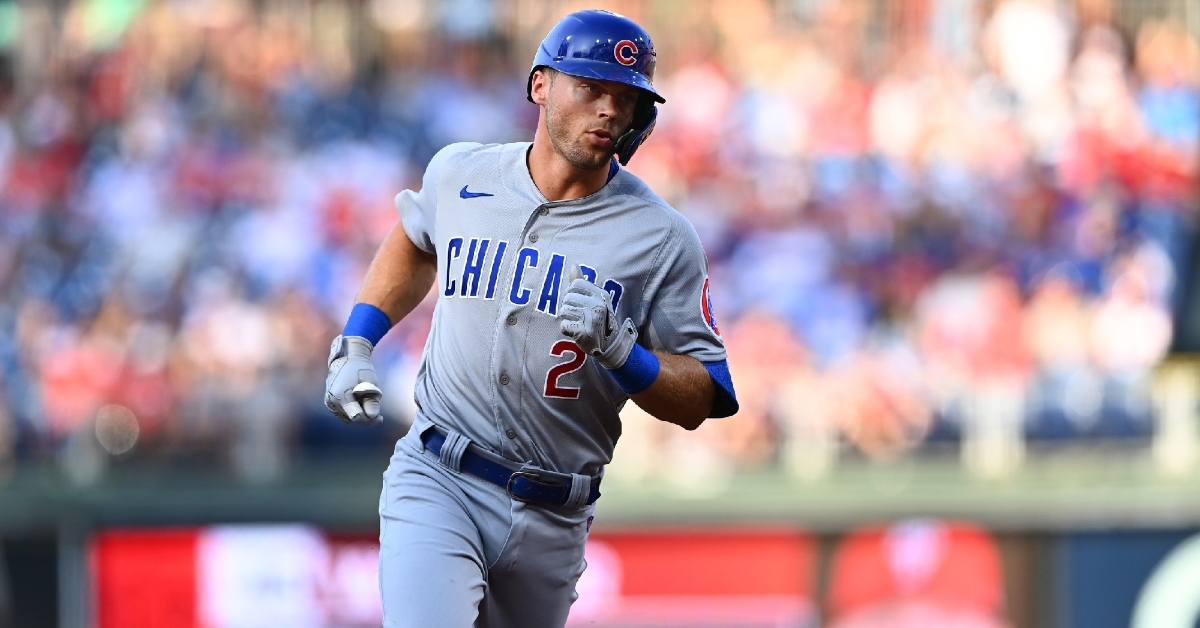

Nico will be our 2nd baseman for at least three more years, barring disaster. He went down with an injury during the final series of the season, but he played in 150 games this year, good for his personal record--so far. He played more this year than he ever had before, and while he hit for slightly better power last year, he set several other personal records and this was basically his best season yet. The thing about Nico is that he keeps getting better. He plays hard, tags well, fields well, runs well (his dramatic increase in stolen bases is perhaps his greatest advance), hits for solid contact and generally makes things happen, while exhibiting selflessness and turning into one of the younger veteran leaders in the clubhouse. He is not Marcus Semien or Ozzie Albies, and he has yet to make an All-Star team, but I'll make a bold prediction and say that it will happen in 2024. While not a superstar, he is good enough to be an everyday 2nd baseman for a World Series contending team. He also got a new teammate this year that is his perfect foil, and who will only make one another better. 

Dansby Swanson: A-


A few noteworthy larger contracts stick out since 2015. Jon Lester and Jason Heyward were the biggest investments in 2015 and 2016. Yu Darvish was the biggest investment post-2016, pre-2021 (2018). Dansby Swanson is now that guy. There are higher expectations on these guys. Lester goes down as one of the greatest free-agent signings in Cubs history, and Heyward is something of the opposite (though see previous year's review, which acknowledges his own intangible role in the 2016 Championship). Darvish looked like a bad deal after the first year or two--but so did Craig Kimbrel, one of the more "affordable" investments that was not quite as daunting. Darvish soon returned to form and once again pitched like one of the premier starters in the MLB, only to be traded in the great fire sale of 2021, when this "reboot" officially began. 

Dansby was praised by nearly every outlet, and sometimes mentioned as "living up to his contract," which felt like an indirect jab at Heyward. Just for fun, why not compare the two, even though they don't play the same position. It's interesting if you look at their age-29 seasons (this year for Dansby; 2019 for J-Hey). Both played 147 games. Dansby had 22 HRs and Heyward had 21, but also 49 fewer plate appearances. Dansby's OPS (we can get into stats another time) was .744 and Heyward's was .772 (and .848 in 2020, and .803 this year on the Dodgers, where the Cubs paid his salary after releasing him a year before the end of said hefty contract). Of course, those were the best years of Heyward's contract, and he wasn't over .744 any other years (though almost in 2018, with .731). I'm not sure what point I'm trying to make, except that Heyward got a worse rap than he deserved, at least in comparison with the high praise Dansby received all year long. They are different positions and you expect more production from an outfielder than a SS (Dansby had 80 RBIs this year; Heyward's best was 62 RBIs in 2019; we might consider RBIs a more reliable metric of value than OPS).

Don't get me wrong: I love Dansby. I'm on my third Cubs jersey-shirt--my first was Soriano, in the late 'aughts, second was Arrieta in 2015, and now Dansby in 2023. He's old school and plays solid baseball and like Nico, he's absolutely good enough to be the starting everyday shortstop for a World Series contender. He did that in Atlanta already. Unlike Nico, he made the All-Star team this year. Arguably, he ended the year on something of a "down note," but he recognized this and made no excuses for himself. When he talks in interviews, sometimes you get the sense of an athlete talking in athlete terms, not really saying much--but more often than not, he seems more real, and it's always refreshing to get more candid thoughts from someone so integral to the overall functioning of the team. 

He did just fine this year, but I'd hope to see him hit about .30 higher in batting average. We have him until 2029, and we have the best double-play combo in the MLB until 2026, so we are good here, for a while at least.

Seiya Suzuki: A-


He had about 120 more plate appearances, but he had 6 more HRs, 43 more hits, 28 more RBIs, and added 23 points to his batting average. Suffice to say, Year 2 was better than Year 1 for Seiya, and Year 1 wasn't all that bad. Seiya's 2023 is a story in the three parts: Part 1 - resume Year 1 performance and add a small slump allocation; Part 2 - sit out for a week or two, mentally reset, and rejoin the everyday lineup to enjoy his greatest successes in the MLB yet, go on an absolute tear for 2 months and hoist the team on your shoulders (with Bellinger alongside supporting as well) and convince the front office to make additions rather than deletions; Part 3 - suffer a humiliating "curse moment" and not let it destroy your morale for the remainder of the season, even though it basically did end postseason fantasies. 

What's most encouraging about this team, and this fanbase, is that nobody blamed Seiya. Yes, he's a major league ballplayer and is expected to make routine plays, but also, this is the MLB, and s*** happens. Seiya's performance leading up to that moment had been nothing short of heroic. If Bellinger had done the same, the reaction would have been similar: utter shock and dismay, followed by compassion (and we certainly would never want to make him feel run out of town). It did appear on that day that Seiya was on the verge of tears after recognizing the turn the game had taken. Everyone was on the verge of tears, frankly. He did what he could after that to redeem himself, but even though we couldn't take one game from that final Braves series, the Diamondbacks had already dealt us the death blow. We look back on 2023 and see the 1-6 record against Arizona as the definitive team match-up that sent us packing (even now, as of this writing, Kershaw & the Dodgers now know how it feels to be spanked by them--they feel like the hottest team in baseball, though it appears the Marlins eclipsed them at the end).

Like Nico and Dansby, Seiya is *good enough* for a World Series team, and we have him until 2026 and at some point over these next three seasons, we should have a good window to compete more credibly for the postseason. Seiya has also "invited" Shohei to join the Cubs. If that happens, Seiya may not win an MVP, but he will be the "shadow" MVP. We will manage our expectations but nobody will pretend they aren't paying attention to him and the Mets, Yankees, and whoever else is linked. 

Yan Gomes: A-


Gomes is an interesting case. First, he admirably filled the gaping hole that Willson Contreras's departure left on the team. He successfully transitioned from a back-up role into a primary catcher role. His game-calling skills were never called into question. Nobody complained about his defense and he made a fancy play or two. Most importantly, he emerged as the greatest clutch hitter on the team, and an underrated hidden weapon. Second, however, it is unclear whether he can replicate this season's performance, as he plays the most physically damaging position in the game and may be expected to play the primary role as a 37-year-old. Given that our back-up is now Miguel Amaya, who has never become the superstar that he was once projected to be, Gomes has the confidence of Ross, and we anticipate he will at least have the opportunity to prove that age has not caught up with him. Certainly, he did nothing this year but prove himself as an integral part of the offense, and a veteran leader in the field and clubhouse more generally. Ross loves Gomes and there will probably be more of the same next year--no one is talking about a major catcher to acquire. It just remains to be seen how long he can keep it going. One would imagine that an alternative back-up catcher to Amaya may emerge (apart from Tucker Barnhart), and it remains an open question whether Amaya will prove next year that he is ready for (or capable of) the primary role. Gomes hit 53 points better than Amaya, and bested him in nearly every category, while playing in 116 games--more than twice as many as Amaya's 53. Gomes has a 2024 team option and I don't think anyone would argue with exercising that. Assuming his 2024 performance could match what he did this year, this would also be *good enough* for a World Series catcher in 2024, though saying things would remain the same in 2025 is not as easy. 

Kyle Hendricks: A-


We should not worry as much about this with Kyle Hendricks. We should not think about letting him fade away elsewhere. As the last standing member of the 2016 Championship team (along with Ross to an extent), we need to keep the connection going. Hendricks should remain a Cub until he is ready to retire. He is a legend in this town and it wouldn't feel right seeing him anywhere else. 2022 was his worst season yet in the majors, dealing with an injury. He missed the earlier part of the year in continuing recovery, but this wasn't a big deal because he almost always has historically started the year on a "rusty" note. Upon his return, he exhibited that--for a game or two. Then he returned to "pure Kyle" form, with his pinpoint control, strike-throwing, ground-ball creating, and lack of pulse. At the end of the year, when Stroman went down, he stepped up. Him and Steele effectively became the #1 and the #2 for the rotation, and while the situation was dire, we stayed in the mix until Stroman returned. Kyle was not perfect, but he was *good enough* to lock a rotation spot for 2024, either in the #2 or #3 position. Perhaps it will be the year he finally makes the All-Star team. I wouldn't bet on it, but no one considers Kyle's presence in the 5-pitcher rotation as a "weakness." When he's dealing, he's as good as any other pitcher in either league. Maybe it seems like I'm giving everyone A-'s, but I'm going from the highs to the lows.

Christopher Morel: A-


Morel was the best story of the 2022 season, but most people still didn't know who he was. Now, while he is not quite a household name, everyone is on notice that he is the most explosive presence on the Cubs since we let Javier Baez go in 2021. Absolutely, he is *good enough* for a near-everyday spot on a World Series team. He has been referenced as a valuable bargaining chip, and his versatility and rousing personality would be welcomed on any team, but query whether we can afford to lose him. His value, right now, is still manageable. The Cubs should sign him to a similar contract that the Braves have for Albies or Acuna Jr. Maybe for 3-4 years. They could still lock him up for a discount, I think. (He is under team control for several years in any case.) Let him go, and you risk seeing him turn into Jorge Soler or Kyle Schwarber and questioning whether we could have been in postseason competition for every single year since 2016. He basically became the biggest power hitter on the team (both he and Bellinger had 27 HRs, but Morel did that in 23 fewer games), a clutch player (picture above taken from walk-off HR vs. the White Sox, one of the major highlights of the season) and the kind of personality every championship team needs to come back from slumps and middling performances. On that last gasp of a game versus the Braves, Morel hit a triple near the end and showed the kind of emotion that had been sorely lacking as the team grappled with elimination. He gave us a prayer, and we couldn't push him across. 

He had 4 more plate appearances in 2023 than 2022, so they're very comparable on that score, as they are with most categories--except for 10 more HRs and 23 more RBIs. Perhaps he needs to work on some things, but I noticed he seem to take better at-bats as the season deepened, and if he can boost his batting average a little bit, there's no reason he wouldn't make the All-Star team. 

Ian Happ: A- 


Happ was extended for 3 years early on this season, so we will have him for the next three seasons, too, and it's looking more like 2024-2026 is the new "window" for competition. Is he *good enough* to be the starting everyday left fielder for a World Series champion? I think so, yes, but I do not think he should be batting third in the line-up, as David Ross slotted him rather often near the end of the season. A few times, it paid off, and Happ did hit a timely home run or two at the very end there. And while he was an All-Star in 2022 and not an All-Star in 2023, his numbers this year were an improvement. Again, he was a rock playing 158 games for the 2nd year in a row, and in 50 additional plate appearances, he drew 41 more walks. Sure, his batting average dropped from .271 to .248, but a .360 OBP isn't too shabby. His defense is quality. People talked a lot more about Seiya's dropped ball because it came at a more crucial moment than Happ's missed ball early on in the next game (almost seeming like he did that to be a good teammate in camaraderie), but he is a "plus defender." Apart from the Diamondbacks poisoning the Cubs at the end, we were not playing "clean games" and various baserunning and fielding errors exacerbated struggles at the plate. I'd imagine the organization is putting a premium on this, with the emergence of Pete Crow-Armstrong (hereinafter, "PCA") as a defender extraordinaire. Happ is also the most prominent switch-hitter on the team. He may not strike deep fear in the opposing pitchers, and remains something of a hidden weapon, even though he has been around long enough to say he was part of the "first competitive window." Look for Happ to make another case for himself as an All-Star in 2024. The dramatic increase in walks this year is a clear sign that, if he remains consistent, he deserves that designation. I do think that he deserves to be near the top of the order for that. (I originally gave him a B+ but I figured if Dansby got an A-, Happ deserves that, too, because they were quite comparable, with Happ having slightly better offensive numbers.)

Mike Tauchman: B


I hadn't heard of Mike Tauchman the first time I saw him at the plate (along with several other Cubs players and relievers this year), but anecdotal experience reminds that, he started playing semi-regularly in the 2nd half of the season and quickly established himself as a difference-maker, responsible for at least two or three wins (one notable walk-off HR and one notable game-saving HR theft). His defense impressed but it appeared that PCA eclipsed him in terms of Ross's confidence, at the end. Despite these clutch moments, I did not feel especially hopeful when he would come up in a crucial situation, same as I might for say, Suzuki or Bellinger or Gomes. Tauchman is a fine utility player and suitable for platooning and sharing duties, but I do not see him as an everyday starting player for a World Series champion. Perhaps he could be, in the 9th slot. He hit leadoff very often. Though he was sometimes good, let's be totally honest here: we need someone that was as good as Dexter to qualify as a bona fide leadoff hitter. This was Tauchman's best season yet, and while there is a place for him on this team, he should be monitored and played according to the ebbs and flows of the season. He seemed like a rather streaky player. For those periods when gets hot, he's a valuable hidden weapon. But we need a true leadoff hitter, still. We can put Happ, or Nico, or Morel, (or Tauchman) in the leadoff spot, but some consistency in that part of the lineup (like say, the Braves or Dodgers have, even though Betts and Acuna Jr. are more in the vein of Soriano as a leadoff hitter) will go a long way towards proving we have a solid Championship formula. Tauchman's contract status makes it appear that he will be relatively easy to retain for a modest salary, so it probably makes sense to do that. Give him credit for those true "WAR" moments. 

Jameson Taillon: C+


Taillon came to the Cubs this year after a very strong year for the Yankees that saw him go 14-5 with a 3.91 ERA in 177 innings pitched, which any Championship contender would take for spots #3-5 in the rotation. He got off to a slow start and multiple publications in NY took note and took the opportunity to call him "crappy" and claim that the Yankees dodged a bullet by letting him to go to the Cubs for 4 years and $68 million. And, yeah, he did end up going 8-10 with a 4.84 ERA in 154 IP, but he showed significant turnaround towards the end of the season. He would still struggle occasionally, but he seemed to "figure it out" and return to excellent form, at times. Several of his starts at the end were near-heroic, and then squandered by an overwhelmed bullpen. He did not make excuses for himself, and despite these encouraging signs, viewed the overall performance this season as a letdown. With the current state of the bullpen, Taillon does not look bad at all--there's no reason to think that he can't return to excellent form on a more consistent basis, and at the very least, deserves a spot in the rotation, even if he and Drew Smyly are basically treated interchangeably (both flirted with no-hitters in one of their starts, both occasionally entered long relief roles). Whether it's as a #4 or #5 starter or long reliever, he'll be on the team. He could be a trade piece, but I do not see his 2023 performance as an abject failure. It was middling, but I prefer to view the improvement as an encouraging sign. 

Drew Smyly: C


Never forget April 21, 2023, when Smyly nearly threw a perfect game in a 13-0 victory over the Dodgers. Many did forget that by the end of the year. But at the beginning, for a minute, it seemed our rotation was on fire. Smyly joined the team in 2022 after a strong year for the 2021 World Series champion Braves, as a tried and tested veteran. He started the same number of games (22 or 23) over the past three years, but his numbers arguably looked better last year. By the end of the season, both the rotation and the bullpen were in shambles, and sometimes Smyly saved us and sometimes he set us back even further. The word is inconsistent, and why it is not unfair to put him and Taillon in almost the exact same category: they have shown flashes of brilliance, but have been unable to maintain. It is, admittedly, a very difficult thing to do at the MLB level, in highly-competitive pennant-race games. The team needed a strong long reliever, and Smyly filled that role *mostly* admirably. He's a few years older than Taillon, but cost about half as much. He has a mutual team/player option for a 2024 contract, and if we can get him to stay for $10-11 million, that might be worthwhile. It wouldn't be the most shocking thing in the world if he "figured it out" for an entire year in 2024, the way he did for the Braves in 2021, and the way Taillon did for the Yankees in 2022. It's worth the gamble, and at the very least, he remains useful.

Jordan Wicks: A- (B+ due to small sample size)


We are wary of rating Wicks too highly (a la Frank Schwindel--never forget Frank the Tank), because he only started 7 games, at the end after Stroman went down, but he went 4-1 and looked like a total stud. Yes, his ERA landed at 4.41 ERA---but I think that was due to 1 or 2 bad starts, and that in all the others, he pitched about as well as anyone. He stepped up in a big way when he needed him to. He handled the pressure of the pennant race as a rookie that got thrown into it at the last minute, in an emergency situation. He probably deserves an A-, but nobody seems to be getting quite as excited about him. The clearest comparison I can make is to Alec Mills, who also wore glasses and threw a no-hitter in 2019; the B+ accounts for "fluke-potential," which every rookie success must overcome. Wicks did not throw a no-hitter, but in his debut, he retired something like 15 batters in a row, which drew a comparison to Mark Prior. No one is saying he is Mark Prior, but if he is, take it. Prior may not have lasted, but for those few years when he was a stud, he was a stud that anyone would have wanted. This team drew comparison to the 2004 team, failing at the very end after hopes of another postseason birth. 2005 wasn't too bad either, but we are hoping that 2024 will have the better end result. Wicks deserves a spot in the rotation with his performance. Yes, I hope we bring in a new starting pitcher that will be a strong anchor in the rotation (or 2, if Stroman walks), and in that case, Wicks at least deserves at shot at the #5 slot. The only problem is that Rowan Wick is gone. We may actually, one day, get Brad Wieck back in the bullpen, but if we can't have an army of Wicks, two might be enough.

Javier Assad: A- (no qualifier)


It might be overblowing things a bit to give Assad a flat A, but he almost deserves that for how he stepped up, time after time, throughout the entire course of the season, and most crucially at the very end. There probably was no single decision that Ross made that upset me more than when he took Assad out on 9/2/23, when he had the opportunity for a complete game shutout and we ended up losing to the Reds 2-1 (this was before the wheels totally came off on the playoff push, but the first signs of trouble). He had 98 pitches, and Ross was arguably justified, and hindsight is 20/20 and no single game mistake is cause for termination, when the season is comprised of hundreds of such intangible moments. But the loss wasn't Assad's fault, and he was as good as he could be, for how he was used. Is he a starter or a long reliever? It's not totally clear. He's in a similar category to Smyly, though he unquestionably performed better than him or Taillon. He was the 3rd or 4th best pitcher on this team, depending on when Stroman was injured. At the very end of the year, when Stroman returned, he was the more reliable of the two. Assad is straight up, a no-brainer. Don't let him get away, because I think may get even better. He's only pitched for 2 years, but the encouraging rookie performance was not a fluke, and he he has earned our trust.

Those are most of the "major guys," and these posts become too long as they are, finding pictures of every single player and writing a personalized evaluation--one other guy deserves one:

Adbert Alzolay: B+


The Cubs never quite figured out how to use Alzolay until this year. He has pitched in fits and starts since 2019, debuting with some hype and showing some flash, bouncing back and forth from the minors, experimented with as a starting pitcher in 2021, and finally emerging as the closer in 2023. There's no question that he was the most reliable person in the bullpen for the job. (The bullpen should be addressed separately, here.) And he contributed to the team in a bigger way than he ever had before. And he was very good in the role, though not perfect, and the only blown games came at the crucial moment, and he also went down at the crucial moment, forcing the Cubs to use Julian Merryweather and Mark Leiter Jr. and Daniel Palencia as closers, which worked as often as it did not. It appears that he blew 3 saves, which is not great, but his ERA of 2.67 was the best on the team (unless you count Shane Greene, who pitched 3 innings and gave up 2 hits and 2 walks and 0 runs, or Tucker Barnhart, the catcher, who oddly pitched 4 innings in 4 games, giving up one run for a 2.25 ERA). 

Adbert is the only player on the team besides Morel with an infectious personality. As previously noted, you shouldn't let these kinds of guys go lightly. The only issue is whether Adbert can cut it as a World Series champion closer. And that is a big ask. The team could swing big and bring in someone like say, Wade Davis or Craig Kimbrel, and no one will complain. Adbert would likely make an effective setup man, though I have a feeling he thrives on the emotion of the closing role. In any case, if the team is seriously competing, I find it hard to believe they wouldn't do something similar to what they did with Aroldis Chapman in 2016, "renting" a closer to take a little pressure off of Adbert (as they did with Rondon) and the rest of the bullpen. Whatever the case, there should be a place for him on this team, and hopefully for many years to come. 

Honorable Mention: Jeimer Candelario: B+


In 2016, Jeimer Candelario, one of the many heavily-touted prospects on the Cubs at the time, made his MLB Debut. It wasn't impressive. He got 1 hit in 11 at-bats, good for a .091 batting average. He played 11 more games for us in 2017 and did marginally better, hitting .152, but then was shipped off to Detroit, where he remained until 2022 and appeared to play perfectly average baseball, except he could be called above-average in 2021 (and actually led the league in doubles). He started off the year on the Nationals, and he was doing alright, probably the best he has done apart from 2021, and the Cubs did not fold but instead added.....by bringing back Candelario in glorious fashion. Candelario's performance in the first couple weeks of that acquisition jumpstarted this team in a serious way. The team was never hotter. They looked unstoppable. They looked like the Braves in 2021. Then he went back down to earth, and also got injured as the team went into a tailspin. I am not sure if there is a place on this team for him in 2024 (I have basically said we should keep all of the players, which most certainly will not happen) but I hope we keep him. I'm not sure if he's *good enough* to be an everyday starting player for a World Series team, but if he could replicate his 2021 year, or even this year (which probably is his best season so far, split between two teams, in terms of power), it would probably suffice. I include him to highlight his contribution because I do think he was the biggest difference-maker after the trade deadline, apart from Jose Cuas who was less terrible than several of his peers in the bullpen.

The Bullpen: C+ (overall)


Why can't we go back to 2017, or even 2021, when we had a really sick bullpen? Why can't we have Ryan Tepera, Andrew Chafin and Craig Kimbrel in innings 7-8-9 when we really need them? Why can't we have "nice things?" Because this is the Cubs.

There are several tiers of relievers in the bullpen, and few of them are reliable. At the top end, people that might get an A-, we have Julian Merryweather, and even he could not escape all blame in that final 2-week skid. He was about as trustworthy as anyone apart from Alzolay, and he throws hard, and he strikes a good number of guys out. He's a guy I'd keep in the bullpen. 

I'd say the same thing for Jose Cuas (B+). He was the other "difference-maker," brought over from the Royals after the trade deadline. He wasn't perfect, either, and I might give him a  B+, but he seemed fairly reliable. Alzolay, naturally, falls into this top category. 

Hayden Wesneski (C) is an interesting case because he also falls into that Taillon/Smyly/Assad situation--starter, long reliever, or reliever? That remains to be seen. He actually started 11 games. There were more positives than negatives, I think, but it certainly wasn't so positive that I think he must start the year at the major league level. He may bounce to AAA and back again, but he did show some potential. He might be middle tier, or higher.

Others in the middle tier could include Brad Boxberger (B-), who was a great pick-up from the Brewers, who has been a very successful reliever in the past, and who had some very encouraging performances, but also struggled somewhat, with injuries and otherwise. A healthy Boxberger could be a key component to the bullpen, the way he was in Milwaukee, as the setup man for Josh Hader. I think he is worth a small gamble for 2024 (mutual option). He's getting older, but pitchers can age gracefully in this game, and if we got 2021 or 2022 Brad Boxberger (A), we'd have one high quality bullpen staple.

Michael Fulmer (B+) arguably belongs in the "top-tier," and should be re-signed for 2024 as well. He could be considered somewhat trustworthy alongside Merryweather and Cuas. He didn't have a terrible year by any stretch, but he wasn't around (injured) when we were needing him the most. 

It's not fair to say Luke Little was unreliable, because of a very small sample size. I think the main thing to say about him is, like Canario, Ross did not give him enough opportunities, opting for others with more experience to often disappointing results. Little actually didn't suck at all. He actually led the team in ERA. He actually pitched 6.2 innings and gave up 0 runs. Hard to say he will be an integral part of the pitching staff, but still very young and promising.

Keegan Thompson (C-) is still kicking around. He was very encouraging over the past year or two, but something seemed to happen (I think injuries) and this season was a step in the wrong direction. I believe he will stay part of the organization and bounce to AAA and back again before being given another opportunity. His success in the past is enough to justify that. 

I don't have much recollection of Michael Rucker (B-) but he was used fairly often (he was likely injured near the end) and seems to fit in the middle tier, or possibly the top-tier. 

Brandon Hughes is worth mentioning because it seems like he's always been a stud, and he only pitched briefly this year, performing poorly and then recognizing injury and being on the IL most of the year. If he comes back as the pitcher he was before, you can keep him as a key component to the bullpen.

I don't ever like being mean, because as noted above, this is an incredibly difficult game to play at the highest of levels. But I would not mind if either Daniel Palencia (D+) or Mark Leiter Jr. (D+) were traded. They both have their qualities. Palencia apparently has electrifying stuff and throws 100 MPH, but I mostly saw him give up home runs. Same for MLJ. While he is retained for facing left-handed hitting, and did have some measure of success (clearly, Ross trusted him, putting him in 69 games, which tied for the most appearances with Merryweather), late in the year, it seemed like Cuas, Palencia and MLJ were pitching like, almost every single game, and it began to show. I am not a full-time sportswriter or statistician or highly-analytical fan, but I go by the feel of what I see, and yeah I watched a lot more in July, August and September than April, May and June, but MLJ just did not give me major confidence. I wouldn't mind if either got traded (and I know other teams would like both, and both do present value propositions), but I think they will get another chance, and hopefully they will be used in more specific situations, and not just because they're the only options left. 

***

There are some other notable players. Nick Madrigal (B+) probably deserves his own picture in this post and he played a lot this year and he probably played better than he ever has in his career, but I could say the same for his sub, Miles Mastrobuoni (B/B+ at the end). They should at least get awards for best names, best naming by parents. Can they play in 7 games of a World Series? Maybe. Madrigal certainly was touted in his prospect days as being a player of that caliber. He hasn't quite delivered on that promise, but he took a step in that direction. 

Obviously, PCA and Alexander Canario are very exciting (even though PCA batted .000, as a lifetime little league .000 hitter with a ~.500 OBP, I am sympathetic). So is Jared Young, to say nothing of Matt Mervis. The sample sizes are too small. Add Canario's grand slam to the list of ridiculous offensive debuts (yes, technically his debut was with a strikeout on 9/6/23, but consider his first start on 9/19/23) his debut) with Nico Hoerner, Javier Baez, Jorge Soler, Kosuke Fukudome and Starlin Castro. And that leaves two final individuals to highlight.

***

Pour One Out for Patrick Wisdom (B-)    


Wisdom earned $763,000 this year, and one imagines, less than that from 2018-2022. He is arbitration-eligible this year, which I believe means, the Cubs will either need to pay him a *reasonable* salary, or release him. Some peg this number at $4 million. Some think that he is not worth $4 million/year. As noted above, we cannot keep everyone. I'm not going to make any predictions, but if both happen, I'll miss Patrick Wisdom more than Cody Bellinger--not because of the confidence they provided as a fan, but because Wisdom represents something important about the team through those fallow years of 2021-2022. When the team ripped (almost) everything up and went back to the drawing board, a slightly-tweaked update on the strategy implemented in the previous fallow years of approximately 2012-2014, Kris Bryant was gone, but Patrick Wisdom materialized in his place. It's questionable whether Wisdom has more power than Bryant, but Bryant is certainly the better hitter. Wisdom strikes out a ton. Kris Bryant was the National League MVP in 2016 and the National League Rookie of the Year in 2015 and is a 4-time All-Star. 

Wisdom has none of these accomplishments, and he was never seen as part of a "new core," like some of the names mentioned above (Happ, Hoerner, Swanson, Suzuki, Steele). But Wisdom is the only other player--apart from Morel and Alzolay--with an infectious personality. In 2021, when all was lost, it was him and Frank Schwindel that allowed fans to indulge in the delusion that, with a rag-tag team of replacement players, they could still occasionally compete with the best (2022 was not 2021, but see the Cubs dominance of the Phillies in 2022, for one example). He led the team in home runs the entire way--until this year. And despite being benched significantly more this season, he still led the team in home runs for a very long time (mid-August). Even when all hope was lost at the end of this season, Wisdom emerged as a pinch-hitting threat. It was demoralizing when Craig Counsell called for the batter ahead of Wisdom (Tauchman?) on 10/1/23, to be intentionally walked and load the bases for him because he knew they could strike him out. He had a chance to be a hero one last time, there. If he had hit a home run, would it have made a difference in what they decide to do with him in 2024? 

Some people seem to think Wisdom is "washed up," but I believe, with proper coaching this offseason, with better plate discipline, he is capable of a significant role on a championship team--so long as the strikeout liability is tempered. Look at Kyle Schwarber. Just look at Kyle Schwarber. Wisdom isn't Schwarber, but he's like a mini-Schwarber/Kris Bryant hybrid, and we can't have either of them back, it seems, so Wisdom is the next best thing. If Schwarber can be an everyday starting left fielder and leadoff hitter of a World Series contender, then there is no reason Wisdom can't do the same as a part-time player, and pinch-hit weapon. Of course, there may not be room for him on the roster, if we become totally stacked. He provides depth at multiple positions (even at catcher, at one point, like Schwarber as well) and his presence on the team, similar to the other 2016-veteran Kyle, provides an intangible: continuity, presence, gravitas.  

All I'm saying is, he deserves $4 million next year, and whether it is provided by the Cubs or another team, it will be interesting to see if getting paid for his fair value leads to a corresponding increase in production. Unless they can bring back Javier Baez, Wisdom doesn't need to go. Certainly, you wouldn't want both on the team--but then again, remember Javy in 2018, remember MVP-era Javy, and recognize that miracles can happen.

David Ross: B

Ross inherited this team from Joe Maddon in 2020 and performed well enough to win National League Manager of the Year, though the Cubs themselves could not last more than two games against the Miami Marlins. I had no problem with the way he managed the bullpen that year. No problem at all seeing him trust Jeremy Jeffress to a 4-1 record with a 1.54 ERA. I absolutely had no problem with the way he managed the 2021 bullpen through one of the best scoreless streaks (38 innings) in MLB history. Even last year, when we had no hope, I had no problem with the way he managed the bullpen to lead the league in strikeouts (716). The man has a track record.

We have to be fair and say that the team did not invest enough in the bullpen for the obvious reason that they did not expect to fully compete. In June and July, it looked like Bellinger and Stroman might be leaving the team for contenders, and that someone might even try to take Steele away. They got Boxberger and Merryweather, and they were solid choices, but they didn't put themselves in the market for a marquee closer (even last year, we got David Robertson). Alzolay did his part, and has been addressed above. We cannot blame Ross for the failures of the bullpen, but one of the things I like about him is that he accepts the blame, he does not blame the players. He wants to be blamed.

He did, however, call out the Pirates as a bad team, which was not a good idea when they were about to play a very important series against the Marlins, where we needed to count on them to win and bail us out. The Pirates almost did in that first game anyways. Regardless, it did not make anyone in Pittsburgh a fan of Ross, nor harbor any positive feelings for the Cubs. Now it's fine to start fights with the Cardinals, or maybe even the Brewers, but you should have other teams that are at least, semi-allies. Teams that will want you to win, too. The Cubs are unique in this. Perhaps no one feels bad for them anymore after 2016, but I have to think, the nostalgia factor survives. People wants to see the Cubs win (except in St. Louis).

Ross, I believe, will stay, though many are calling for his termination. The only other thing I don't like that much about Ross is the way he handles the media. He once noted that, "Twitter probably knows better than I do" about certain in-game decisions, and the comment was double-edged--sarcastic, but actually accurate. He became prickly whenever his bullpen decisions were questioned, which felt like projection. And yet, hindsight is 20/20, of course, and Ross knows enough about winning in this game that he deserves the chance to do it with the guys that he has fostered and developed over the past four seasons. One more chance, at least.

For all of the heartbreak that this season carried with it, I probably had more fun following the team than any year before. I went to Toronto to see Steele beat the Blue Jays on 8/12/23, went to Milwaukee to see us win that pseudo-lame-duck game on 9/30/23, saw us come from behind to beat the White Sox at Guaranteed Rate on 7/26/23, and saw us beat the Brewers at Wrigley on 8/30/23. I watched too many important games from Murphy's Bleachers. I invested more in this team than any year before, and though it didn't end up being "worth it," sometimes the journey itself is the pleasure.

Wednesday, October 4, 2023

The Grand Inquisitor - Fyodor Dostoevsky (Transl. Constance Garnett; Introduction by Anne Fremantle) (1880; 1956; 1984; 2004)

Dostoevsky is a blind spot for me. I haven't really read of much of anything he's written, and so I cannot speak as an authority on him. "The Grand Inquisitor" is a chapter from The Brothers Karamazov and this slim volume was assigned to me in a course on Tyranny, Totalitarianism and Terror, about 20 years ago. It is barely 20 pages long and ultimately serves as a parable. 

I decided to read it ("again") because of the previous selection. Both books quite clearly portray Christ as a supernatural phenomenon while maintaining credence to the historical details. I felt this would be a fair venue for a type of short essay on Catholicism, faith and the cyclical nature of history. I also need to read Dostoevsky, period. Only in revisiting this did I decide on three big books that I hope to one day cover on this blog: Moby Dick, War and Peace and The Brothers Karamazov. These are due by about 2030.

This chapter of the novel consists of a dialogue between Ivan and Alyosha, which is mostly Ivan telling Alyosha the story with intermittent commentary and questioning. Ivan refers to it as a poem. It is not written in verse, but there are a few italics that appear to serve as gloss, and I am uncertain whether they occur in the original text. They are: (1) The three temptations foreshadowed the whole subsequent history of mankind; (2) The first temptation: the problem of bread.; (3) The second temptation: the problem of conscience.; (4) The third temptation: the problem of unity.; (5) Summary: the Inquisitor's Utopia.

Quite clearly, I think, these are glosses. They are not there for the benefit of Alyosha, but the modern-day students that need to write 1,000-word essays dissecting the translated text to "prove" some "original" thesis. In a way, these past 2 reviews (to say nothing of countless other reviews on this blog) may serve as a college essay. I claim no copyright over said ideas, but I always appreciate, of course, proper credit. 

This will not, however, be a comparison of Between Heaven and Hell and "The Grand Inquisitor." One selection simply inspired the other. No question that this is the essential text, if one must pick between the two. It is, after all, a portion of one of the greatest novels in the history of the world, or so I have been told. People often put the Bible in similar territory, i.e. every true scholar must read the Bible, for it is also the greatest "novel" of all time, the greatest story ever told, etc. As far as biblical authority goes, and as far as any "updates" go, this stands alongside the monumental Paradise Lost, which, like the Bible, is also in verse (though more verse, if that makes sense; it is sometimes called an epic poem, which the Bible is often not). 

The Spanish Inquisition lasted from 1478-1834, so it ended just 50 years before this tale was written. However, it appears to take place closer to the beginning:

"'" But Thou didst think too highly of men therein, for they are slaves, of course, though rebellious by nature. Look around and judge; fifteen centuries have passed, look upon them. Whom hast Thou raised up to Thyself? I swear, man is weaker and baser by nature than Thou hast believed him! Can he, can he do what Thou didst? By showing him so much respect, Thou didst, as it were, cease to feel for him, for Thou didst ask far too much from him--Thou who hast loved him more than Thyself! Respecting him less, Thou wouldst have asked less of him. That would have been more like love, for his burden would have been lighter."'" (12)

Thee/Thou/Prisoner/Jesus is set to be executed the next day, but not before he is admonished and interrogated by the Grand Inquisitor. No answers are provided. Instead, the Grand Inquisitor lays out the institution's r'aison d'etre: subjugate and enslave the masses, for they do not know what is best for them. Follow the example of "the wise spirit, the dread spirit of death and destruction," not Jesus. Give them happiness in slavery, rather than unhappiness in freedom. 

Dostoevsky meant to criticize the rise of Russian socialism, which bent towards atheism, nihilism, and rationalism, and away from true Christian faith. Socialism is often decried in the culture today as one step removed from a communist state, and embraced by many that regard our present-day capitalist framework as a different type on enslavement. 

Regardless, evangelism remains in vogue in conservative ideology. Morality is used as a cudgel for delegitimizing dissent and casting doubt on self-actualization. Women lose autonomy over their bodies and identity politics become a flashpoint. The Church stands impassive, and makes tentative steps towards a more inclusive stance. But that is inconvenient for the election of certain representatives, who see authoritarianism as the most efficient path towards unification and economic prosperity. 

There is no question that the Church has diverged from the path that Jesus prescribed and led others to follow. Whether Jesus believed in proselytization remains a subject of debate, as with many other precepts from the Bible: they can be shifted according to the motivations of the speaker. It would seem clear to me, as a person that spent 10 years in a Catholic school, that he would not believe in it, that he would not force his way onto anyone, that he would simply live as he found best, and leave others to follow his example and decide for themselves. Indeed, the Grand Inquisitor bemoans Christ for failing to give bread to man, for allowing man to retain his conscience, and for failing to establish his own sovereignty. 

In short, Jesus' teachings are inconvenient for the Inquisition, and since 15 centuries have passed, the people have forgotten, and the Church's interpretation of the teachings have become Gospel; to see Christ resurrected in the flesh, performing miracles again, potentially exposing the fraud inherent in the institution, is an intolerable risk for the Grand Inquisitor: it threatens to upend the enterprise. 

There is some application of this parable to present day, and perhaps there always has been, yet it is felt most clearly in the totalitarian systems of government in the past. This is merely the background for one side of debate, the side that has an ulterior motive (query whether both sides have separate ulterior motives). Yet in a way, the Grand Inquisitor's ideology makes sense: it truly does seem that much of the time, the great masses are susceptible to suggestion, triggered by perceived wrongs that do not align with their values. They need to be effectively managed, and letting them think for themselves can destabilize the regime in power. 

The ending of the parable, however, provides some measure of comfort: the prisoner offers no response but a kiss on the lips of the Grand Inquisitor, and he is allowed to escape into the night and avoid an auto-da-fe. The Inquisitor will hold to his views, while privately knowing that he has been further disproven. Perhaps one day, such Inquisitors will resign their posts, become "whistleblowers" of a type, and renounce their ways. The Inquisition did ultimately end, and the Soviet Union did ultimately come into being and did ultimately end, and the Church has been "Reformed," and continues to be further reformed, still. History ultimately bends towards humanity, but the truth is never apparent until the highest authority has acknowledged their errors, lies, cruelties, and general mismanagement. That generally means giving up power, and that only tends to happen when power is no longer theirs. Such renunciation, however, is less persuasive when offered from that perspective of diminished power. 

Wednesday, August 2, 2023

Between Heaven and Hell - Peter Kreeft (1982; 2008)

The world recently lost Sinead O'Connor (she was 56). Last night, I watched a documentary on her. I was ten years old in her heyday, and my experience of her largely centered around comparisons between our hairstyles: I often opted for buzz cuts at the time and people often chided me that I looked like her. I might have seen her rip up the photo of John Paul II on SNL, but the meaning of the action was lost on me at the time. 

On the last day of last year, it was Pope Benedict XVI's turn (he was 95), and the documentary seems to indicate that both Popes played roles in covering up the rampant sex abuse in the Catholic Church. I always considered John Paul more respectable than Benedict, and the documentary does pause for a moment to acknowledge more specific actions by Benedict, but neither seem nearly infallible as our current Pope who, while not perfect, is certainly the most admirable in my lifetime thus far. 

However, I still read Benedict's obituary in the Wall Street Journal. For better or worse, I waded into the comments, and certain elements of his philosophical views were discussed. For there are different shades to Christianity and Catholicism that may lead to vastly different views on what it means to live a Good Life. 

One person mentioned Between Heaven and Hell, perhaps comparing Benedict's ideology with that of C.S. Lewis, in this book. I can't recall and I have nothing further to say on Benedict, but this is how I came to reserve this book at the library. 

***

This book is 115 pages long and was renewed from the library 8 times. Like Aliss at the Fire, that should be all you need to know about how compelling I found it. The conceit, or concept, however, was compelling enough that I wanted to check it out.

In essence, this book is a 3-person play. It might be more interesting to see it performed as a play, but then again I would probably find it maddening. For this is not a story, per se; rather, a dialogue between famous personages in a certain setting.

The setting is purgatorio and the date is November 22, 1963 and the players are John F. Kennedy, Aldous Huxley and C.S. Lewis.

That alone was compelling. Particularly since November 22 remains a date of many birthdays in my circle. I recently found out that my younger brother will turn 44 on 11/22/33 and I considered this some sort of numerological omen. This year will bring the 60th anniversary of that date, and so a review of this book seems timely. 

We all know that President Kennedy was assassinated on 11/22/63. Many of us know that Aldous Huxley died that same day (a hero to just as many of us as Kennedy was). However, I did not know how Huxley died, and so one of the more titillating parts of the book arrived in the epilogue:

"The three deaths were as different as the three lives had been, and providentially perfect templates of the three philosophies of life that had motivated them. Kennedy was murdered by an assassin; for he who lives by politics may die by politics, as 'he who lives by the sword will die by the sword' (Matthew 26:52). Huxley died of an LSD overdose while experimenting with mystical experience; for he who lives by man-made mysticisms will die by man-made mysticisms. Lewis died of bone disease, a few years after he had taken the pain of his dying wife's bone cancer out of her body and into his, beside her bedside; for he who lives by the Way of Exchange will die by the Way of Exchange. Like Christ, he offered God his own life for hers, and on November 22, God accepted the offer." (122)

That excerpt lets the cat out of the bag: it is clear that Kreeft ascribes to the viewpoints expressed by C.S. Lewis in this text. Now then, I had no idea that C.S. Lewis also died on this same day (nor that he was also known as "Jack" by his friends), and I have very little knowledge of him in general. A friend had recommended The Screwtape Letters to me, many years ago, and that is something I've been meaning to get around to for years, and hopefully one day will. I see him like I see J.R.R. Tolkien (whom I also haven't read), but further towards philosophy than fantasy on the storytelling spectrum. 

I'm not aware of Huxley's religious affiliation but it seems clear that Buddhism is his lodestar. It's worth noting that Huxley is far more incidental in this book than the other two. The primary dialogue in this book is between JFK and Lewis; there is a second dialogue between Huxley and Lewis that is quite a bit shorter, and probably also the best part of the book, though that isn't saying all that much (for me, personally). 

*

One problem I had with this book was the epilogue, for it revealed the book to be Christian propaganda. Now I am raised Roman Catholic and went to Catholic School for 10 years and I am a lapsed Catholic but I greatly enjoyed seeing the Vatican and felt that there should be some kind of birthright trip in order to bolster participation in the Church and to redeem itself from its sordid history--for that sordid history is quite probably the most damning lie over the past 2,000 years of human progress. We believe in the divinity of Jesus Christ, and we expect him to forgive us all our sins--so I guess that means we can do some of the most horrible things imaginable, go to confession, and get a clean slate, and we're all good? It's a convenient way out of personal accountability. It's a license to behave badly. Nobody is perfect, and believe me, I am not perfect, but this purported forgiveness of sins is problematic insofar as it can lead to a delusional sense of morality. Now of course, we do not encourage people to sin, we encourage them to love their neighbors as themselves, to love God and hold Jesus up as a role model and try to exhibit the goodness that he represents. But we fail and they all know we are going to fail and they all know they fail, quite inveterately. And they want money, lots of it. There's the aspirational part of the Catholic Church and there's the functional part of the Catholic Church and while there is a certain sense that they have acknowledged this "problem" and are taking steps to stop such crimes from happening in the future, some of the hypocrisies of the Church temper such encouraging feelings. Pope Francis, however, has been about as good a Pope as he can be, working within the political framework of the Institution. 

Kreeft may not have had any idea that such things were happening in 1982, but most certainly should have in 2008. I believe this is conveniently ignored in the epilogue. Then again, this is not exactly a recommendation to convert to Catholicism because it is the One True Way (though it feels that way). 

Really, Kreeft wanted to write a philosophical dialogue, much like Plato did for Socrates. Socrates did not author any works, nor did Jesus, and they are lumped together in this book as "sages" (along with Buddha, Confucius and perhaps Lao Tzu). Other people have to tell their story. Kreeft considers Plato to be singular: "It is surely an almost clumsily obvious piece of divine providence that the father of all philosophy, who wrote nothing of himself (like Jesus and like Buddha), should have history's greatest philosophical poet, Plato, as his biographer." (120)

In Between Heaven and Hell, C.S. Lewis plays the role of Socrates, and JFK/Huxley play the role of Glaucon, albeit more challenging "pupils." The dialogue itself is a Platonic dialogue for beginners on the purported divinity of Christ. There are dialectics in it, and it is not like reading a play. It is not really entertaining. It is somewhat informative. It is an educational tool. The pages have glosses on them that summarize the main point of that section of dialogue ["Jesus, the guru to the Jews?"; "Six crucial differences between Jesus and the gurus"; "(1) God as personal"; "(2) God as Creator"; "(3) God as knowable"; "(4) God as good, not 'beyond good and evil'"; "(5) What must I do to be saved?"; "(6) Hell."]

I don't know what else to say about this book. Based on the above, you can decide for yourself if you want to read it. I don't really recommend it, unfortunately. If you haven't read Brave New World, please, do yourself a favor and read that instead. I also read The Doors of Perception and Heaven and Hell (ironic that the title for this book is so similar; its debt is owed to Lewis, not Huxley) and would recommend those over this. And you need to read Republic or perhaps other things by Plato to "get" this. In short, there are many other texts that one could read that will offer the same or similar revelations.

This is, however, the type of book that can be assigned in high school or college-level philosophy courses. It is useful in its own way. It's short enough that it can fit easily into any syllabus. And the famous people ostensibly add a layer of human interest to the proceedings. 

But ultimately it is propaganda. Though Lewis's argument ultimately "wins" the debate at hand, the debate is fixed from the start. Credit Kreeft for examining Christianity through a philosophical lens and offering up his own Defense of Christianity, but know that he reveals himself to be a zealot in the epilogue and post-script.  Fortunately, the players do not opine on the sin-status of homosexuality, but perhaps if written today, the issue would find its way into the text. 

One excerpt to give a flavor, on knowing that miracles can't happen:

"Lewis: I might ask you what Professor Kirke asked Peter: How do you know that? Has science proved that miracles can't happen? But I've put that line of argument into another of my books, Miracles....No, I didn't think you had read it...and I'd rather follow out the psychological line of argument now. The point of my reference to Lucy was to show that like Lucy and like Buddha, Jesus says incredible things, and like Lucy and like Buddha, Jesus is a credible person. So we must either believe his unbelievable claim or disbelieve his believable personality, his personal credibility.

Kennedy: Let's examine his personality, then, though I'm not sure where it will take us. I do know something about human nature, and human history, and great men of the past. I too wrote a book, you know, Profiles in Courage. No? You haven't read mine either? Well, we're even then. But go ahead with the argument.

Lewis: Let us divide all people into four categories....

Kennedy: Oh, oh. Here we go again. Black-or-white thinking.

Lewis: But surely there are categories. The only question is whether they are appropriate, fitting to the real. 

Kennedy: I don't like divisions among people. 

Lewis: But all categories are divisions, classifications, outlines. 

Kennedy: Putting people into classes has done immense harm throughout human history. 

Lewis: Really dividing people, yes. But not mentally dividing them. For instance, to mentally distinguish male and female is good, and necessary (how confused we would be if we couldn't, or wouldn't, as some seem to nowadays). But to really divide them, to isolate them, is usually bad. In fact, to unite them most fruitfully, you must mentally divide them most clearly: vive la difference, and all that. (52-53)

That is one of the more entertaining sections of the book, so be aware that it is not always as intriguing. Miracle is an odd word. It can refer to a miracle performed by Jesus (turning water into wine) or an unbelievably good event. It is not a miracle that the Cubs won in 2016 but many people referred to it as such. It is a miracle when terminal illness is cured, and such situations have been known to occur (exceedingly rare and improbable as they are). There are miraculous survivals, and there are miraculous achievements, but a true Miracle--well, to witness one would be the greatest proof of divine forces at work in this world. 

*

Once many years ago during sailing school, I had been put in an Optimist, which is a 1-person boat. The bay was rather rough that day, and while I agreed to take an Optimist, I was very scared. I didn't tell anyone and I kept it to myself and wanted to be brave and prove to myself that I could handle the rough conditions, that my boat wouldn't capsize, but I prayed in my head that something would prevent me from being forced into that situation. 

Fortunately, someone soon offered me the alternative of getting into a Beatle-Cat instead. I accepted that offer, and crewed the boat with two other people, and saw a few other schoolmates in Optimists, bailing water out of their vessels. I felt that God had answered my prayers and saved me from a dangerous situation. 

* 

In hindsight, I was easily convinced. I was still technically in Catholic School at the time, and after going away to boarding school, alone, I did not attend nearly as many services. Many of my classmates were Jewish, and other religious viewpoints entered into my worldview. By the end of high school I defined myself as Agnostic (and I still do, from a certain angle).

Shortly before college, then, a certain incident of running into a certain person at a certain specific time, under rather improbable circumstances, a coincidental encounter of the highest kind, convinced me of proof of divinity in this world. People bandy about the phrase "butterfly effect" and we cannot know how real it is, but ultimately, that is the more accurate explanation for the reality of our existence. Cause and effect, intentional choices, accidents, conflicted decision-making---all affect how we move through this world and comprise the substance of our experience. Perhaps God put everything in place at the beginning, and let human beings do what they would, and that is about as far as I am willing to go. 

In other words, Kreeft (and Lewis, really) did not convince me to embrace Catholicism wholeheartedly and without reservation. I wasn't looking for that from this book; I was looking for a modern philosophy book. And while this is a simplified and streamlined version of one, there are other texts that may impart wisdom that do not quite feel like a fait accompli from the start. As a "reboot" and variation of the Platonic dialogues from a more modern perspective, it is not a failure.  

Grade: C+

Monday, June 26, 2023

The Shards - Bret Easton Ellis (2023)

Flying Houses is no longer a book review blog; it is a blog devoted to reviewing the books of Bret Easton Ellis. I kid, but this is just our third [book review] post of 2023, and the first post was for Glamorama. In that review, I suggested that Glamorama was, in fact, BEE's greatest novel, and upon re-reading, I had second thoughts. I revised that opinion to Less Than Zero. And right when I posted that review, The Shards was released, and I saw that it was longer than Glamorama, and I knew it had something to do with his earlier life, around the time he was putting the pieces of Less Than Zero together, while still in high school.

I had also listened to this podcast and recalled certain nefarious details of violent crimes being committed in Los Angeles around that time that reached closer towards Ellis's social circle. I do believe there was a serial killer on the loose, but will need to relisten to reference this with any kind of specificity. I will say that this podcast is interesting to listen to both before and after reading The Shards, because the host tends to conflate the characters in Less Than Zero with friends and acquaintances from Ellis's life. While that may have been true, The Shards takes that as a cue to present a more extreme example. 

It is not unlike Lunar Park, in this respect, which is Ellis casting himself as the protagonist. Unlike Lunar Park, it takes place in the past, and at first blush, it is far more believable. 

I might as well just come out and say it: for the first 200 pages or so, I felt completely convinced that this was Ellis's greatest novel. It basically is Less Than Zero, writ-large, and four hundred pages longer. But by page 400, that feeling started to wane. At its conclusion, I had to place it in slot #2 behind Less Than Zero. I feel confident in stating it is his 2nd best, and LTZ is only #1 because of its rapid-fire style and cultural/industry impact. By contrast, The Shards is the epitome of a slow burn.

***

Over the first 200 pages, Ellis does the best work in his career. This is saying something. Because it felt like he "lost it," really, since Glamorama, and that is now *twenty-five-years* in the past. But Glamorama is still a really fucked up book, and arguably he had "lost it" since Rules of Attraction, which was a follow-up that walked along similar lines as Less Than Zero, and now here, The Shards has as well. Ellis was a baby when he wrote those first two books. Now he is approaching senior citizenship, and while still one of the most famous American authors, this is the "comeback" that he hasn't ever particularly cared about making. He still has it, he never lost it, even though White made it seem like he had become a cranky old man and mostly interested in "yelling at clouds." 

He didn't "lose it," but his r'aison d'etre shifted. Things changed after Glamorama. Lunar Park is a truly bizarre novel, far from an abject failure, but an attempt at a genre exercise, or rather a nudge in the direction of genre fiction. It was his ode to Stephen King, and so too The Shards owes a certain debt to King. While Lunar Park mined quiet domestic bliss with a hazy undercurrent of nameless dread, it felt more suggestive than visceral. It would fall into the horror genre, but it was not an aggressive example of such. (Note: I haven't read Lunar Park more than once, I used to have a copy in 2006 or so, but I think I lent it and never got it back; so my memory of it is "hazy," too.) 

After that, there was Imperial Bedrooms, the sequel to Less Than Zero, but similarly, a genre exercise--this time "detective fiction" or "crime noir." It was enjoyable and fun, amusing, but felt like something of a truc, somewhat slight, almost like he was writing it to cash in on previous success. Then he apparently did work in film, most notably The Canyons, which I barely recall seeing. Then there was White, which was his first book in 10 years, a collection of essays, a good portion of them previously published. And now finally in the opening pages of The Shards, he pulls back the curtain to explain this career trajectory:

"After that night [which involved a panic attack and ambulance ride in 2006] I abandoned the project and instead wrote two others book during the following thirteen years, and it wasn't until 2020 that I felt I could begin The Shards, or The Shards had decided that Bret was ready because the book was announcing itself to me--and not the other way around. I hadn't reached out to the book because I spent so many years pushing myself away from the dream, from Robert Mallory, from that senior year at Buckley; so many decades spent pushing away from the Trawler, and Susan and Thom and Deborah and Ryan, and what happened to Matt Kellner; I had relegated this story to the dark corner of the closet and for many years this avoidance worked--I didn't pay as much attention to the book and it stopped calling out to me. But sometime during 2019 it began climbing its way back, pulsing with a life of its own, wanting to merge with me, expanding into my consciousness in such a persuasive way that I couldn't ignore it any longer--trying to ignore it had become a distraction. This particular timing had coincided with the fact that I wasn't writing screenplays anymore, that I had decided at a certain point to stop chasing that game--a decade of being well compensated for TV pilots and scripts for movies that would mostly never be made--and I briefly wondered if there was a connection between the book beckoning to me and the new lack of interest in writing for Hollywood. It didn't matter: I had to write the book because I needed to resolve what happened--it was finally time." (6-7)

The book thus introduces itself in grand fashion, and its propulsive energy does not abate until roughly the halfway point. It gets a lot of mileage out of autofiction. Autofiction can be a cheap, lazy device, not unlike voice-over narrative in film--but I have a soft-spot for voice-over narrative in film, and so too for autofiction, because it can sometimes best explore the artist's intent and motivation, and offer the most profound insights they've uncovered over the course of their career. It can feel lazy if you are trying to write a 5 paragraph essay on symbol and metaphor in this book, when you need to do literary detective work and interpret the "text" through a pre-determined lens (Feminist, Queer, Marxist, etc.). You can't do that with this book. It's like a big piece of candy. Less Than Zero is basically a pixie stick, and The Shards is basically a giant pixie stick. While the characters and motifs here are all "arch" and have a certain intellectual underpinning (primarily Ellis's admiration for Joan Didion), it is lurid, graphic, gory, prurient, and yes, cliched. 

But what separates it from the rest of his oeuvre, like Less Than Zero, is the era, and his ability to create atmosphere out of it. Ellis was the same age, or even younger than the characters in Less Than Zero when he wrote it. He writes this about 40 years later, and he inhabits that same perspective brilliantly. 

There are two novels here: one is a coming-of-age novel about a senior year in high school and getting ready to get away from everyone and starting a more authentic life; the other is an 80's slasher flick about teenagers doing drugs and having sex and getting slaughtered by a killer on the loose. The magic of the novel is that Ellis ties them together seamlessly. He does this so well that the reader will constantly question whether it is really autobiographical. At least this was the case for me. 

I will do my best to avoid spoilers here but the novel is at its best when it is working from this perspective: Ellis knows his own notoriety and presence as a faded literary icon, and he fashions an origin story befitting that perfectly. The narrative detail from the period is so precise and intricately observed that one cannot discount its veracity. 

***

This does, however, lead to my sole criticism of the book, which is that it moves slow. This is probably intentional. I didn't mind all that much. But others have criticized this book for some of the dialogue, that it becomes inane and cliched and devolves into "basic" tropes. Yes perhaps, but so did all 80's movies, and while I do think this is a Great Novel, I have trouble putting it on the Best Books list. 

This a book of two halves, similar to Glamorama being three "parts" of varying quality. The first half of this book is just stellar. It really does announce itself as being the book that everyone should be reading as their 2023 summertime beach read. Maybe it wouldn't get shortlisted (or even longlisted) for the Booker Prize, but it's a lot better than Gone Girl (which I liked too!). There is actually more in common with that book than appears at first glance. BEE hasn't had a "hit" since American Psycho, to put it mildly incorrectly--a Glamorama film could be a dazzling misunderstood classic if adapted, like some people sometimes say about Southland Tales (that odd Donnie Darko 2007 follow-up that is mostly forgotten but which may be sort of brilliant) . The Shards finally would make for the best adaptation for a multitude of reasons (including societal repression in the early 80's vis-a-vis mainstream depictions of gay/bi relations; the movie would have no audience in 1985 with an "openly closeted" narrator; in 2023, it is practically required that award-winning films must focus on some marginalized identity, though yes, these are rich white kids, so maybe it's a no-go) because it is a pure genre exercise that has a real human story underpinning it. 

This review is getting bogged down in parentheticals and comparisons and box office musings and semi-colons; suffice to say, it's the most mainstream thing he's done so far, and while it may be less ground-breaking than Less Than Zero was at the time, it doesn't come off as "padded" or "parasitic" as some might have considered Imperial Bedrooms, which even though I liked it a lot, definitely mines Less Than Zero for all it is worth in an attempt to re-ignite interest in oeuvre and work. That didn't come off in a way that made a dent in the larger cultural conversation. 

And this probably won't either, but it's a much better candidate. I will lament that more people will not read this novel, because they won't know what they are missing. It's got to be made into a movie (it already is "in development" as an HBO series, actually)--the only problem is that BEE is also the main character and I can't recall a big movie where the author writes about themselves (in this particular way) and also has a movie made about that. There are memoirs, for sure, but this isn't a memoir. 

***

PLOT: 1980's Los Angeles, serial killer on loose, paranoia, "numbness," Quaaludes, stereotypical high school politics, secret gayness. CAST: Bret, Thom (jock, prom king), Susan (prom queen, class President), Debbie (girlfriend to Bret, daughter to Terry, major film producer/"open secret" married gay), Matt (harmless stoner/slacker, "close" with Bret); Ryan (sidekick to Thom, also on football team, "close" with Bret); and Robert (the new kid that drives the majority of the action of the novel).

[Would like to pause here for one moment to acknowledge a small detail about Robert: it is often remarked that he was in a "facility" just outside of Jacksonville, IL. I doubt that many people reading this post (or book) have been to Jacksonville but I have. It's such a weird detail. I wonder if BEE has been there. It's not a place I'm anxious to revisit, but there's more there than in some of the surrounding towns (Florence--pop. 9, where I stayed in a ABNB that Abe Lincoln allegedly stayed at in the late 1850s; Pittsfield, more charming and bigger than Florence, but empty)--though it's all chains and big box stores on a strip. It's the middle of nowhere basically. But Robert also went to school in Evanston, IL and moved to L.A. for confusing reasons that are ultimately explained (by his aunt, whom he stays with and mildly disturbs).]

Most of the characters are students at Buckley, a famous fancy private high school, which seems like the L.A. equivalent to the Dalton School in NYC. It's not a boarding school, crucially, and it is often observed how much freedom they all had when they were 16 or 17 and had a car to drive around L.A. They live at home with parents, but parents are never there, or if they are, they seem to let their kids do whatever they want. Bret's parents are separated, and details about his father are glossed over. His mother, too, for she spends the entirety of the novel on a seemingly endless trip to Europe, and Bret lives alone in a house in Sherman Oaks with their dog (Shingy) and a maid that comes by on weekdays (Rosa). 

Of course, it's not an endless trip to Europe, as the novel seems to concern two months in particular--September and October--though it may be November by the end of the novel. 

This is the only scene with Bret's mother:

"I grabbed my mother and fell into her arms weeping when she appeared at Laurie Wright's house early Tuesday morning to take me back to Mulholland in a black limousine that was waiting curbside in front of the residence on North Hillcrest." (572)

BEE has always been a writer very concerned with specific time and place, and again, anyone that has lived in L.A. for any limited amount of time will be able to envision the events more clearly. This may annoy some readers, however, as certain stretches of the novel read more like Google Map directions than a literary thriller. 

This is forgivable, as are many other aspects. Yes, BEE's high school experience is rather basic and feels lifted out of a John Hughes film except set in L.A. But, after re-listening the podcast, it is quite clear that this novel is very true to life in a certain sense. Just to hear him talk about his girlfriend at the time, and her father, and the two classmates that he got "close" with--the experience feels directly transposed onto the novel. Robert Mallory is essentially a plot device and really the entire novel is just Bret being suspicious of him. 

From a certain angle, there can be a lot to take apart, and it doesn't feel like the work of a literary master, but if we consider Stephen King that, this is every bit as good as anything King has ever done.

Ellis writes about his love for King in this book, and his attendance at an opening day screening of The Shining figures as a crucial detail throughout the novel. King's villains are not often serial killers but demonic spirits and "triggered" humans. While here, there definitely is a serial killer, and graphic descriptions of their "offerings," his experience of that is mostly through Los Angeles Times reporting, not his own detective work. He suspects Robert is the killer (I don't think that's a spoiler) and he undertakes his own detective work on him, but not as directly on the murders themselves (apart from one of the victims). 

I'm wary of spoiling anything here, but the spoilers are mostly about who dies when, and shifts in relationships between characters. Ellis takes the opportunity to depict a "me too" experience and essentially minimizes the hurt and pain that many victims express in the wake of such "casting couch" incidents. He does this by writing about himself in that position, and it may be disingenuous, or maybe not. 

Many times, authors write thinly-veiled autobiographical novels, and readers and critics subtly acknowledge the elements that appear taken from their own lives. But when one writes an "openly autobiographical" novel, it gives one license to write about more questionable behavior and avoid moral opprobrium. No, one cannot call Ellis a "me too" apologist, because as a victim (whether or not he actually was--and I don't think anyone wants to presume that he was not, for it certainly lends credence to the idea that his early literary stardom was a byproduct of said incident, though this seemingly only relates to a screenplay deal, not a book deal), we must believe, or at least give the benefit of the doubt (even rich white male ones). 

Writing a novel like this also takes a "quiver" out of the critics' arrows: we don't analyze that Debbie is real-life Ellis's girlfriend, because we know she was, after what he said in the podcast (this must be intentional--all of Ellis's work, including what he says about himself on podcasts, is all of the same part). Instead, we analyze how much of this book really is autobiographical, and after reading, we should know. 

The ending, while somewhat anticlimactic, despite having a real climax that probably would be good on film, also leaves some unanswered questions, including a rather chilling one. There are things I like and don't like about the ending, but on balance I see it as "adequate." It's not an Ernest Hemingway ending (i.e. significantly better than the rest of the novel). It's not as puzzling as the ending to Glamorama, but feels vaguely unsatisfying, maybe because it feels a little unrealistic (i.e. how easily and simply it ends, with such little investigation). 

I am not sure it belongs on the Best Books list, but it is very close and I think I probably would put it on there. On that note, I now need to read yet another Ellis book, so I can have an actual review of Less Than Zero on FH, and truly assess if it is still his best novel. Both might go on the list, and while this may not be better, it is a close second, and probably better than The Rules of Attraction, which I now hope will get similar treatment, and a book-length exploration of his time at Bennington College. 

It's one of the limited few books (along with Why We Sleep) that I checked out from the public library, needed to return, and felt comfortable purchasing for the personal library (which is not very large--as the personal library is Flying Houses itself--and most books are rented and not bought, here). That is the last thing I can say as a testament to its quality. 

Grade: A-

Wednesday, March 15, 2023

Aliss at the Fire - Jon Fosse (Transl. Damion Searls) (2004; 2010; 2022)

This book is 74 pages long and I received it as a gift on New Year's Eve and it took me 71 days to read. 

I should have finished it sooner. I took it with me to Spain, and I spent most of that time reading The Shards, not this. I feel guilty about this, and so the only thing I can do is explain myself. I try to pride myself on having wide-ranging tastes, and being open-minded towards more experimental literature, but in reality, my imagination is rather limited. I tend to be self-obsessed and look for personal connections in art to elevate (or justify) my own experience as a human being in this world. I would like to try to understand others better so that I can be more compassionate towards their sensitivities and struggles, but I also have my own, and they are not often considered "worthy" of transmogrification in art. Here, that struggle may be "grief," or perhaps death itself, which is something that all of us share, and so this should mean something to us all--but the method of communication has to fit the message. Unless there really isn't one.  

This is a really strange little book. It bears something of a resemblance to the final section of Ulysses. It has no punctuation, save for question marks (and more limited exclamation points--but see below). New sentences are denoted by capitalization, but these are generally lines of dialogue, and beyond that, only proper nouns are capitalized. So there are no sentences, really. Someone compares it Waiting for Godot in a praise blurb on the back (technically, "The Beckett of the twenty-first century" - Le Monde) and that is a fair estimation of its plot. Except instead of Godot, Signe (?) is waiting for Asle to return.

I thought it was Aliss that was waiting for Asle to return but looking back at the first page it does appear the protagonist of this novella is Signe, the woman, who is looking out the window of her home on some Thursday in 2002, thinking back to a date in 1979 when her husband went out to the fjord near their home in a flimsy rowboat. He never returned (I think) and so she continues to wait, 23 years later. 

The book might have been a little more interesting if she had taken edibles or acid or mushrooms or something, because it does become "trippy." It essentially consists of an extended hallucination where the woman (I will call her that because the book mostly just says "she") looks through the window and see various things, generally closer to the shore, that appear to be distant events from the past. (If you don't mind, I'm going to read the wikipedia page now, because sometimes we need cliffs notes to confirm uncertain understanding.)

Before that, though, the translator's note does offer some clues, and may "sell" the book better than this review: 

"The Norweigan title of this novel is Det er Ales, which means 'That's Ales' or 'It's Ales'; the woman's name in the original is Ales, not Aliss. Unfortunately, this Norweigan name coincides with the English word for a type of beer, and would certainly be interpreted that way in a title without other context: It's Ales would come across as a very different book than the one Fosse wrote. Since publishing this book in 2004, Fosse has written a Trilogy and Septology with multiple characters named Asle and Ales, so the decision might have been different now, but a dozen years ago I decided I needed to change Ales's name and the book's title. This second edition follows the first English translation, published in 2010, but readers should know that Aliss is another one of Fosse's characters named Ales." ([77])

Not much more helpful, though the 2nd paragraph of the note may be more illuminating:

"Back then I emailed Fosse to ask what the name Ales meant to him and what he wanted the title to convey. I had noticed that the book's first burst of short sentences, after forty or so pages flowing by without a full stop, included the sentence 'Det er Ales,' so the title should refer to that moment in the book, but what else? Fosse told me that Ales was a very old-fashioned name, 'maybe your grandmother might have known an old woman names Ales'. He himself had a great-great-grandmother named Ales who was known as a 'wise woman', a healer. She really did heal people, and the sick came to see her from far and wide; at one point she was called in to see a local priest, to talk about her 'practice', but there was no punishment. About the title, Fosse said: 'It means Ales is spreading out over the whole universe.'" ([77])

So it appears there are actual sentences. Let me try to find them:

I'm super proud of myself now:

".....and she takes the stick over to the fire and she puts the stick with the sheep head on it into the flames and while the boy dangles in her arm she moves the sheep head back and forth in the flames, and then its wool catches fire and blazes up and then a burnt smell goes up, burning, and then she dips the sheep head in the water of the fjord before she puts it back into the flames, and again that burnt smell, and then she moves the sheep head back and forth, back and forth in the flames. That's Aliss, he thinks, and he sees it, he knows it. That's Aliss at the fire. That is Aliss, he thinks, his great-great-grandmother, he is sure of it. It's Aliss, he was named after her, or rather after her grandson Asle, the one who died when he was seven, the one who drowned, he drowned in the bay, his Grandpa Olaf's brother, his namesake. But that is Aliss, in her early twenties, he thinks. And the boy, about two years old, that's Kristoffer, his great-grandfather, the one who would later be Grandpa Olaf's father and also the father of the Asle he was named after, his namesake, the one who drowned when he was just seven years old, he thinks and he sees Kristoffer start to cry dangling there in Aliss's arm and she puts down the stick with the sheep head on it and then she sets Kristoffer down  on the shore and he stands up and stands there unsteady on his little legs, and then Kristoffer takes one careful step, and he stands, and then he takes another step, and then he falls on his side and shrieks and Aliss says no, why do you have to try to stand up, can't you just sit quiet, Aliss says, and she puts down the stick and she picks up Kristoffer and holds him tight to her chest
  You good little boy, you're a good little boy, Aliss says
  Don't cry now, don't cry anymore, that's a good boy, she says
  and Kristoffer stops crying, gives a little sob, and then he's happy again and Aliss puts him down on the same stone as before and she picks up the stick with the sheep head again and starts to burn it, moves it back and forth in the flames. And again Kristoffer stands up. And again he takes a careful step forward. And then another. And Aliss stands there, moving the stick with the sheep head on it back and forth in the flames. That is Aliss." (33-34)

Actually, the sentences continue onto page 35, but end there. I excerpt something so long to provide a flavor of the text and perhaps you can see why it was difficult for me to summon the will to ensconce myself within it.

The wikipedia page is not much help because it does not exist, but there is one for Jon Fosse, which notes that he suffered a serious accident at age 7 that brought him close to death and significantly influenced his later writing. 

And so perhaps Aliss at the Fire is a puzzle one has to solve: it must be semi-autobiographical in some form or shade, Asle (the great-grand-uncle) died at age 7, I think, and Aliss is portrayed as something of a healer, in the vision that Signe/Asle has.

Yes, the book shifts perspectives between Signe and Asle at a certain point, and then there is later Brita (who I think is ancestor-Asle's mother, or current-Asle's great-great-grand-aunt), who gives a boat to Asle for his 7th birthday (Kristoffer, Asle's older brother, is apparently there too).

To say this book is enormously difficult and confusing is an understatement. It is extremely boring, to a ridiculous degree.

I said some of these things to my friend that gave it to me as a gift, and he told me that Fosse's masterpiece is 700 pages long and very similar in style and tone to this, and opens up with an image of a person watching paint dry, presumably drawn out over several hundred pages. So this all feels intentional but something of a cruel joke on readers. 

Yet this is High Art, and does tend to lend credence to a fractural and mystical reality. Asle may have drowned too, like his great-grand-uncle, but he has also lived in the same house that his ancestors lived in, and so this may be considered a ghost story. It also bears a certain resemblance to a short story that I wrote a five paragraph essay on in high school called "Yellow Wallpaper." I got a C- on that paper. That story is about the frayed mental health of a subjugated woman; this story is not necessarily about madness, but a vision, seeing things that aren't there, or might be there, and the reality of things we experience when we are alone, in a house, we hear certain noises and see certain flashes of things and our experience is the only reality of them, as no other person is there to witness them or confirm that reality--it may just be in our minds.

So perhaps Aliss at the Fire is a success, because it made me think all of these things, and I do think its "message" (if it has one) may be profound. Yet on the metric of 'le plaisir du texte,' it did not provide an enjoyable experience. Perhaps neither does grief, or dying, but still, this is not a cogent meditation, this is an experiment in language and form, and the translation lends it a further air of mystery. Yet perhaps it is all too real, if one lives alone in a house in Norway, looking out at a fjord, waiting for a missing person while the hope of their return is all but lost.