The reboot is not complete. It may be complete in 2024, but that largely depends on how this offseason plays out, which is likely to be controversial. The moves over the past two paid off. In 2022, we had 74 wins, and in 2023, we had 83 wins. That is only a 9 game improvement, and we will need an improvement of that magnitude to make the playoffs comfortably next year. They played better than an 83 win team, and this September collapse is not nearly as heartbreaking as we imagine the iteration in 1969 must have been. We played surprisingly well, given expectations, and for a period, it seemed that the clearest comparison was to the 2015 team. Falling out of contention, most directly at the hands of the Arizona franchise, hurt badly, but it exposed the weaknesses of this team and provided a playbook and to-do list for the offseason. Most importantly, it was the most fun team to watch since 2017, and that includes the 2020 division-winning campaign.
The Marlins beat us that year, and the Marlins beat us this year, though not at the end of the season when it showed. They just performed marginally better than we did between September 12-September 29. A friend and I got tickets to the 9/30 game in Milwaukee on 9/11 and our faith in our team was misplaced.
But there were more bright spots than lamentations this year, we know what we need this offseason, and there is a more positive prognosis for 2024 than we might have expected (though back in late 2021/early 2022, "realistic" competitiveness was anticipated for 2023). It feels wrong to say anything less than the playoffs in 2024 will be a disappointment--the season is long and unpredictable--but there is no question that our expectations will be higher. I wouldn't count on the Cardinals playing as poorly next year as they did this year, and that will make the division that much more difficult for us, as yes, the Reds ended the season a game behind us, too. We should run down the pieces on this team from from studs to duds. I don't want to call anyone a "dud" because it takes an incredible amount of skill and talent to make it to the MLB level--but we need to see some improvement from a few, or trade them, or keep them out of dangerous situations.
Justin Steele: A

No one pegged Steele for a Cy Young contender, but then again, that had also been the case for Kyle Hendricks (in 2016, at least). As the wins piled up, and as Marcus Stroman lost his touch in the 2nd half, Steele emerged as the ace of the rotation. After the turnaround post-trade deadline, when the playoffs looked like a fait accompli, and the first signs of collapse were showing, Steele maintained his composure for every start and prevented the team from falling too far behind--except twice. And while those 2 "uncharacteristic" performances hurt, badly, it's a tall order to expect someone like this to be perfect and flawless. It's not like he came out of nowhere--strong performances in 2021 and 2022 indicated this type of growth was possible--but until he gets a $300 million contract, it's unfair to expect him to be Gerrit Cole. He was great, just for who he was, and I loved watching him pitch. We absolutely need to keep him a Cub for as long as possible, just as we have with Hendricks. I still don't understand contracts after all this time, but Steele made $740K in 2023, which is indisputably the greatest bargain in the MLB in 2023. He is arbitration-eligible in 2025. Do we need to re-sign him, or is he automatically re-signed, with an adjusted salary? I need a quick primer on this. If I had to say what he deserves next year, it's at least $10 million. Another year or two like this, and it should jump to $20, or $25 million, if not more. The sky is the limit for him, though it will be difficult to eclipse this year's performance.
Marcus Stroman: A-

For comparison, Marcus Stroman earned $25 million over each of the last two years, and no one said that was too much. No one could criticize that contract especially around the All-Star break, when Stroman was also in the Cy Young conversation. He started off the year as good as any other ace on any other team in the league, if not better. The investment was good, but a playoff run didn't seem likely. Then something happened to Stroman. After a string of less-than-stellar starts, he and his trainers realized he was injured. He went down when we needed him the most, and a couple other pitchers stepped up and rose to the occasion. It's questionable whether someone should get their grade "dinged" due to injury. On the one hand, it's not really fair, no one is invulnerable, and pitchers are particularly susceptible given the intensity of throwing 90+ pitches. On the other hand, players like Cal Ripken Jr. existed, and players like Dansby Swanson still exist. I don't fault Stroman, we know he wants to play, and I hope we re-sign him, but not nearly as many people are talking about needing to re-sign him as one other very obvious player.
Cody Bellinger: A

It feels like he's been around forever, as he has just completed his 7th season and can be considered a veteran of the MLB, but Cody is still just 28, and entering the prime of his career. After a torrid three-season stretch from 2017-2019, which included being named Rookie of the Year and MVP, Cody fell off a cliff over the next three seasons in what might be best described as "long COVID." His highest batting average was .239, and hit 41 home runs over those three years, just 2 more than in his rookie year alone. He looked like a bust. People said he needed a change of scenery. Enter Chicago, who took a chance and gave him a $17.5 million 1-year-deal. The bet paid off. While Bellinger was not quite as dominant as those first three seasons, he recorded his highest batting average (just .002 higher than in 2019, but still) and fully "resurged." He was truly a key component to the Cubs' improvement this year. Like several others on the team, he caught fire after the All-Star break, and while he wasn't named to that team, his 2nd half performance positioned him as one of the more feared hitters in the league. Few people expect Cody to re-sign here. He seems like a hired gun. There may be a growing suspicion about massive long-term deals, and I wouldn't offer him a 10-year contract for $300 million. I would, however, offer a 3-year contract for $75-80 million. It's likely others will be willing to pay more, but the Cubs should try to compete. Cody may not be a "once in a generation" player like say, Acuna Jr. or Ohtani, but he is not easily replaceable. He's young enough that, if those three seasons truly were an aberration, he could put together a career worth of the Hall of Fame. Anytime you have a potential HOF-er on your team, you should do everything in your power to keep them, and if the Cubs do not keep Bellinger, they will need to bring in another heavy hitter from the outside. I like to think the Cubs are the best team to play for in the MLB, for numerous reasons, and while Cody seemed to like playing here fine, it was disappointing that in interviews shortly after the season, he spoke in the past tense, and did not even give a hint that he hoped to return. One hopes that was just a political instruction of his agent S. Boras Corp.
There are, however, at least two positions that we don't have to worry about for a few more years.
Nico Hoerner: A-

Nico will be our 2nd baseman for at least three more years, barring disaster. He went down with an injury during the final series of the season, but he played in 150 games this year, good for his personal record--so far. He played more this year than he ever had before, and while he hit for slightly better power last year, he set several other personal records and this was basically his best season yet. The thing about Nico is that he keeps getting better. He plays hard, tags well, fields well, runs well (his dramatic increase in stolen bases is perhaps his greatest advance), hits for solid contact and generally makes things happen, while exhibiting selflessness and turning into one of the younger veteran leaders in the clubhouse. He is not Marcus Semien or Ozzie Albies, and he has yet to make an All-Star team, but I'll make a bold prediction and say that it will happen in 2024. While not a superstar, he is good enough to be an everyday 2nd baseman for a World Series contending team. He also got a new teammate this year that is his perfect foil, and who will only make one another better.
Dansby Swanson: A-
A few noteworthy larger contracts stick out since 2015. Jon Lester and Jason Heyward were the biggest investments in 2015 and 2016. Yu Darvish was the biggest investment post-2016, pre-2021 (2018). Dansby Swanson is now that guy. There are higher expectations on these guys. Lester goes down as one of the greatest free-agent signings in Cubs history, and Heyward is something of the opposite (though
see previous year's review, which acknowledges his own intangible role in the 2016 Championship). Darvish looked like a bad deal after the first year or two--but so did Craig Kimbrel, one of the more "affordable" investments that was not quite as daunting. Darvish soon returned to form and once again pitched like one of the premier starters in the MLB, only to be traded in the great fire sale of 2021, when this "reboot" officially began.
Dansby was praised by nearly every outlet, and sometimes mentioned as "living up to his contract," which felt like an indirect jab at Heyward. Just for fun, why not compare the two, even though they don't play the same position. It's interesting if you look at their age-29 seasons (this year for Dansby; 2019 for J-Hey). Both played 147 games. Dansby had 22 HRs and Heyward had 21, but also 49 fewer plate appearances. Dansby's OPS (we can get into stats another time) was .744 and Heyward's was .772 (and .848 in 2020, and .803 this year on the Dodgers, where the Cubs paid his salary after releasing him a year before the end of said hefty contract). Of course, those were the best years of Heyward's contract, and he wasn't over .744 any other years (though almost in 2018, with .731). I'm not sure what point I'm trying to make, except that Heyward got a worse rap than he deserved, at least in comparison with the high praise Dansby received all year long. They are different positions and you expect more production from an outfielder than a SS (Dansby had 80 RBIs this year; Heyward's best was 62 RBIs in 2019; we might consider RBIs a more reliable metric of value than OPS).
Don't get me wrong: I love Dansby. I'm on my third Cubs jersey-shirt--my first was Soriano, in the late 'aughts, second was Arrieta in 2015, and now Dansby in 2023. He's old school and plays solid baseball and like Nico, he's absolutely good enough to be the starting everyday shortstop for a World Series contender. He did that in Atlanta already. Unlike Nico, he made the All-Star team this year. Arguably, he ended the year on something of a "down note," but he recognized this and made no excuses for himself. When he talks in interviews, sometimes you get the sense of an athlete talking in athlete terms, not really saying much--but more often than not, he seems more real, and it's always refreshing to get more candid thoughts from someone so integral to the overall functioning of the team.
He did just fine this year, but I'd hope to see him hit about .30 higher in batting average. We have him until 2029, and we have the best double-play combo in the MLB until 2026, so we are good here, for a while at least.
Seiya Suzuki: A-
He had about 120 more plate appearances, but he had 6 more HRs, 43 more hits, 28 more RBIs, and added 23 points to his batting average. Suffice to say, Year 2 was better than Year 1 for Seiya, and Year 1 wasn't all that bad. Seiya's 2023 is a story in the three parts: Part 1 - resume Year 1 performance and add a small slump allocation; Part 2 - sit out for a week or two, mentally reset, and rejoin the everyday lineup to enjoy his greatest successes in the MLB yet, go on an absolute tear for 2 months and hoist the team on your shoulders (with Bellinger alongside supporting as well) and convince the front office to make additions rather than deletions; Part 3 - suffer a humiliating "curse moment" and not let it destroy your morale for the remainder of the season, even though it basically did end postseason fantasies.
What's most encouraging about this team, and this fanbase, is that nobody blamed Seiya. Yes, he's a major league ballplayer and is expected to make routine plays, but also, this is the MLB, and s*** happens. Seiya's performance leading up to that moment had been nothing short of heroic. If Bellinger had done the same, the reaction would have been similar: utter shock and dismay, followed by compassion (and we certainly would never want to make him feel run out of town). It did appear on that day that Seiya was on the verge of tears after recognizing the turn the game had taken. Everyone was on the verge of tears, frankly. He did what he could after that to redeem himself, but even though we couldn't take one game from that final Braves series, the Diamondbacks had already dealt us the death blow. We look back on 2023 and see the 1-6 record against Arizona as the definitive team match-up that sent us packing (even now, as of this writing, Kershaw & the Dodgers now know how it feels to be spanked by them--they feel like the hottest team in baseball, though it appears the Marlins eclipsed them at the end).
Like Nico and Dansby, Seiya is *good enough* for a World Series team, and we have him until 2026 and at some point over these next three seasons, we should have a good window to compete more credibly for the postseason. Seiya has also "invited" Shohei to join the Cubs. If that happens, Seiya may not win an MVP, but he will be the "shadow" MVP. We will manage our expectations but nobody will pretend they aren't paying attention to him and the Mets, Yankees, and whoever else is linked.
Yan Gomes: A-

Gomes is an interesting case. First, he admirably filled the gaping hole that Willson Contreras's departure left on the team. He successfully transitioned from a back-up role into a primary catcher role. His game-calling skills were never called into question. Nobody complained about his defense and he made a fancy play or two. Most importantly, he emerged as the greatest clutch hitter on the team, and an underrated hidden weapon. Second, however, it is unclear whether he can replicate this season's performance, as he plays the most physically damaging position in the game and may be expected to play the primary role as a 37-year-old. Given that our back-up is now Miguel Amaya, who has never become the superstar that he was once projected to be, Gomes has the confidence of Ross, and we anticipate he will at least have the opportunity to prove that age has not caught up with him. Certainly, he did nothing this year but prove himself as an integral part of the offense, and a veteran leader in the field and clubhouse more generally. Ross loves Gomes and there will probably be more of the same next year--no one is talking about a major catcher to acquire. It just remains to be seen how long he can keep it going. One would imagine that an alternative back-up catcher to Amaya may emerge (apart from Tucker Barnhart), and it remains an open question whether Amaya will prove next year that he is ready for (or capable of) the primary role. Gomes hit 53 points better than Amaya, and bested him in nearly every category, while playing in 116 games--more than twice as many as Amaya's 53. Gomes has a 2024 team option and I don't think anyone would argue with exercising that. Assuming his 2024 performance could match what he did this year, this would also be *good enough* for a World Series catcher in 2024, though saying things would remain the same in 2025 is not as easy.
Kyle Hendricks: A-

We should not worry as much about this with Kyle Hendricks. We should not think about letting him fade away elsewhere. As the last standing member of the 2016 Championship team (along with Ross to an extent), we need to keep the connection going. Hendricks should remain a Cub until he is ready to retire. He is a legend in this town and it wouldn't feel right seeing him anywhere else. 2022 was his worst season yet in the majors, dealing with an injury. He missed the earlier part of the year in continuing recovery, but this wasn't a big deal because he almost always has historically started the year on a "rusty" note. Upon his return, he exhibited that--for a game or two. Then he returned to "pure Kyle" form, with his pinpoint control, strike-throwing, ground-ball creating, and lack of pulse. At the end of the year, when Stroman went down, he stepped up. Him and Steele effectively became the #1 and the #2 for the rotation, and while the situation was dire, we stayed in the mix until Stroman returned. Kyle was not perfect, but he was *good enough* to lock a rotation spot for 2024, either in the #2 or #3 position. Perhaps it will be the year he finally makes the All-Star team. I wouldn't bet on it, but no one considers Kyle's presence in the 5-pitcher rotation as a "weakness." When he's dealing, he's as good as any other pitcher in either league. Maybe it seems like I'm giving everyone A-'s, but I'm going from the highs to the lows.
Christopher Morel: A-

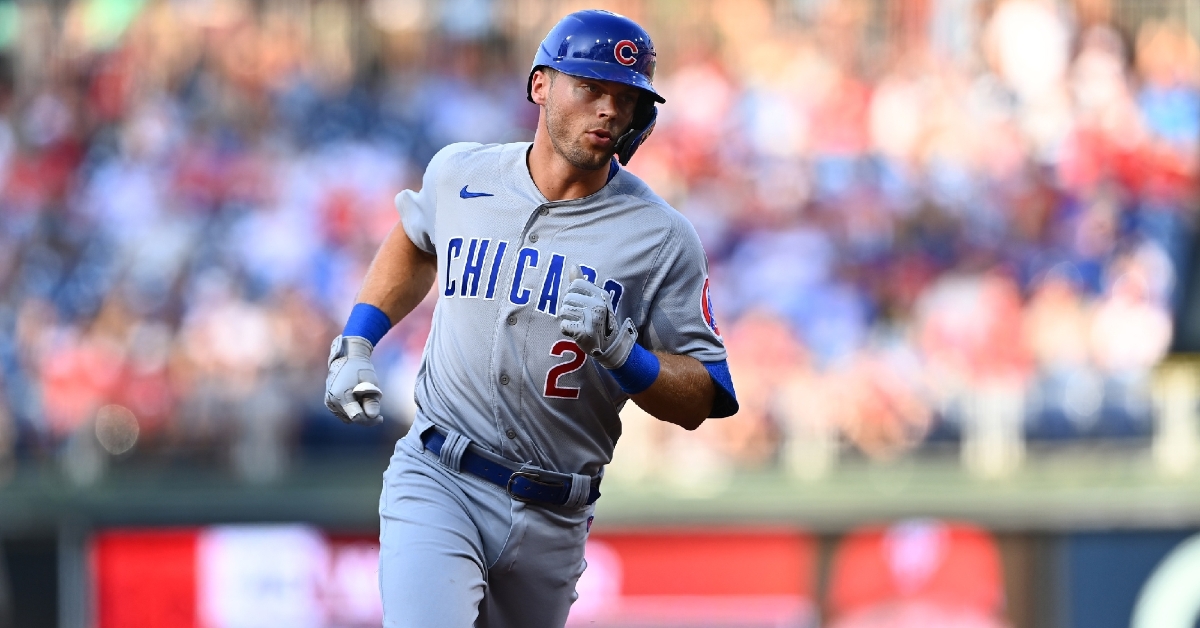
Morel was the best story of the 2022 season, but most people still didn't know who he was. Now, while he is not quite a household name, everyone is on notice that he is the most explosive presence on the Cubs since we let Javier Baez go in 2021. Absolutely, he is *good enough* for a near-everyday spot on a World Series team. He has been referenced as a valuable bargaining chip, and his versatility and rousing personality would be welcomed on any team, but query whether we can afford to lose him. His value, right now, is still manageable. The Cubs should sign him to a similar contract that the Braves have for Albies or Acuna Jr. Maybe for 3-4 years. They could still lock him up for a discount, I think. (He is under team control for several years in any case.) Let him go, and you risk seeing him turn into Jorge Soler or Kyle Schwarber and questioning whether we could have been in postseason competition for every single year since 2016. He basically became the biggest power hitter on the team (both he and Bellinger had 27 HRs, but Morel did that in 23 fewer games), a clutch player (picture above taken from walk-off HR vs. the White Sox, one of the major highlights of the season) and the kind of personality every championship team needs to come back from slumps and middling performances. On that last gasp of a game versus the Braves, Morel hit a triple near the end and showed the kind of emotion that had been sorely lacking as the team grappled with elimination. He gave us a prayer, and we couldn't push him across.
He had 4 more plate appearances in 2023 than 2022, so they're very comparable on that score, as they are with most categories--except for 10 more HRs and 23 more RBIs. Perhaps he needs to work on some things, but I noticed he seem to take better at-bats as the season deepened, and if he can boost his batting average a little bit, there's no reason he wouldn't make the All-Star team.
Ian Happ: A-

Happ was extended for 3 years early on this season, so we will have him for the next three seasons, too, and it's looking more like 2024-2026 is the new "window" for competition. Is he *good enough* to be the starting everyday left fielder for a World Series champion? I think so, yes, but I do not think he should be batting third in the line-up, as David Ross slotted him rather often near the end of the season. A few times, it paid off, and Happ did hit a timely home run or two at the very end there. And while he was an All-Star in 2022 and not an All-Star in 2023, his numbers this year were an improvement. Again, he was a rock playing 158 games for the 2nd year in a row, and in 50 additional plate appearances, he drew 41 more walks. Sure, his batting average dropped from .271 to .248, but a .360 OBP isn't too shabby. His defense is quality. People talked a lot more about Seiya's dropped ball because it came at a more crucial moment than Happ's missed ball early on in the next game (almost seeming like he did that to be a good teammate in camaraderie), but he is a "plus defender." Apart from the Diamondbacks poisoning the Cubs at the end, we were not playing "clean games" and various baserunning and fielding errors exacerbated struggles at the plate. I'd imagine the organization is putting a premium on this, with the emergence of Pete Crow-Armstrong (hereinafter, "PCA") as a defender extraordinaire. Happ is also the most prominent switch-hitter on the team. He may not strike deep fear in the opposing pitchers, and remains something of a hidden weapon, even though he has been around long enough to say he was part of the "first competitive window." Look for Happ to make another case for himself as an All-Star in 2024. The dramatic increase in walks this year is a clear sign that, if he remains consistent, he deserves that designation. I do think that he deserves to be near the top of the order for that. (I originally gave him a B+ but I figured if Dansby got an A-, Happ deserves that, too, because they were quite comparable, with Happ having slightly better offensive numbers.)
Mike Tauchman: B

I hadn't heard of Mike Tauchman the first time I saw him at the plate (along with several other Cubs players and relievers this year), but anecdotal experience reminds that, he started playing semi-regularly in the 2nd half of the season and quickly established himself as a difference-maker, responsible for at least two or three wins (one notable walk-off HR and one notable game-saving HR theft). His defense impressed but it appeared that PCA eclipsed him in terms of Ross's confidence, at the end. Despite these clutch moments, I did not feel especially hopeful when he would come up in a crucial situation, same as I might for say, Suzuki or Bellinger or Gomes. Tauchman is a fine utility player and suitable for platooning and sharing duties, but I do not see him as an everyday starting player for a World Series champion. Perhaps he could be, in the 9th slot. He hit leadoff very often. Though he was sometimes good, let's be totally honest here: we need someone that was as good as Dexter to qualify as a bona fide leadoff hitter. This was Tauchman's best season yet, and while there is a place for him on this team, he should be monitored and played according to the ebbs and flows of the season. He seemed like a rather streaky player. For those periods when gets hot, he's a valuable hidden weapon. But we need a true leadoff hitter, still. We can put Happ, or Nico, or Morel, (or Tauchman) in the leadoff spot, but some consistency in that part of the lineup (like say, the Braves or Dodgers have, even though Betts and Acuna Jr. are more in the vein of Soriano as a leadoff hitter) will go a long way towards proving we have a solid Championship formula. Tauchman's contract status makes it appear that he will be relatively easy to retain for a modest salary, so it probably makes sense to do that. Give him credit for those true "WAR" moments.
Jameson Taillon: C+

Taillon came to the Cubs this year after a very strong year for the Yankees that saw him go 14-5 with a 3.91 ERA in 177 innings pitched, which any Championship contender would take for spots #3-5 in the rotation. He got off to a slow start and multiple publications in NY took note and took the opportunity to call him "crappy" and claim that the Yankees dodged a bullet by letting him to go to the Cubs for 4 years and $68 million. And, yeah, he did end up going 8-10 with a 4.84 ERA in 154 IP, but he showed significant turnaround towards the end of the season. He would still struggle occasionally, but he seemed to "figure it out" and return to excellent form, at times. Several of his starts at the end were near-heroic, and then squandered by an overwhelmed bullpen. He did not make excuses for himself, and despite these encouraging signs, viewed the overall performance this season as a letdown. With the current state of the bullpen, Taillon does not look bad at all--there's no reason to think that he can't return to excellent form on a more consistent basis, and at the very least, deserves a spot in the rotation, even if he and Drew Smyly are basically treated interchangeably (both flirted with no-hitters in one of their starts, both occasionally entered long relief roles). Whether it's as a #4 or #5 starter or long reliever, he'll be on the team. He could be a trade piece, but I do not see his 2023 performance as an abject failure. It was middling, but I prefer to view the improvement as an encouraging sign.
Drew Smyly: C

Never forget April 21, 2023, when Smyly nearly threw a perfect game in a 13-0 victory over the Dodgers. Many did forget that by the end of the year. But at the beginning, for a minute, it seemed our rotation was on fire. Smyly joined the team in 2022 after a strong year for the 2021 World Series champion Braves, as a tried and tested veteran. He started the same number of games (22 or 23) over the past three years, but his numbers arguably looked better last year. By the end of the season, both the rotation and the bullpen were in shambles, and sometimes Smyly saved us and sometimes he set us back even further. The word is inconsistent, and why it is not unfair to put him and Taillon in almost the exact same category: they have shown flashes of brilliance, but have been unable to maintain. It is, admittedly, a very difficult thing to do at the MLB level, in highly-competitive pennant-race games. The team needed a strong long reliever, and Smyly filled that role *mostly* admirably. He's a few years older than Taillon, but cost about half as much. He has a mutual team/player option for a 2024 contract, and if we can get him to stay for $10-11 million, that might be worthwhile. It wouldn't be the most shocking thing in the world if he "figured it out" for an entire year in 2024, the way he did for the Braves in 2021, and the way Taillon did for the Yankees in 2022. It's worth the gamble, and at the very least, he remains useful.
Jordan Wicks: A- (B+ due to small sample size)

We are wary of rating Wicks too highly (a la Frank Schwindel--never forget Frank the Tank), because he only started 7 games, at the end after Stroman went down, but he went 4-1 and looked like a total stud. Yes, his ERA landed at 4.41 ERA---but I think that was due to 1 or 2 bad starts, and that in all the others, he pitched about as well as anyone. He stepped up in a big way when he needed him to. He handled the pressure of the pennant race as a rookie that got thrown into it at the last minute, in an emergency situation. He probably deserves an A-, but nobody seems to be getting quite as excited about him. The clearest comparison I can make is to Alec Mills, who also wore glasses and threw a no-hitter in 2019; the B+ accounts for "fluke-potential," which every rookie success must overcome. Wicks did not throw a no-hitter, but in his debut, he retired something like 15 batters in a row, which drew a comparison to Mark Prior. No one is saying he is Mark Prior, but if he is, take it. Prior may not have lasted, but for those few years when he was a stud, he was a stud that anyone would have wanted. This team drew comparison to the 2004 team, failing at the very end after hopes of another postseason birth. 2005 wasn't too bad either, but we are hoping that 2024 will have the better end result. Wicks deserves a spot in the rotation with his performance. Yes, I hope we bring in a new starting pitcher that will be a strong anchor in the rotation (or 2, if Stroman walks), and in that case, Wicks at least deserves at shot at the #5 slot. The only problem is that Rowan Wick is gone. We may actually, one day, get Brad Wieck back in the bullpen, but if we can't have an army of Wicks, two might be enough.
Javier Assad: A- (no qualifier)

It might be overblowing things a bit to give Assad a flat A, but he almost deserves that for how he stepped up, time after time, throughout the entire course of the season, and most crucially at the very end. There probably was no single decision that Ross made that upset me more than when he took Assad out on 9/2/23, when he had the opportunity for a complete game shutout and we ended up losing to the Reds 2-1 (this was before the wheels totally came off on the playoff push, but the first signs of trouble). He had 98 pitches, and Ross was arguably justified, and hindsight is 20/20 and no single game mistake is cause for termination, when the season is comprised of hundreds of such intangible moments. But the loss wasn't Assad's fault, and he was as good as he could be, for how he was used. Is he a starter or a long reliever? It's not totally clear. He's in a similar category to Smyly, though he unquestionably performed better than him or Taillon. He was the 3rd or 4th best pitcher on this team, depending on when Stroman was injured. At the very end of the year, when Stroman returned, he was the more reliable of the two. Assad is straight up, a no-brainer. Don't let him get away, because I think may get even better. He's only pitched for 2 years, but the encouraging rookie performance was not a fluke, and he he has earned our trust.
Those are most of the "major guys," and these posts become too long as they are, finding pictures of every single player and writing a personalized evaluation--one other guy deserves one:
Adbert Alzolay: B+

The Cubs never quite figured out how to use Alzolay until this year. He has pitched in fits and starts since 2019, debuting with some hype and showing some flash, bouncing back and forth from the minors, experimented with as a starting pitcher in 2021, and finally emerging as the closer in 2023. There's no question that he was the most reliable person in the bullpen for the job. (The bullpen should be addressed separately, here.) And he contributed to the team in a bigger way than he ever had before. And he was very good in the role, though not perfect, and the only blown games came at the crucial moment, and he also went down at the crucial moment, forcing the Cubs to use Julian Merryweather and Mark Leiter Jr. and Daniel Palencia as closers, which worked as often as it did not. It appears that he blew 3 saves, which is not great, but his ERA of 2.67 was the best on the team (unless you count Shane Greene, who pitched 3 innings and gave up 2 hits and 2 walks and 0 runs, or Tucker Barnhart, the catcher, who oddly pitched 4 innings in 4 games, giving up one run for a 2.25 ERA).
Adbert is the only player on the team besides Morel with an infectious personality. As previously noted, you shouldn't let these kinds of guys go lightly. The only issue is whether Adbert can cut it as a World Series champion closer. And that is a big ask. The team could swing big and bring in someone like say, Wade Davis or Craig Kimbrel, and no one will complain. Adbert would likely make an effective setup man, though I have a feeling he thrives on the emotion of the closing role. In any case, if the team is seriously competing, I find it hard to believe they wouldn't do something similar to what they did with Aroldis Chapman in 2016, "renting" a closer to take a little pressure off of Adbert (as they did with Rondon) and the rest of the bullpen. Whatever the case, there should be a place for him on this team, and hopefully for many years to come.
Honorable Mention: Jeimer Candelario: B+

In 2016, Jeimer Candelario, one of the many heavily-touted prospects on the Cubs at the time, made his MLB Debut. It wasn't impressive. He got 1 hit in 11 at-bats, good for a .091 batting average. He played 11 more games for us in 2017 and did marginally better, hitting .152, but then was shipped off to Detroit, where he remained until 2022 and appeared to play perfectly average baseball, except he could be called above-average in 2021 (and actually led the league in doubles). He started off the year on the Nationals, and he was doing alright, probably the best he has done apart from 2021, and the Cubs did not fold but instead added.....by bringing back Candelario in glorious fashion. Candelario's performance in the first couple weeks of that acquisition jumpstarted this team in a serious way. The team was never hotter. They looked unstoppable. They looked like the Braves in 2021. Then he went back down to earth, and also got injured as the team went into a tailspin. I am not sure if there is a place on this team for him in 2024 (I have basically said we should keep all of the players, which most certainly will not happen) but I hope we keep him. I'm not sure if he's *good enough* to be an everyday starting player for a World Series team, but if he could replicate his 2021 year, or even this year (which probably is his best season so far, split between two teams, in terms of power), it would probably suffice. I include him to highlight his contribution because I do think he was the biggest difference-maker after the trade deadline, apart from Jose Cuas who was less terrible than several of his peers in the bullpen.
The Bullpen: C+ (overall)

Why can't we go back to 2017, or even 2021, when we had a really sick bullpen? Why can't we have Ryan Tepera, Andrew Chafin and Craig Kimbrel in innings 7-8-9 when we really need them? Why can't we have "nice things?" Because this is the Cubs.
There are several tiers of relievers in the bullpen, and few of them are reliable. At the top end, people that might get an A-, we have Julian Merryweather, and even he could not escape all blame in that final 2-week skid. He was about as trustworthy as anyone apart from Alzolay, and he throws hard, and he strikes a good number of guys out. He's a guy I'd keep in the bullpen.
I'd say the same thing for Jose Cuas (B+). He was the other "difference-maker," brought over from the Royals after the trade deadline. He wasn't perfect, either, and I might give him a B+, but he seemed fairly reliable. Alzolay, naturally, falls into this top category.
Hayden Wesneski (C) is an interesting case because he also falls into that Taillon/Smyly/Assad situation--starter, long reliever, or reliever? That remains to be seen. He actually started 11 games. There were more positives than negatives, I think, but it certainly wasn't so positive that I think he must start the year at the major league level. He may bounce to AAA and back again, but he did show some potential. He might be middle tier, or higher.
Others in the middle tier could include Brad Boxberger (B-), who was a great pick-up from the Brewers, who has been a very successful reliever in the past, and who had some very encouraging performances, but also struggled somewhat, with injuries and otherwise. A healthy Boxberger could be a key component to the bullpen, the way he was in Milwaukee, as the setup man for Josh Hader. I think he is worth a small gamble for 2024 (mutual option). He's getting older, but pitchers can age gracefully in this game, and if we got 2021 or 2022 Brad Boxberger (A), we'd have one high quality bullpen staple.
Michael Fulmer (B+) arguably belongs in the "top-tier," and should be re-signed for 2024 as well. He could be considered somewhat trustworthy alongside Merryweather and Cuas. He didn't have a terrible year by any stretch, but he wasn't around (injured) when we were needing him the most.
It's not fair to say Luke Little was unreliable, because of a very small sample size. I think the main thing to say about him is, like Canario, Ross did not give him enough opportunities, opting for others with more experience to often disappointing results. Little actually didn't suck at all. He actually led the team in ERA. He actually pitched 6.2 innings and gave up 0 runs. Hard to say he will be an integral part of the pitching staff, but still very young and promising.
Keegan Thompson (C-) is still kicking around. He was very encouraging over the past year or two, but something seemed to happen (I think injuries) and this season was a step in the wrong direction. I believe he will stay part of the organization and bounce to AAA and back again before being given another opportunity. His success in the past is enough to justify that.
I don't have much recollection of Michael Rucker (B-) but he was used fairly often (he was likely injured near the end) and seems to fit in the middle tier, or possibly the top-tier.
Brandon Hughes is worth mentioning because it seems like he's always been a stud, and he only pitched briefly this year, performing poorly and then recognizing injury and being on the IL most of the year. If he comes back as the pitcher he was before, you can keep him as a key component to the bullpen.
I don't ever like being mean, because as noted above, this is an incredibly difficult game to play at the highest of levels. But I would not mind if either Daniel Palencia (D+) or Mark Leiter Jr. (D+) were traded. They both have their qualities. Palencia apparently has electrifying stuff and throws 100 MPH, but I mostly saw him give up home runs. Same for MLJ. While he is retained for facing left-handed hitting, and did have some measure of success (clearly, Ross trusted him, putting him in 69 games, which tied for the most appearances with Merryweather), late in the year, it seemed like Cuas, Palencia and MLJ were pitching like, almost every single game, and it began to show. I am not a full-time sportswriter or statistician or highly-analytical fan, but I go by the feel of what I see, and yeah I watched a lot more in July, August and September than April, May and June, but MLJ just did not give me major confidence. I wouldn't mind if either got traded (and I know other teams would like both, and both do present value propositions), but I think they will get another chance, and hopefully they will be used in more specific situations, and not just because they're the only options left.
***
There are some other notable players. Nick Madrigal (B+) probably deserves his own picture in this post and he played a lot this year and he probably played better than he ever has in his career, but I could say the same for his sub, Miles Mastrobuoni (B/B+ at the end). They should at least get awards for best names, best naming by parents. Can they play in 7 games of a World Series? Maybe. Madrigal certainly was touted in his prospect days as being a player of that caliber. He hasn't quite delivered on that promise, but he took a step in that direction.
Obviously, PCA and Alexander Canario are very exciting (even though PCA batted .000, as a lifetime little league .000 hitter with a ~.500 OBP, I am sympathetic). So is Jared Young, to say nothing of Matt Mervis. The sample sizes are too small. Add Canario's grand slam to the list of ridiculous offensive debuts (yes, technically his debut was with a strikeout on 9/6/23, but consider his first start on 9/19/23) his debut) with Nico Hoerner, Javier Baez, Jorge Soler, Kosuke Fukudome and Starlin Castro. And that leaves two final individuals to highlight.
***
Pour One Out for Patrick Wisdom (B-)

Wisdom earned $763,000 this year, and one imagines, less than that from 2018-2022. He is arbitration-eligible this year, which I believe means, the Cubs will either need to pay him a *reasonable* salary, or release him. Some peg this number at $4 million. Some think that he is not worth $4 million/year. As noted above, we cannot keep everyone. I'm not going to make any predictions, but if both happen, I'll miss Patrick Wisdom more than Cody Bellinger--not because of the confidence they provided as a fan, but because Wisdom represents something important about the team through those fallow years of 2021-2022. When the team ripped (almost) everything up and went back to the drawing board, a slightly-tweaked update on the strategy implemented in the previous fallow years of approximately 2012-2014, Kris Bryant was gone, but Patrick Wisdom materialized in his place. It's questionable whether Wisdom has more power than Bryant, but Bryant is certainly the better hitter. Wisdom strikes out a ton. Kris Bryant was the National League MVP in 2016 and the National League Rookie of the Year in 2015 and is a 4-time All-Star.
Wisdom has none of these accomplishments, and he was never seen as part of a "new core," like some of the names mentioned above (Happ, Hoerner, Swanson, Suzuki, Steele). But Wisdom is the only other player--apart from Morel and Alzolay--with an infectious personality. In 2021, when all was lost, it was him and Frank Schwindel that allowed fans to indulge in the delusion that, with a rag-tag team of replacement players, they could still occasionally compete with the best (2022 was not 2021, but see the Cubs dominance of the Phillies in 2022, for one example). He led the team in home runs the entire way--until this year. And despite being benched significantly more this season, he still led the team in home runs for a very long time (mid-August). Even when all hope was lost at the end of this season, Wisdom emerged as a pinch-hitting threat. It was demoralizing when Craig Counsell called for the batter ahead of Wisdom (Tauchman?) on 10/1/23, to be intentionally walked and load the bases for him because he knew they could strike him out. He had a chance to be a hero one last time, there. If he had hit a home run, would it have made a difference in what they decide to do with him in 2024?
Some people seem to think Wisdom is "washed up," but I believe, with proper coaching this offseason, with better plate discipline, he is capable of a significant role on a championship team--so long as the strikeout liability is tempered. Look at Kyle Schwarber. Just look at Kyle Schwarber. Wisdom isn't Schwarber, but he's like a mini-Schwarber/Kris Bryant hybrid, and we can't have either of them back, it seems, so Wisdom is the next best thing. If Schwarber can be an everyday starting left fielder and leadoff hitter of a World Series contender, then there is no reason Wisdom can't do the same as a part-time player, and pinch-hit weapon. Of course, there may not be room for him on the roster, if we become totally stacked. He provides depth at multiple positions (even at catcher, at one point, like Schwarber as well) and his presence on the team, similar to the other 2016-veteran Kyle, provides an intangible: continuity, presence, gravitas.
All I'm saying is, he deserves $4 million next year, and whether it is provided by the Cubs or another team, it will be interesting to see if getting paid for his fair value leads to a corresponding increase in production. Unless they can bring back Javier Baez, Wisdom doesn't need to go. Certainly, you wouldn't want both on the team--but then again, remember Javy in 2018, remember MVP-era Javy, and recognize that miracles can happen.
David Ross: B
Ross inherited this team from Joe Maddon in 2020 and performed well enough to win National League Manager of the Year, though the Cubs themselves could not last more than two games against the Miami Marlins. I had no problem with the way he managed the bullpen that year. No problem at all seeing him trust Jeremy Jeffress to a 4-1 record with a 1.54 ERA. I absolutely had no problem with the way he managed the 2021 bullpen through one of the best scoreless streaks (38 innings) in MLB history. Even last year, when we had no hope, I had no problem with the way he managed the bullpen to lead the league in strikeouts (716). The man has a track record.
We have to be fair and say that the team did not invest enough in the bullpen for the obvious reason that they did not expect to fully compete. In June and July, it looked like Bellinger and Stroman might be leaving the team for contenders, and that someone might even try to take Steele away. They got Boxberger and Merryweather, and they were solid choices, but they didn't put themselves in the market for a marquee closer (even last year, we got David Robertson). Alzolay did his part, and has been addressed above. We cannot blame Ross for the failures of the bullpen, but one of the things I like about him is that he accepts the blame, he does not blame the players. He wants to be blamed.
He did, however, call out the Pirates as a bad team, which was not a good idea when they were about to play a very important series against the Marlins, where we needed to count on them to win and bail us out. The Pirates almost did in that first game anyways. Regardless, it did not make anyone in Pittsburgh a fan of Ross, nor harbor any positive feelings for the Cubs. Now it's fine to start fights with the Cardinals, or maybe even the Brewers, but you should have other teams that are at least, semi-allies. Teams that will want you to win, too. The Cubs are unique in this. Perhaps no one feels bad for them anymore after 2016, but I have to think, the nostalgia factor survives. People wants to see the Cubs win (except in St. Louis).
Ross, I believe, will stay, though many are calling for his termination. The only other thing I don't like that much about Ross is the way he handles the media. He once noted that, "Twitter probably knows better than I do" about certain in-game decisions, and the comment was double-edged--sarcastic, but actually accurate. He became prickly whenever his bullpen decisions were questioned, which felt like projection. And yet, hindsight is 20/20, of course, and Ross knows enough about winning in this game that he deserves the chance to do it with the guys that he has fostered and developed over the past four seasons. One more chance, at least.
For all of the heartbreak that this season carried with it, I probably had more fun following the team than any year before. I went to Toronto to see Steele beat the Blue Jays on 8/12/23, went to Milwaukee to see us win that pseudo-lame-duck game on 9/30/23, saw us come from behind to beat the White Sox at Guaranteed Rate on 7/26/23, and saw us beat the Brewers at Wrigley on 8/30/23. I watched too many important games from Murphy's Bleachers. I invested more in this team than any year before, and though it didn't end up being "worth it," sometimes the journey itself is the pleasure.